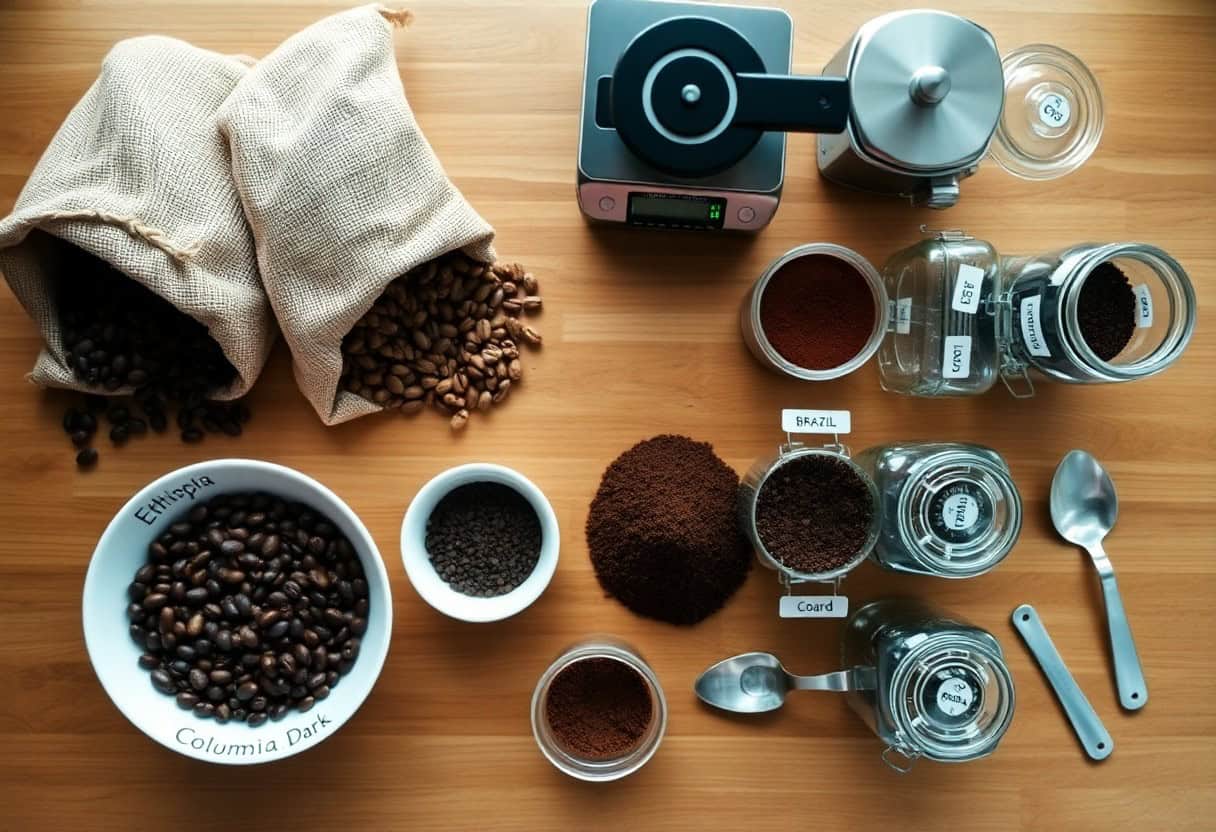
TL;DR — Coffee beans: Coffee beans by origin, roast, grind, and storage explained simply. The 7 calls that lift every cup at home from average to excellent.
Table of Contents
There’s a huge difference between good coffee and great coffee, and it starts with understanding your beans. Your choice of origin affects flavor, roast level determines intensity, grind size impacts extraction, and improper storage can ruin even the finest beans. This guide shows you how to get it right every time.
Key Takeaways:
- Coffee flavor is deeply influenced by origin-beans from different regions offer distinct taste profiles due to climate, altitude, and soil conditions.
- Roast level affects both flavor and body; lighter roasts preserve origin characteristics and acidity, while darker roasts bring out bolder, smokier notes.
- Grind size must match the brewing method-espresso needs a fine grind, French press requires coarse, and mismatched grinds lead to under- or over-extraction.
- Whole beans stay fresh longer than pre-ground coffee; grinding just before brewing preserves aroma and flavor.
- Store coffee in an airtight container away from light, heat, and moisture-avoid the fridge or freezer to prevent condensation and flavor degradation.

Classification of Coffee Bean Types
Coffee begins with the bean, and not all beans are created equal. The world’s coffee production revolves around a few primary species, each with distinct traits that shape flavor, aroma, and body. Your choice of bean type directly influences your final cup, from the brightness of a light roast to the depth of an espresso. Understanding these differences helps you make informed decisions based on your taste preferences. Arabica, Robusta, Liberica, and Excelsa represent the core categories, though only the first two dominate global markets. Thou can now explore how each contributes to the coffee experience.
- Arabica: Known for smooth, complex flavors and lower caffeine
- Robusta: Bold, earthy taste with nearly double the caffeine of Arabica
- Liberica: Rare, with floral and woody notes, grown in limited regions
- Excelsa: Tart and fruity, often used in blends for depth
- Species variation affects acidity, body, and roast behavior
| Bean Type | Primary Flavor Profile |
| Arabica | Sweet, floral, with bright acidity |
| Robusta | Bitter, woody, high bitterness |
| Liberica | Smoky, tropical, slightly floral |
| Excelsa | Sour, fruity, complex depth |
Comparing Arabica and Robusta Characteristics
Arabica beans grow at higher elevations and require more care, which contributes to their smoother, more nuanced taste. You’ll often notice notes of fruit, sugar, and wine, with a clean finish. Robusta thrives in harsher conditions and delivers a harsher, more astringent profile. It’s commonly used in instant coffee and espresso blends for its strong punch and crema production. The caffeine content in Robusta is significantly higher, acting as a natural pest deterrent.
| Characteristic | Arabica vs. Robusta |
| Caffeine Level | Arabica: Lower / Robusta: Higher |
| Growing Altitude | Arabica: 600-2000m / Robusta: 200-800m |
| Flavor Complexity | Arabica: High / Robusta: Low to moderate |
| Price Point | Arabica: Higher / Robusta: More affordable |
Niche Varieties: The Role of Liberica and Excelsa
Liberica and Excelsa occupy a small but distinctive corner of the coffee world. You’re unlikely to find them in mainstream cafes, but their unique profiles attract adventurous drinkers.
Liberica offers a bold, smoky aroma with a hint of fruitiness, often described as having a “wild” character. Excelsa, technically a subgroup of Liberica, adds tart, almost citrus-like notes that can brighten a blend.
These beans are primarily grown in Southeast Asia and are celebrated for their rarity and regional significance.
Thou may never rely on Liberica or Excelsa for daily brewing, but sampling them reveals coffee’s incredible diversity beyond the usual choices. Their limited cultivation preserves cultural traditions and genetic variety in coffee farming.
Terroir and Global Origin Factors
Every coffee bean carries the signature of its birthplace, shaped by terroir-the interplay of soil, climate, and elevation. Regions like Ethiopia, Colombia, and Sumatra produce distinctly different profiles due to their unique environmental conditions. Your perception of acidity, body, and aroma shifts dramatically depending on origin. Thou choose beans not just by name, but by the land that shaped them.
Environmental Factors Shaping Regional Flavor Profiles
Temperature, rainfall, and soil composition directly influence how flavor compounds develop in coffee cherries.
- Altitude affects sugar development and bean density
- Volcanic soil imparts mineral richness and complexity
- Shade cover slows maturation, enhancing sweetness
Knowing these elements helps you predict taste before the first sip.
Identifying High-Altitude vs. Low-Altitude Beans
High-altitude beans typically grow above 1,200 meters and display brighter acidity, tighter bean structure, and more complex floral or fruity notes. In contrast, low-altitude beans tend to be fuller-bodied with earthier, more muted profiles. You can often spot high-grown beans by their harder texture and denser appearance.
- High-altitude: higher acidity, nuanced flavors, slower maturation
- Low-altitude: smoother, heavier body, faster ripening
Choosing based on elevation gives you control over your brew’s character.
Elevation changes how sugars and acids form in the bean, making high-altitude coffees more desirable for specialty roasters. The cooler temperatures at higher elevations slow cherry development, allowing more time for flavor concentration.
You’ll notice this in the cup as layered notes of citrus, berry, or tea-like clarity. Low-altitude beans, while less complex, offer consistency and richness ideal for espresso blends.
Thou match the bean’s origin traits to your preferred brewing method for best results.
The Art and Chemistry of Roasting
Roasting transforms raw green coffee beans into the aromatic brown beans you brew. As heat is applied, moisture escapes and chemical reactions like the Maillard reaction and caramelization develop complex flavors. You can control acidity, body, and sweetness by adjusting roast time and temperature. Under-roasting risks grassy, sour notes, while over-roasting can obliterate origin character with bitter, smoky tones.
Each roast level offers a different sensory experience. Light roasts preserve the bean’s native traits, while dark roasts emphasize roast-derived flavors. Your preference depends on what you value in a cup-clarity or boldness, brightness or depth. The roaster’s skill lies in balancing these elements without compromising bean integrity.
Pros and Cons of Light, Medium, and Dark Roasts
| Roast Level | Pros and Cons |
|---|---|
| Light | Preserves origin flavors; higher acidity; retains more caffeine |
| Light | Lacks body; can taste underdeveloped if not roasted well |
| Medium | Balanced sweetness and acidity; fuller body than light |
| Medium | May mute some delicate origin notes |
| Medium-Dark | Rich mouthfeel; subtle roast complexity |
| Medium-Dark | Acidity begins to diminish noticeably |
| Dark | Strong, bold flavor; low acidity; consistent profile |
| Dark | Origin characteristics are often lost |
| Dark | Can develop bitter, ashy notes if overdone |
Understanding the Degassing Process After Roasting
Carbon dioxide escapes from beans after roasting, a natural process called degassing. Brewing too soon traps gas in your brew, causing uneven extraction and bubbly, sour results. Allowing 12-48 hours of rest improves flavor clarity and balance.
This off-gassing peaks within the first few days and gradually slows. While espresso benefits from slightly older beans (4-7 days post-roast), filter coffee often tastes best between days 3 and 10. Storing beans immediately in a sealed container with a one-way valve helps manage pressure while preserving freshness. Ignoring degassing undermines even the best roast.
Mastering the Grind for Optimal Extraction
Your coffee’s flavor hinges on grind size matching your brewing method. Too fine, and you risk over-extraction-bitter, harsh notes dominate. Too coarse, and under-extraction leaves your cup sour and weak. Consistency in particle size ensures even water contact, promoting balanced extraction and richer flavor.
Adjusting your grinder isn’t guesswork-it’s precision. Small tweaks make dramatic differences, especially in methods like espresso or pour-over. Always dial in fresh after changing beans or roast levels. Perceiving subtle shifts in taste helps refine your approach over time.
Step-by-Step Guide to Calibrating Grind Size
Follow this simple process to match your grind to your brew method and achieve peak flavor. Small adjustments matter-change one setting at a time and brew test shots or cups to evaluate.
| Brew Method | Grind Setting |
|---|---|
| Espresso | Fine, like powdered sugar |
| Pour-Over (V60) | Medium-fine, like sea salt |
| French Press | Coarse, like breadcrumbs |
| AeroPress | Medium-fine to fine, adjustable |
Essential Tips for Burr vs. Blade Grinder Performance
Burr grinders deliver uniform particles, imperative for even extraction and flavor clarity. Blade grinders chop inconsistently, creating fines and boulders that disrupt brewing balance. Heat buildup in blade models can also alter bean chemistry. For control and repeatability, a burr grinder is unmatched.
- Choose conical burr grinders for quieter operation and less heat
- Flat burrs offer precision, ideal for espresso
- Avoid blade grinders for pour-over or espresso-they lack consistency
- Calibrate burr distance regularly to maintain accuracy
Perceiving how grind texture affects your final cup reveals the true impact of equipment choice. Uniformity prevents channeling in espresso and uneven saturation in drip methods.
While blade grinders are cheaper, their erratic output undermines even the finest beans. A quality burr grinder preserves the bean’s intended profile, making it a necessary investment for serious brewing.
- Uniform particle size prevents over- and under-extracted notes
- Burr grinders allow precise adjustments for any method
- Blade models create heat, risking aroma loss
- Consistent grind quality enhances sweetness and clarity
Perceiving the difference starts with your first controlled pour-notice how clean the acidity is, how balanced the body feels. That’s the result of proper grinding.
Scientific Principles of Bean Storage
Light, heat, oxygen, and moisture are the primary enemies of coffee freshness. Each of these external factors accelerates the degradation of volatile compounds responsible for aroma and flavor. Exposure to oxygen triggers oxidation, dulling brightness and introducing stale notes. Light and heat speed up chemical reactions that break down oils, while moisture invites mold and spoilage. Thou must protect your beans from all four to preserve their integrity.
- Oxygen – causes oxidation, leading to flat, cardboard-like taste
- Light – degrades aromatic compounds, especially UV exposure
- Heat – increases volatility of flavor molecules, hastening staling
- Moisture – promotes microbial growth and clumping in ground coffee
Best Practices for Vacuum Sealing and Temperature Control
Airtight containers with one-way valves prevent oxygen ingress while allowing CO₂ to escape post-roast. Vacuum sealing removes air, drastically slowing oxidation. Store beans at stable, cool temperatures-ideally between 15-20°C (59-68°F). Avoid refrigeration, as condensation and odor absorption degrade quality. Freezing is acceptable only for long-term storage of whole beans in vacuum-sealed portions.
| Practice | Effect |
|---|---|
| Vacuum sealing | Reduces oxygen exposure by up to 99%, preserving aroma |
| Cool, dark storage | Slows chemical degradation and maintains flavor stability |
| Avoid temperature swings | Prevents condensation and moisture buildup inside containers |
Consistent temperature and minimized air contact are non-negotiable for peak freshness. Vacuum-sealed whole beans kept in a dark, cool cupboard retain their sensory profile significantly longer than those in open or warm environments. Thou should only grind what you brew, and store the rest with precision.
Professional Selection Strategies
Understanding how to choose the right coffee beans elevates your brewing from routine to refined. Start by checking roast dates-fresh roasted coffee beans deliver brighter, more complex flavors. Look for origin details, processing methods, and altitude on packaging. For a comprehensive breakdown, explore The Ultimate Guide To Fresh Roasted Coffee Beans to sharpen your selection skills.
Expert Tips for Decoding Coffee Bag Labels
Roast date tells you freshness-always prioritize beans roasted within the past month. Origin indicates flavor tendencies, while processing method affects body and sweetness. Altitude, varietal, and tasting notes offer clues to complexity. Any informed choice begins with reading labels like a pro.
- Single-origin means distinct regional character
- Washed process delivers clean, bright cups
- Natural process enhances fruitiness and body
Matching Bean Profiles to Specific Brewing Methods
Light roasts with high acidity thrive in pour-over setups, enhancing floral and citrus notes. Espresso demands denser, medium-dark beans that balance sweetness and crema. Cold brew benefits from coarse-ground, chocolatey dark roasts steeped slowly.
Your method should align with the bean’s inherent traits.
Choosing the right bean for your brewer isn’t arbitrary-it’s sensory precision. A bright Ethiopian bean may dazzle in a V60 but fade in a French press, while a full-bodied Sumatran excels in immersion brewing. Any mismatch dulls potential.
Match roast, grind, and origin to your equipment for peak results.
Final Words
So you’ve explored the journey of coffee beans-from their origin in high-altitude farms to the roast that defines their flavor. You now know how grind size affects extraction and why proper storage preserves freshness.
Each choice you make, from bean selection to brewing method, shapes your daily cup.
Your understanding of coffee is deeper because you’ve seen how origin influences acidity, how roast level alters body, and how grind consistency ensures balance.
With this knowledge, you’re equipped to brew with confidence and enjoy coffee not just as a drink, but as a crafted experience.
FAQ
Q: What does coffee bean origin tell us about flavor?
A: Coffee bean origin refers to the geographic region where the coffee is grown, and it plays a major role in shaping the final taste.
Beans from Ethiopia often have bright, floral, and citrusy notes due to the high altitude and diverse heirloom varietals. Colombian coffee tends to be balanced with mild acidity and hints of caramel or nuts.
Beans from Sumatra are known for their earthy, full-bodied profile with low acidity. Soil composition, climate, elevation, and farming practices all influence how the beans develop their unique characteristics.
Two beans of the same species can taste completely different depending on where they’re grown.
Q: How does roast level affect coffee taste and caffeine content?
A: Roast level changes both the flavor and appearance of coffee beans. Light roasts preserve more of the bean’s original characteristics, offering higher acidity and complex, fruity, or tea-like flavors.
Medium roasts strike a balance, bringing out sweetness and body while still retaining some origin traits. Dark roasts have a bolder, smokier taste, often with notes of chocolate or spice, but they mask more of the bean’s natural profile.
Contrary to popular belief, darker roasts do not contain more caffeine. In fact, caffeine degrades slightly during prolonged roasting, so light to medium roasts usually have marginally more caffeine than dark ones.
Q: Why does grind size matter for brewing coffee?
A: Grind size determines how quickly water extracts flavor from coffee grounds, and it must match your brewing method. Espresso requires a fine grind to create resistance and allow proper extraction under high pressure.
A French press works best with a coarse grind to prevent over-extraction and sediment in your cup. Pour-over methods like the Chemex or V60 use a medium-fine grind for balanced flow and clarity.
Using the wrong grind size leads to bitter, over-extracted coffee or weak, sour under-extracted brews. For consistent results, grind beans just before brewing with a burr grinder.
Q: What is the best way to store coffee beans at home?
A: Coffee beans stay freshest when stored in a cool, dark place in an airtight container. Exposure to air, light, heat, and moisture degrades flavor quickly. Avoid clear containers on the countertop near the stove.
Do not store beans in the refrigerator-condensation and odors can ruin them. Freezing is controversial; while it can extend shelf life for long-term storage, frequent temperature changes cause moisture buildup.
For daily use, buy whole beans in small batches and use them within 2-4 weeks of roasting for peak flavor.
Q: Can the same coffee bean taste different based on roast and grind?
A: Yes, the same coffee bean can taste completely different depending on how it’s roasted and ground.
A light roast of a Guatemalan bean might highlight red apple and honey notes, while a dark roast of that same bean could taste like dark chocolate and toasted walnut.
Grind size also alters extraction: too fine, and the coffee turns bitter; too coarse, and it tastes thin and sour. Even with identical beans and water, changing the roast profile or grind setting transforms the final cup.
This is why baristas adjust these variables to match brewing equipment and taste preferences.
Key Takeaways: Coffee beans
- Pick the right coffee beans — match the brew method to the bean origin for the best cup.
- Time the coffee beans — extraction time is the single biggest flavour lever you control.
- Grind for the coffee beans — coarse for press, fine for espresso, in between for everything else.
- Water temp for coffee beans — 92-96°C is the sweet spot for full extraction without bitterness.
- Ratio drives coffee beans — 1:15 to 1:18 coffee-to-water nails balance for most brew styles.
Apply Coffee beans to Your Morning
Pick one variable to change this week and brew the coffee beans the same way for seven days. Taste, log, then adjust.
- The Complete Guide to Espresso – Machines, Beans, and Pulling the Perfect Shot
- How to Make a Caramel Macchiato at Home – The Coffeehouse-Style Method
- How to Make a Pumpkin Spice Latte Without a Syrup Bottle
For deeper standards on coffee beans, see the Specialty Coffee Association.
FAQs: Coffee beans
What is the easiest coffee beans for a beginner? The French press is the gentlest start — almost impossible to over-extract, gives a full-bodied cup, and needs no special gear.
How much does coffee beans setup cost? A solid home rig starts around £80 for grinder, kettle, and one brew device — under £200 covers nearly any method short of espresso.
Does coffee beans keep overnight? Brewed coffee loses character within 30 minutes. Brew fresh, or cold-brew the night before for an iced drink the next morning.