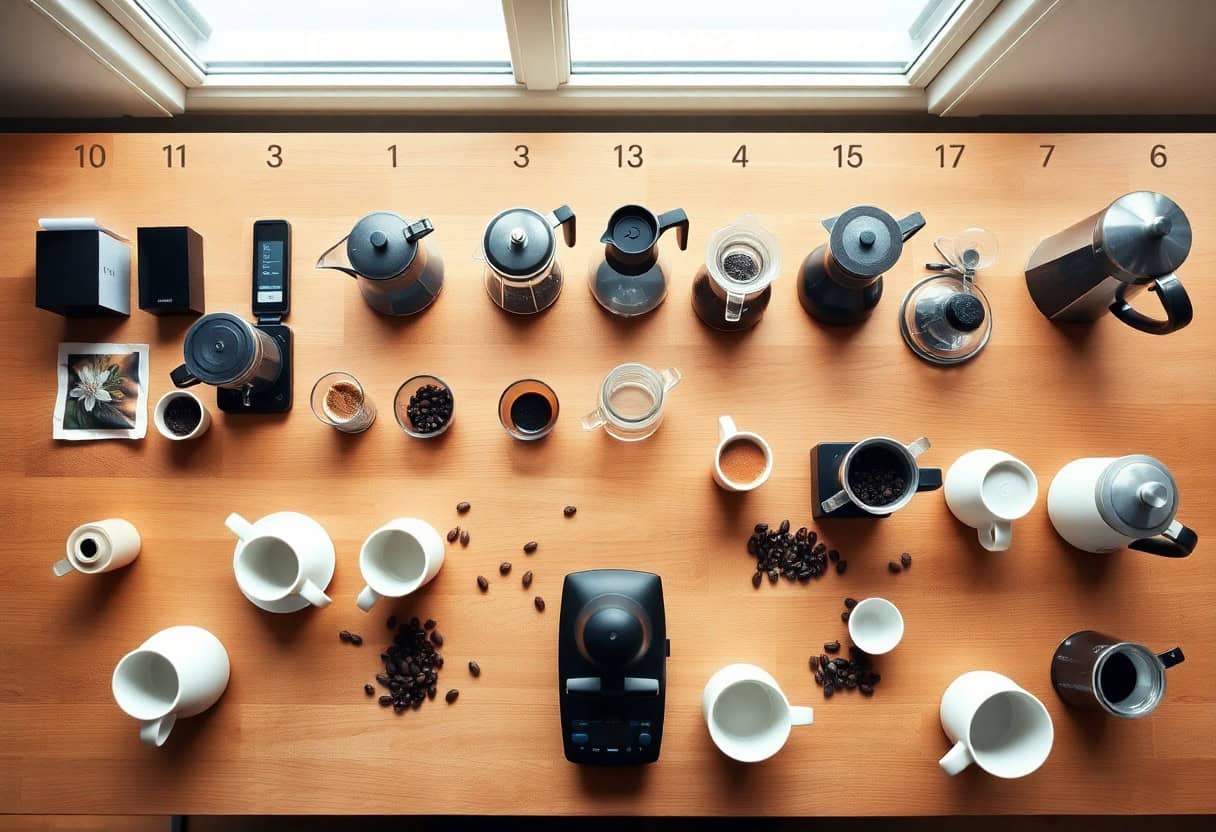
TL;DR — Coffee brewing methods: Every coffee brewing method ranked by effort. 14 ways to brew at home — pour-over to AeroPress to French press — with the right tool for every morning.
Table of Contents

Methods vary widely in time, gear, and skill-some take seconds, others demand precision. You’ll discover which techniques deliver the best flavor with the least effort, and which ones pose burn risks or steep learning curves. Each method is ranked so you can choose wisely based on your routine and taste.
Key Takeaways:
- Coffee brewing methods vary widely in effort, from quick and simple techniques like drip coffee to more involved processes like siphon brewing that require precision and attention.
- Manual methods such as pour-over, AeroPress, and French press offer greater control over flavor but demand more time and practice to master.
- Automatic machines like drip brewers and pod systems minimize effort and cleanup, making them ideal for busy routines despite less customization.
- Brew time, grind size, water temperature, and equipment cleanliness significantly impact taste, regardless of the method used.
- Personal preference plays a major role-some enjoy the ritual of hands-on brewing, while others prioritize speed and consistency.
Understanding the Fundamentals: Key Factors in Extraction
Your coffee’s flavor hinges on how evenly and completely extraction occurs. Water pulls soluble compounds from ground beans, and the balance of these compounds determines whether your brew tastes sweet, sour, or bitter. Too little extraction yields sour notes; too much brings out harsh bitterness. Control comes from managing time, temperature, grind size, and water quality. Assume that
- Using freshly ground beans preserves volatile aromatics
- Water temperature affects extraction speed and compound solubility
- Grind size consistency ensures even extraction across all particles
- Brew time must align with method and grind to avoid imbalance
The Role of Water Temperature and Quality
Water temperature directly influences how quickly solubles dissolve from coffee grounds. Too cold-below 195°F-and extraction slows, leaving underdeveloped, sour flavors. Too hot-above 205°F-and you risk scalding the grounds, pulling out excessive bitterness. Ideal range sits between 195°F and 205°F for most methods. Filtered water is vital; chlorine or mineral imbalances distort taste and damage equipment over time.
| Factor | Impact on Brew |
|---|---|
| Temperature below 195°F | Under-extraction, sour, weak flavor |
| Temperature above 205°F | Over-extraction, bitter, astringent taste |
| Hard water (high minerals) | Alters flavor, causes scale buildup |
| Soft or distilled water | Lacks flavor-enhancing minerals, flat cup |
Grind Size Consistency and Its Impact on Flavor
Each brewing method demands a specific grind size, from fine espresso to coarse French press. Inconsistent particles lead to uneven extraction-fines over-extract while boulders under-extract, creating a muddy, unbalanced cup. A quality burr grinder delivers uniformity, letting you target flavor precisely. This control separates passable coffee from exceptional.
Imagine brewing a pour over with a blade grinder: tiny fragments extract rapidly, contributing bitterness, while larger chunks remain sour and hollow. The result is a chaotic flavor profile, no matter how precise your pour. Uniform particle distribution ensures every grain contributes equally, unlocking clarity, sweetness, and balance. Assume that your grinder is the most important tool in achieving this precision.
Choosing Your Tool: Primary Types of Coffee Makers
Every coffee brewing method begins with selecting the right coffee maker, a decision shaped by your time, taste, and tolerance for involvement. From simple pour-overs to pressurized espresso machines, each tool delivers a distinct experience and flavor profile. Your preference for control, consistency, or convenience determines which path suits you best. Any serious exploration of brewing starts with understanding the core categories.
- Manual brewers – Require user control over water flow and timing (e.g., pour-over, French press)
- Immersive devices – Steep grounds fully in water (e.g., AeroPress, French press)
- Pressure-driven systems – Use force to extract flavor (e.g., espresso machine, Moka pot)
- Automatic drip machines – Handle water heating and distribution with minimal input
- Single-serve units – Prioritize speed and convenience using pods or capsules
| Type | Effort Level |
| French Press | Low |
| Pour-Over | Medium |
| AeroPress | Medium |
| Espresso Machine | High |
Categorizing Methods by Mechanical Complexity
Understanding how much mechanical input a method demands helps match it to your daily routine. Simpler tools like the French press rely on immersion and gravity, requiring minimal technique. More complex systems, such as espresso machines, involve precise pressure, temperature control, and calibration. The more moving parts or variables involved, the steeper the learning curve. Any consistent results depend on mastering these mechanics.
Low-Effort Immersion Methods: Step-by-Step Guides
| Method | Effort Level & Key Details |
| French Press | Low effort, 4-minute brew, full-bodied flavor, requires coarse grind |
| Cold Brew | Minimal daily effort, 12-24 hour steep, smooth and low-acid concentrate |
| Cowboy Coffee | Low-tech, no tools needed, boiled over fire, ideal for camping |
French Press: The Classic Full-Body Brew
You’ll start by heating water to just off the boil-around 200°F is ideal for optimal extraction. Add coarse-ground coffee to the beaker, pour water evenly, and stir gently to saturate all grounds. Place the lid on with the plunger up and let it steep for four minutes. Pressing too hard or too fast can release silt and bitterness, so plunge slowly and steadily. Pour immediately to avoid over-extraction.
Cold Brew: Patience Over Technique
You only need coarsely ground beans and cold filtered water to begin. Combine them in a 1:4 coffee-to-water ratio in a jar or pitcher, stir gently, then cover and refrigerate for 12 to 24 hours. The long steep time extracts flavor without acidity, resulting in a smooth, naturally sweet concentrate. After steeping, filter through a paper or cloth filter to remove sediment.
This method forgives imprecise measurements and doesn’t require special gear. Because it’s brewed cold, it stays fresh in the fridge for up to two weeks. Dilute with water or milk when serving-typically 1:1-but adjust to your taste. No heat means no bitterness, making it perfect for iced coffee lovers.
Cowboy Coffee: The Simplest Outdoor Method
You can brew this over a campfire with just coffee grounds, water, and a pot. Add water to the pot and bring it to a boil. Remove from heat, stir in coarse coffee grounds (about 2 tablespoons per cup), and let steep for 4 minutes. Drop a splash of cold water to sink the grounds, then pour carefully into your mug. No filter? No problem-this rugged method thrives on simplicity.
It’s called “cowboy” for a reason: it’s rugged, direct, and built for the wild. While sediment will settle at the bottom of your cup, that’s part of the charm. Boiling coffee directly with grounds extracts bold flavor fast, and cleanup is as easy as dumping the sludge. Just don’t rush the pour-let the grounds settle first.
Moderate-Effort Drip and Hybrid Techniques
Home brewers often find balance in methods that demand attention without overwhelming routine. These techniques offer improved control over flavor compared to fully automatic systems, yet don’t require the precision of high-effort manual methods. You can explore nuanced profiles while maintaining consistency, especially when using quality grinders and filtered water. For deeper insights, check out this I made a (fairly) comprehensive guide to brewing good coffee by a seasoned enthusiast.
Pour-Over Mastery: V60 and Chemex
Perfecting the pour-over means mastering timing and water distribution. With the V60, you gain bright, clean cups by controlling flow rate and bloom time. The conical shape and spiral ridges promote even extraction when you pour in slow, concentric circles. Over-saturating the grounds leads to bitterness, so maintain a steady hand.
Chemex offers a similar experience but with a thicker filter that removes more oils, yielding a crisper, tea-like body. You’ll need a gooseneck kettle for precision, but the ritual rewards patience. Water temperature between 195°F and 205°F is ideal for unlocking clarity without scalding the coffee.
AeroPress: The Versatile Travel Companion
Compact and resilient, the AeroPress adapts to your environment-campsite or kitchen counter. You control brew time, pressure, and grind size, making it easy to experiment with flavor. Its quick cleanup and durability make it ideal for daily use, even on the go.
Using air pressure, it produces a rich, low-acid cup in under two minutes. You can brew espresso-style or diluted Americano, adjusting to taste. Many enthusiasts swear by the inverted method for reducing pre-drip.
What sets the AeroPress apart is its forgiving nature. Even if your grind isn’t perfect, you can tweak variables like steep time or water volume to compensate. It consistently delivers a smooth, full-bodied result with minimal risk of over-extraction, making it a favorite among beginners and experts alike.
Automatic Drip: Optimizing the Standard Machine
Most households rely on automatic drip machines for convenience, but few use them to their full potential. You can significantly improve results by using freshly ground beans, the right ratio (1:15 to 1:17 coffee to water), and regular descaling. Pre-wetting the filter reduces paper taste and stabilizes brewing temperature.
Look for models with thermal carafes and adjustable settings-glass carafes often fail to maintain heat. Brewing with quality water and avoiding the “keep warm” function after brewing preserves flavor integrity.
Many overlook that even basic drip machines can produce excellent coffee when paired with proper maintenance and technique. Cleaning the showerhead monthly prevents clogs and uneven saturation, ensuring every batch extracts evenly. With small upgrades in routine, your everyday brew can rival café-quality results.
High-Effort Precision and Pressure Brewing
Mastering high-effort brewing methods demands attention to detail, timing, and technique. These systems reward patience with exceptional clarity, intensity, and control over extraction. You’ll need specialized equipment and consistent practice, but the results often rival professional café quality. Temperature stability and grind precision are non-negotiable-small errors lead to bitter or weak coffee.
Each method in this category transforms brewing into a ritual, blending science and artistry. You’re not just making coffee-you’re conducting a controlled reaction. Success hinges on your ability to replicate variables like pressure, water contact time, and bean freshness. While intimidating at first, these techniques offer unmatched depth for those willing to invest the effort.
Moka Pot: Stovetop Espresso-Style Intensity
Heating water in the lower chamber creates steam pressure that forces liquid through ground coffee into the top chamber. You get a bold, concentrated brew reminiscent of espresso-though not true espresso by technical standards. The Moka pot delivers rich flavor with minimal gear, making it a favorite in Italian households.
Controlling heat is critical; too high and your coffee scorches, ruining the balance. Use a fine to medium grind and avoid overfilling the basket. Never leave it unattended on the stove-timing affects both safety and taste. With practice, you can pull consistently intense, aromatic cups that stand up to milk or shine black.
Siphon Brewing: The Science of Vacuum Extraction
Vacuum pressure drives this theatrical brewing method, where water rises into the upper chamber to mix with coffee before descending after heat removal. You witness every phase of extraction in real time, giving you precise control over steeping duration. The result is a clean, tea-like cup with floral and bright notes rarely achieved elsewhere.
Setup requires a heat source, filter, and careful measurement. Any fluctuation in temperature disrupts the vacuum seal and ruins the drawdown. It’s fragile, complex, and unforgiving-but deeply satisfying when executed well. Watching the liquid retreat like a science experiment adds drama to your morning routine.
Seeing the siphon in action turns brewing into performance. As vapor pressure lifts water upward and the brew stirs gently, you’re not just observing coffee-you’re engaging with thermodynamics. The cloth or metal filter impacts body significantly; cloth yields clarity, while metal adds slight richness. Each cup reflects your command of heat, timing, and grind, making siphon brewing one of the most expressive methods available.
Manual Espresso: Mastering the Art of the Pull
Generating 9 bars of pressure by hand separates the dedicated from the casual brewer. You control every variable-tamping force, pour speed, and lever resistance-making each shot a personal expression. Consistency is hard-won and easily lost with even minor shifts in technique.
Expect a steep learning curve and many discarded shots before achieving balanced extraction. The machine offers no automation; your strength and rhythm determine the outcome. A perfect pull delivers syrupy crema, intense aroma, and layered flavor unmatched by most home methods.
Perfecting manual espresso means understanding how small changes affect the final shot. A half-second difference in pre-infusion or a slight twist in tamping pressure alters sweetness and body. Your machine becomes an extension of your hands, responding to subtle cues. When everything aligns, the result feels earned-not just brewed. This method isn’t about convenience; it’s about connection to the craft.
Comparative Analysis: Pros and Cons and Expert Tips
Every brewing method brings distinct advantages and limitations that affect both flavor and daily usability. Your choice should align with your time, taste preferences, and willingness to engage with the process. Below is a detailed comparison to help you weigh each option objectively.
| Method | Pros & Cons |
|---|---|
| Espresso | High flavor intensity; requires expensive gear and precise technique |
| Pour Over | Clean, bright cup; demands attention and timing |
| French Press | Full-bodied, rich; sediment in cup, hard to clean |
| AeroPress | Fast, versatile, easy cleanup; small batch only |
| Cold Brew | Sweet, low-acid; long steep time (12-24 hrs) |
| Moka Pot | Stovetop espresso-like; risk of bitterness if overheated |
| Percolator | Rugged, nostalgic; often over-extracts, harsh taste |
| Single-Serve Pod | Fast, convenient; expensive long-term, wasteful |
| Siphon | Dramatic presentation, balanced cup; fragile, complex setup |
| Chemex | Pristine clarity, elegant design; paper filters costly, fragile |
Evaluating Flavor Profiles and Ease of Use
Flavor clarity often depends on contact time and filtration. Methods like pour over and Chemex deliver crisp, tea-like cups, while French Press emphasizes body and oil retention. Simpler methods like AeroPress or pod machines favor consistency over complexity. Your daily routine should guide your pick-some crave ritual, others speed.
Troubleshooting and Maintenance Tips
Issues often stem from grind size, water temperature, or poor cleaning. Knowing how to adjust these variables keeps your brewing method performing. Regular maintenance prevents off-flavors and equipment failure.
- Use filtered water to avoid mineral buildup
- Descale espresso machines monthly
- Replace paper filters and clean metal ones after each use
- Grind fresh to prevent bitterness or sourness
- Store beans in airtight containers away from light
Small oversights lead to big flavor flaws. Thou must treat each brew as both science and habit to master consistency.
Conclusion
The right brewing method shapes your coffee experience more than you realize. You now have a clear ranking of 14 techniques, from simplest to most involved, so you can match your effort level with your desired flavor.
Whether you prefer speed or precision, there’s a method that fits your routine.
You’ve seen how tools like French presses, pour-overs, and espresso machines differ in demand and output. With this knowledge, you make informed choices without guesswork. Your morning cup is no longer about trial and error-it’s about intention.
FAQ
Q: What coffee brewing methods require the least effort, and why are they ranked that way?
A: The easiest methods include drip coffee makers, single-serve pods, and cold brew pitchers. These rank low in effort because they involve minimal setup, little to no grinding or measuring precision, and often automate the brewing process.
Drip machines heat water and drip it over grounds with the push of a button. Pod systems use pre-measured capsules, eliminating guesswork. Cold brew only requires steeping coarse grounds in cold water overnight, then filtering.
They suit people who want coffee without spending time on technique.
Q: Which brewing methods demand the most time and skill, and what makes them challenging?
A: Pour-over techniques like the Kalita Wave or Chemex, along with the siphon brewer and traditional espresso machines, rank highest in effort. These require attention to water temperature, grind size, pour speed, and timing.
Pour-overs need a steady hand and consistent circular pouring to extract evenly. Siphon brewing involves precise heat control and a delicate setup. Espresso machines require tamping pressure, grind calibration, and machine maintenance.
Mastery takes practice and patience.
Q: How does grind size affect different brewing methods?
A: Grind size directly impacts extraction and flavor. French press uses coarse grounds to avoid over-extraction and sludge. Espresso needs a fine grind to create resistance under high pressure.
Pour-over works best with medium-fine grounds for balanced flow. Using the wrong grind can make coffee bitter or weak. A burr grinder helps maintain consistency, which is key for methods like AeroPress or Moka pot where precision matters.
Q: Can I use the same coffee beans across all 14 brewing methods?
A: Yes, the same beans can be used, but the roast and origin may taste different depending on the method. Light roasts shine in pour-over or siphon, where clarity and acidity are highlighted.
Dark roasts work well in espresso or Moka pot, where boldness and body are emphasized. Adjusting grind, water temperature, and brew time helps tailor the same beans to each method.
Freshly roasted, whole beans always deliver better flavor than pre-ground.
Q: Is there a noticeable taste difference between low-effort and high-effort brewing methods?
A: Taste varies based on control and extraction. Low-effort methods like drip or pods produce consistent, drinkable coffee but often lack complexity.
High-effort methods allow fine-tuning, bringing out floral, fruity, or chocolate notes that automated systems miss. A well-executed pour-over can taste brighter and cleaner than a standard drip brew.
The difference becomes clear when comparing specialty beans across methods. Skill and attention amplify flavor depth.
Key Takeaways: Coffee brewing methods
- Pick the right coffee brewing methods — match the brew method to the bean origin for the best cup.
- Time the coffee brewing methods — extraction time is the single biggest flavour lever you control.
- Grind for the coffee brewing methods — coarse for press, fine for espresso, in between for everything else.
- Water temp for coffee brewing methods — 92-96°C is the sweet spot for full extraction without bitterness.
- Ratio drives coffee brewing methods — 1:15 to 1:18 coffee-to-water nails balance for most brew styles.
Apply Coffee brewing methods to Your Morning
Pick one variable to change this week and brew the coffee brewing methods the same way for seven days. Taste, log, then adjust.
- The Complete Guide to Coffee Beans – Origin, Roast, Grind, and Storage
- The Complete Guide to Espresso – Machines, Beans, and Pulling the Perfect Shot
- How to Make a Caramel Macchiato at Home – The Coffeehouse-Style Method
For deeper standards on coffee brewing methods, see the Specialty Coffee Association.
FAQs: Coffee brewing methods
What is the easiest coffee brewing methods for a beginner? The French press is the gentlest start — almost impossible to over-extract, gives a full-bodied cup, and needs no special gear.
How much does coffee brewing methods setup cost? A solid home rig starts around £80 for grinder, kettle, and one brew device — under £200 covers nearly any method short of espresso.
Does coffee brewing methods keep overnight? Brewed coffee loses character within 30 minutes. Brew fresh, or cold-brew the night before for an iced drink the next morning.