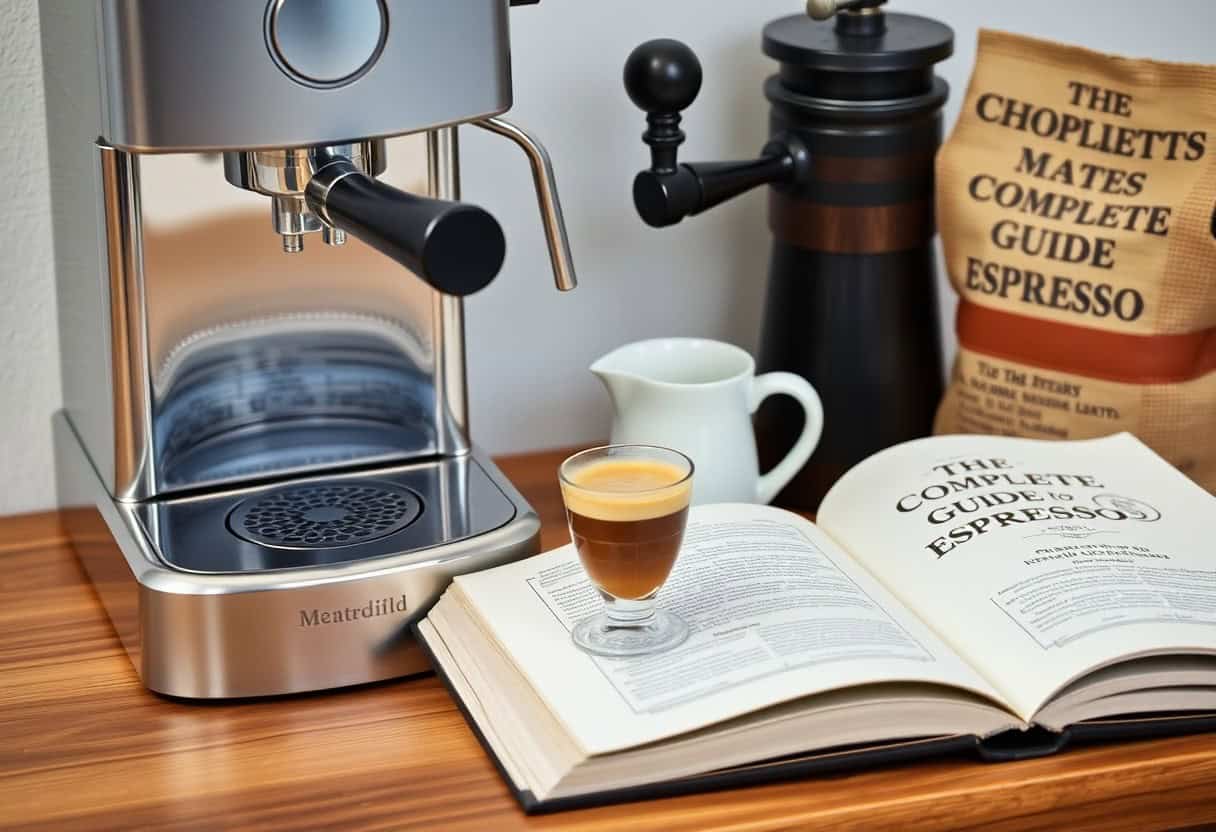
TL;DR — Espresso machines: Espresso machines compared, bean choice, and the full pull walkthrough. 7 proven picks and the steps to a cafe-grade shot at home.
Table of Contents

Just one wrong grind size can turn your espresso from rich and balanced to bitter or sour in seconds. You control every variable-from machine type to bean freshness-and each decision directly impacts flavor. This guide shows you how to master the science and art behind a perfect shot, avoid common mistakes, and build consistency with every pull.
Key Takeaways:
- Espresso quality depends heavily on the machine’s ability to maintain consistent water temperature and pressure during extraction.
- Freshness of coffee beans matters-beans roasted within the past two to three weeks and ground just before brewing yield the best flavor.
- A good shot of espresso typically takes 25 to 30 seconds to pull, producing about 1 ounce of concentrated coffee with a golden crema on top.
- The grind size must match the machine and dose; too fine leads to over-extraction and bitterness, while too coarse results in weak, sour shots.
- Tamping pressure should be even and consistent-around 30 pounds of force-to ensure water flows uniformly through the coffee puck.
Understanding the Bean: Origin and Roast Profiles
Every espresso shot begins with a decision about beans-your choice shapes flavor, body, and aroma. Origin influences sweetness, acidity, and complexity, with African beans often delivering bright, fruity notes and Latin American varieties offering balanced, nutty profiles. Processing method and altitude further refine these characteristics, making bean selection a deeply personal pursuit. The
Key factors in selecting espresso-grade coffee beans
Consider these elements when choosing beans built for espresso:
- Bean density affects how evenly it grinds and extracts
- Moisture content impacts shelf life and shot consistency
- Single-origin offers distinct terroir-driven flavors
- Blends are often engineered for balanced espresso performance
The right bean matches your machine’s capabilities and your taste preferences.
Comparing roast levels: Medium vs. Dark profiles
Roast level dramatically shifts your espresso’s character. A medium roast preserves more of the bean’s original traits, highlighting acidity and floral or fruity notes, while allowing subtle sugars to develop. Dark roasts push toward bitter-sweet balance, with heavier body and pronounced chocolate or smoky tones. The
| Medium Roast | Dark Roast |
|---|---|
| Retains more origin character | Origin flavors masked by roast |
| Higher perceived acidity | Lower acidity, more bitterness |
| Lighter body, tea-like clarity | Fuller body, syrupy mouthfeel |
| Suitable for lighter, nuanced espressos | Ideal for traditional, bold shots |
Espresso Machine Types: Finding Your Perfect Match
Every espresso journey begins with choosing the right machine, and your brewing style should guide the decision. Whether you value precision, convenience, or hands-on control, there’s a machine designed to match your expectations. Understanding the differences between manual, semi-automatic, and super-automatic models helps narrow the field. Each type offers distinct advantages depending on your skill level, time commitment, and desired flavor control. After reviewing the features, you’ll be ready to make an informed choice.
| Machine Type | Best For |
| Manual Lever | Enthusiasts seeking full control |
| Semi-Automatic | Home baristas wanting consistency |
| Super-Automatic | Busy users needing speed |
| Capsule | Minimal cleanup and simplicity |
Pros and cons of manual, semi-automatic, and super-automatic machines
Manual machines offer the highest level of control, letting you adjust pressure throughout the pull, but demand significant practice. Semi-automatic models automate water delivery, balancing control with consistency, making them ideal for learning. Super-automatics grind, tamp, and brew with the push of a button, but limit customization. Assume that your preference for involvement shapes the best fit.
| Manual | Full control, low maintenance, authentic experience |
| Steep learning curve, inconsistent results if unskilled | |
| Semi-Automatic | Consistent extraction, customizable, great for growth |
| Requires grinder, more cleaning than super-automatics | |
| Super-Automatic | Fast, convenient, integrated grinder |
| Less control, higher repair risk, expensive maintenance | |
| Capsule | Fastest option, minimal cleanup |
| Limited bean choice, ongoing capsule cost |
Types of heating systems: Single boiler vs. Heat exchangers
Single boiler machines use one heating element for both brewing and steaming, requiring you to wait between functions. Heat exchanger (HX) systems allow simultaneous brewing and steaming by using a separate tube within the boiler.
This makes HX models more efficient for milk drinks. Assume that your drink preferences determine which system suits you best.
- Single Boiler: Simple design, affordable, great for black coffee lovers
- Heat Exchanger: Enables back-to-back drinks, ideal for lattes
- Thermal Block: Heats quickly, common in super-automatics
- Dual Boiler: Maximum temperature stability, professional performance
- Recovery Time: Critical for high-volume brewing
| Heating System | Key Feature |
| Single Boiler | One function at a time, budget-friendly |
| Heat Exchanger | Brew and steam simultaneously |
| Thermal Block | Fast heat-up, compact design |
| Dual Boiler | Independent boilers, superior stability |
| Step | Action & Tips |
| Dosing | Use a scale to measure 18-20g of freshly ground coffee for a double shot. Consistency here ensures balanced extraction. |
| Distribution | Evenly spread grounds in the portafilter using a WDT tool or gentle tap. This prevents channeling and promotes uniform flow. |
| Tamping | Apply 30 lbs of pressure with a level, flat tamper. An uneven tamp leads to spotty extraction and sour or bitter flavors. |
| Locking In | Insert portafilter immediately after tamping to preserve puck integrity. Delay increases dry time, affecting shot quality. |
| Start the Shot | Begin extraction within 5 seconds of locking in. Aim for a 25-30 second shot time yielding 36-40g of espresso. |
Preparing the puck: Dosing, distribution, and tamping
Your shot’s fate is sealed before water touches the coffee. Start with precise dosing-too much or too little throws off the entire balance. A digital scale removes guesswork and guarantees reproducibility. Once dosed, distribute grounds evenly to eliminate dense pockets.
You need uniformity across the puck surface. Use a distribution tool or gentle side taps to settle the coffee. When tamping, apply steady, level pressure. An angled or inconsistent tamp creates uneven water pathways, leading to under- or over-extracted zones.
Executing the pull: Timing and yield ratios
Time starts the moment espresso leaves the portafilter. Aiming for 25-30 seconds ensures optimal extraction without tipping into bitterness. Your yield should hit 1:2 ratio-18g in, 36g out. This balance delivers sweetness and clarity without harshness.
Watch the flow: it should resemble warm honey, not water. Too fast and your shot tastes sour; too slow and it turns overwhelmingly bitter. Adjust grind size first if timing is off-this is your primary control.
Yield and time work together to define quality. A 1:2 ratio in 27 seconds typically produces a well-rounded shot with layered flavors and balanced acidity. If your espresso lacks sweetness or finishes harsh, tweak your grind finer or coarser in small increments. Always change only one variable at a time to isolate its effect. Your machine’s consistency depends on your attention to these details.

Mastering Flavor and Texture
Achieving balance in your espresso means understanding how extraction shapes both flavor and mouthfeel. The ideal shot delivers a harmonious blend of sweetness, acidity, and bitterness, supported by a thick, velvety body. When done right, the texture coats your palate without feeling watery or dry. Your grind size, dose, and brew time all influence this equilibrium, making consistency key across pulls.
Small changes can dramatically shift the sensory experience. A well-extracted espresso finishes clean, with lingering notes rather than harshness or hollowness. Pay attention to how the liquid flows-too fast or too slow alters everything. Any adjustment should be made with intention and recorded for repeatability.
Identifying extraction variables: Under-extracted vs. Over-extracted
Under-extracted shots taste sour, thin, and lack sweetness because water hasn’t dissolved enough soluble compounds. You’ll notice a quick pull time-usually under 25 seconds-and a pale, patchy crema. The flavor feels sharp and incomplete, often with grainy or vegetal notes.
Over-extracted espresso runs too long, exceeding 30 seconds, resulting in a dark, bitter brew with dry astringency. The grind is likely too fine or the dose too high. Crema may appear dark and bubbly. Any imbalance here masks the bean’s origin character and ruins mouthfeel.
Pro tips for achieving silky crema and body
Use freshly roasted, high-quality beans with natural sugars intact-this boosts crema formation and sweetness. Dial in your grind size until the shot flows like warm honey, aiming for 1:2 brew ratio over 25-30 seconds. Pre-wet the puck with a quick pre-infusion to ensure even saturation.
- Keep your portafilter and group head clean to prevent channeling
- Apply consistent tamping pressure-30 pounds is ideal
- Use soft, filtered water to preserve espresso clarity and machine health
Any small inconsistency can break the balance needed for a luxurious texture.
For a truly silky body, focus on emulsifying the coffee’s natural oils through proper pressure and temperature stability. Machines with dual boilers or PID control maintain steady brew temperature, preventing spikes that degrade texture. Freshness matters-beans 7-21 days post-roast typically produce the most vibrant crema and rounded mouthfeel. Even minor tamping angles can cause uneven flow, so level distribution is non-negotiable.
- Distribute grounds evenly using a tool like a Nudge or WDT
- Ensure your machine delivers 9 bars of pressure consistently
- Serve immediately-crema begins collapsing within seconds
Any detail overlooked risks diminishing the sensory payoff.
Care and Maintenance
Daily cleaning routines for machine longevity
Wipe down the group head and portafilter after each use to prevent coffee residue from building up. Left unchecked, old oils can clog the machine and spoil your shot’s flavor. Run a blank shot-without coffee-occasionally to clear any lingering grinds. Always purge the steam wand immediately after steaming milk, then wipe it with a damp cloth to avoid milk scorching inside the tip.
Descaling and backflushing protocols
Mineral deposits from water accumulate over time and can damage internal components. Descaling every 1-3 months keeps your machine running safely and efficiently. Backflush weekly with a blind basket and cleaning detergent to clear coffee oils from the group head. Never skip these steps-they directly impact both taste and machine lifespan. For detailed instructions, check this guide on How to Make an Espresso.
Using the right descaling solution matters-some chemicals can corrode seals or valves if too harsh. Always follow your machine manufacturer’s recommendations for frequency and product type. Incorrect descaling can void warranties or cause permanent damage. Backflushing under pressure forces debris backward through the system, restoring proper water flow and pressure stability for consistent extraction.
Conclusion
Considering all points, mastering espresso requires understanding your machine, selecting fresh beans suited to your taste, and refining your technique with consistent practice.
You control the variables-grind size, dose, tamping pressure, and extraction time-and each plays a direct role in the quality of your shot.
You build skill through repetition and attention to detail. A well-pulled espresso isn’t accidental; it’s the result of your commitment to process and precision. With the right approach, you produce balanced, flavorful shots that reflect your effort and knowledge.
FAQ
Q: What type of espresso machine is best for beginners?
A: A semi-automatic espresso machine offers the best balance for beginners. It allows control over shot timing while handling water pressure automatically. Machines with built-in grinders and PID temperature control simplify the learning curve.
Entry-level models from brands like Breville or Gaggia provide consistent performance without overwhelming complexity. Start with one that has clear indicators for pressure and brew time to build confidence in technique.
Q: Does the type of coffee bean affect espresso quality?
A: Yes, the bean variety, roast profile, and freshness directly impact espresso flavor. Beans labeled as espresso blends are typically roasted to enhance body and sweetness under high pressure.
Single-origin beans can also work well, especially if they have balanced acidity and natural sugars. Always use beans roasted within the past two to three weeks and grind them just before brewing for optimal aroma and crema.
Q: How fine should espresso grounds be?
A: Espresso requires a fine grind, similar to table salt in texture. Too coarse, and the water passes through too quickly, producing a weak, sour shot. Too fine, and the puck restricts flow, leading to over-extraction and bitterness.
The ideal grind depends on the machine, bean, and dose. Adjust incrementally and evaluate shot time-aim for 25 to 30 seconds for a double shot using 18-20 grams of coffee.
Q: Why is my espresso sour or bitter?
A: Sour espresso usually means under-extraction, where water didn’t dissolve enough flavor compounds. This happens with a grind that’s too coarse, insufficient dose, or a short shot time.
Bitter espresso points to over-extraction, often from a grind that’s too fine, tamping too hard, or pulling the shot too long. Dial in variables one at a time-start with grind size-and use taste as the final guide.
Q: What is the ideal water temperature and pressure for pulling espresso?
A: Most espresso machines operate at 9 bars of pressure, which forces hot water through compacted grounds efficiently. Water temperature should be between 195°F and 205°F.
Temperatures below this range lead to under-extracted, sour shots; above, they risk burning the coffee and creating harsh flavors.
Machines with PID controllers allow precise temperature adjustments, helping maintain consistency across different beans and environments.
Key Takeaways: Espresso machines
- Pick the right espresso machines — match the brew method to the bean origin for the best cup.
- Time the espresso machines — extraction time is the single biggest flavour lever you control.
- Grind for the espresso machines — coarse for press, fine for espresso, in between for everything else.
- Water temp for espresso machines — 92-96°C is the sweet spot for full extraction without bitterness.
- Ratio drives espresso machines — 1:15 to 1:18 coffee-to-water nails balance for most brew styles.
Apply Espresso machines to Your Morning
Pick one variable to change this week and brew the espresso machines the same way for seven days. Taste, log, then adjust.
- How to Make a Caramel Macchiato at Home – The Coffeehouse-Style Method
- How to Make a Pumpkin Spice Latte Without a Syrup Bottle
- How to Make Dalgona Whipped Coffee (Without an Electric Mixer)
For deeper standards on espresso machines, see the Specialty Coffee Association.
FAQs: Espresso machines
What is the easiest espresso machines for a beginner? The French press is the gentlest start — almost impossible to over-extract, gives a full-bodied cup, and needs no special gear.
How much does espresso machines setup cost? A solid home rig starts around £80 for grinder, kettle, and one brew device — under £200 covers nearly any method short of espresso.
Does espresso machines keep overnight? Brewed coffee loses character within 30 minutes. Brew fresh, or cold-brew the night before for an iced drink the next morning.
Skip to content