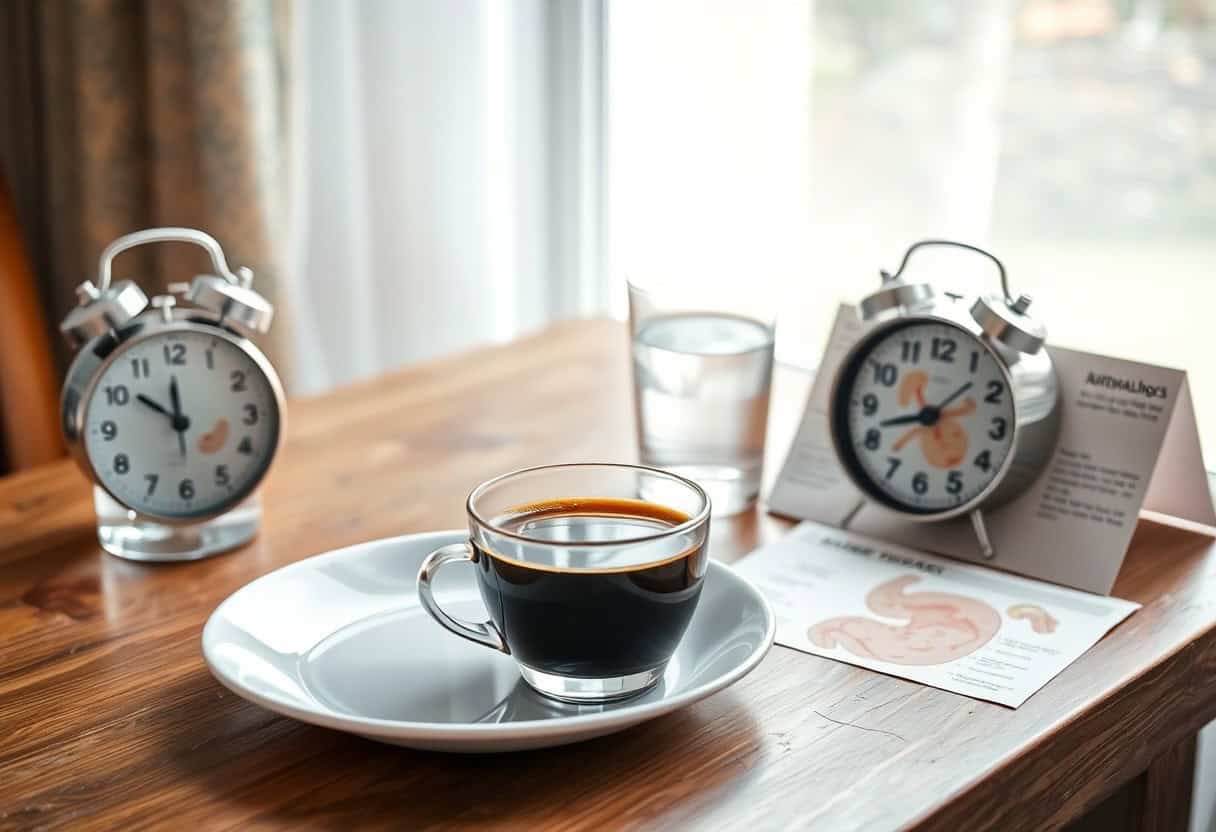
Empty Stomach Coffee is either a power move or a stomach disaster depending on your body. Most people tolerate empty stomach coffee fine, but reflux-prone drinkers pay for it. Here are 7 proven truths to know.
Table of Contents
Table of Contents
TL;DR — coffee on an empty stomach: Drinking coffee on an empty stomach can spike cortisol, irritate the gut lining, and amplify caffeine side effects. This guide breaks down what coffee on an empty stomach actually does inside the body, who reacts hardest, and the seven smart rules to drink without paying for it later.
TL;DR: Drinking coffee on an empty stomach can spike cortisol, irritate the gut, and waste caffeine on a closed-off stomach. Here are seven real effects of coffee on an empty stomach, who should genuinely avoid coffee on an empty stomach, and how to fix it with a 2-minute habit.
It’s common to reach for coffee first thing in the morning, but doing so on an empty stomach can trigger acid reflux and disrupt cortisol balance. Your body absorbs caffeine faster, leading to sharp energy spikes and crashes. While it may briefly boost alertness, long-term habits could harm digestion and stress response.
Table of Contents
Key Takeaways:
- Coffee on an empty stomach increases stomach acid production, which can lead to heartburn or irritation, especially in people with sensitive digestive systems.
- The combination of caffeine and an empty stomach may cause a rapid spike in cortisol, the stress hormone, potentially heightening feelings of anxiety or jitteriness.
- Drinking coffee before eating can reduce appetite temporarily, but this might lead to skipping breakfast, which can disrupt blood sugar balance and energy levels later in the day.
- Some individuals experience improved mental alertness from morning coffee even without food, but this effect varies widely based on metabolism and tolerance.
- Consuming coffee with a small snack or meal can help buffer its acidic and stimulant effects, making it gentler on the stomach and more sustainable for energy.
The Morning Ritual
The First Cup
You reach for your coffee before eating, drawn by habit and the promise of alertness. Acidity in the brew can irritate your empty stomach lining, potentially triggering heartburn or bloating. Caffeine also prompts a quick spike in cortisol, amplifying stress responses when your body is already in a heightened morning state.
That initial jolt of energy often fades fast, leaving you tired and craving another cup. Drinking coffee on an empty stomach may disrupt blood sugar balance, making it harder to maintain steady energy throughout the morning.
The Quiet Kitchen
Silence surrounds you as you stand in the dim light, mug in hand. This moment of solitude shapes your body’s metabolic rhythm before food ever enters the picture. Stomach acid rises in anticipation of digestion, but without food, it can erode the gastric lining over time.
You’re not just starting your day-you’re signaling your nervous system to shift into high gear.
With no food to buffer the effects, caffeine’s stimulation of gastric acid and adrenaline becomes more pronounced. Repeating this pattern daily may contribute to long-term digestive discomfort or increased anxiety. Choosing to eat even a small snack first can significantly reduce these risks while preserving the comfort of your quiet ritual.
The Acid Surge
Drinking coffee on an empty stomach triggers a rapid release of gastrin, a hormone that signals your digestive system to prepare for food. This spike can happen within minutes of your first sip, stimulating the intestines and increasing gut motility. While this may aid digestion in some, it often leads to urgency or discomfort when no food is present to process. For a deeper look at whether this habit is safe, check out this guide on Is It OK To Drink Coffee on an Empty Stomach?
Gastrin Release
Your body responds to coffee’s compounds by releasing gastrin from the stomach lining, even without food. This premature signal can cause excessive digestive activity, leading to cramping or diarrhea in sensitive individuals. The effect is stronger with darker roasts and higher caffeine levels, intensifying the chain reaction in your gut.
Hydrochloric Acid Impact
Stomach cells produce hydrochloric acid when stimulated by coffee, creating an acidic environment that’s meant to break down food. Without food to buffer it, this acid can irritate the stomach lining, potentially causing heartburn or nausea. Over time, repeated exposure may contribute to gastritis or worsen existing ulcers.
Chronic exposure to unbuffered hydrochloric acid may weaken the mucosal lining, increasing your risk for inflammation and discomfort. This is especially true if you consume coffee daily on an empty stomach, as the lining doesn’t get adequate time to recover between exposures.
The Cortisol Factor
The Natural Spike
Your body releases cortisol naturally in the morning, peaking within an hour of waking. This hormone helps you feel alert and ready for the day, working with your circadian rhythm to promote wakefulness. Drinking coffee right after rising means you’re combining external stimulation with an already high internal signal. You may not need that extra push-your system is already primed to wake up.
Disrupting the Rhythm
Caffeine on an empty stomach when cortisol is high can desensitize your body’s response over time. Your adrenal glands may start relying on coffee instead of natural cues, weakening your energy rhythm. This interference can lead to midday crashes and dependency on caffeine just to feel normal. The result? A cycle that’s hard to break.
Your body thrives on consistency, and repeatedly overriding cortisol peaks with caffeine disrupts hormonal balance. Over time, this pattern can impair your natural energy regulation, making it harder to wake up without coffee-even when well-rested. Timing your first cup 60-90 minutes after waking aligns better with your body’s chemistry and supports long-term energy stability.
Glucose and Blood
Drinking coffee on an empty stomach triggers a chain reaction in your glucose metabolism. Caffeine stimulates adrenaline release, which signals your liver to dump stored glucose into your bloodstream. This sudden rise can cause a spike in blood sugar, even without food. For some, this response is manageable, but for others-especially those with insulin resistance-it can lead to unstable energy levels and increased fat storage.
Insulin Sensitivity
Caffeine may temporarily reduce your body’s sensitivity to insulin. When you consume coffee before eating, your cells become less responsive to insulin’s signal to absorb glucose. This means your pancreas must produce more insulin to manage blood sugar, increasing strain over time. Repeated exposure to this pattern can heighten the risk of insulin resistance, a precursor to type 2 diabetes.
Glucose Response
Your body’s glucose response sharpens when coffee hits an empty stomach. Without food to slow absorption, caffeine accelerates glucose production and delays insulin action. The result? A quicker, higher spike in blood sugar followed by a crash that leaves you fatigued and craving more fuel. This rollercoaster effect undermines metabolic stability and may worsen cravings throughout the day.
Over time, frequent morning coffee without food trains your metabolism to expect rapid glucose fluctuations. This pattern can dull your body’s ability to regulate energy smoothly, making it harder to maintain focus and satiety. Chronic disruption of glucose response may contribute to long-term metabolic dysfunction, especially in predisposed individuals.
The Esophagus and Gut
Every time you sip coffee on an empty stomach, your digestive tract responds immediately.
The acidic nature of coffee triggers a chain reaction starting in the esophagus and moving through the gut, often intensifying discomfort if protective stomach contents are absent.
Without food to buffer its effects, coffee can irritate sensitive tissues and disrupt normal digestive rhythms, setting the stage for longer-term irritation.
The Sphincter Muscle
Your lower esophageal sphincter acts as a gatekeeper between the esophagus and stomach. Coffee, especially when consumed black and on an empty stomach, can cause this muscle to relax prematurely, allowing stomach acid to creep upward. This increases the risk of heartburn and acid reflux, particularly in sensitive individuals. Over time, repeated exposure may weaken sphincter function, making reflux more frequent.
Intestinal Speed
Coffee stimulates contractions in your intestines, speeding up transit time. This effect, driven by caffeine and other compounds, can lead to an urgent need to use the bathroom shortly after drinking it. While this laxative effect benefits some, it can also cause diarrhea or nutrient malabsorption when the gut moves too fast to properly absorb what it needs.
You might not realize how quickly coffee reaches your colon-sometimes in as little as four minutes. This rapid stimulation means food and fluids pass through your system before optimal nutrient extraction occurs. If you regularly drink coffee before eating, your body may struggle to absorb key vitamins and minerals over time, especially magnesium and B vitamins, due to reduced intestinal dwell time.
The Better Way
Starting your day with coffee doesn’t have to disrupt your digestion or spike your stress hormones. You can enjoy your morning brew in a way that supports energy, focus, and gut health-without the crash.
Adding Fat
Blending your coffee with a spoon of MCT oil or grass-fed butter slows caffeine absorption and reduces its acidic impact on your stomach. This simple tweak turns coffee into a more balanced source of energy.
Fat also signals your body to release satiety hormones, helping you avoid mid-morning cravings and blood sugar swings. For those skipping breakfast, this can make a meaningful difference in how you feel by 10 a.m.
The Proper Hour
Drinking coffee 60-90 minutes after waking aligns with your body’s natural cortisol rhythm. Cortisol peaks early, and caffeine too soon can amplify stress responses or blunt this hormone’s effectiveness.
Waiting gives your body time to wake up naturally, making coffee a true performance enhancer-not a crutch.
Your adrenal glands respond best when caffeine isn’t layered on top of already high stress hormones. By delaying your first sip, you protect your nervous system and improve long-term energy resilience. This small shift can reduce jitteriness, improve focus, and support balanced mood throughout the morning.
To wrap up
Summing up, drinking coffee on an empty stomach triggers acid production that can irritate your digestive tract, leading to discomfort or bloating.
Your body responds to caffeine quickly, often increasing cortisol and potentially causing jitters or anxiety. Over time, this habit may disrupt your metabolism and affect nutrient absorption.
You’re better off pairing coffee with food to buffer its effects and maintain steady energy. What you consume-and when-shapes how your body functions. Making mindful choices supports long-term well-being.
Key Takeaways: Coffee On An Empty Stomach
- Drinking coffee on an empty stomach can double morning cortisol release in some people.
- Most healthy adults tolerate coffee on an empty stomach fine — but reflux sufferers should switch order.
- If you ever feel jittery, it is the coffee on an empty stomach hitting an empty system faster.
- A small banana or yogurt before coffee on an empty stomach blunts the absorption curve significantly.
- Habitual coffee on an empty stomach drinkers see fewer effects due to caffeine tolerance.
Apply What You Know About Coffee On An Empty Stomach
Now that you understand coffee on an empty stomach, brew smarter with these guides.
- Anxiety, cortisol and coffee on an empty stomach
- Gut health and coffee on an empty stomach
- Metabolism and coffee on an empty stomach
For the authoritative industry position on coffee on an empty stomach, see the Specialty Coffee Association.
Key Takeaways: Coffee on an Empty Stomach
- Coffee on an Empty Stomach spikes cortisol — readings climb sharply when you skip breakfast.
- Coffee on an Empty Stomach irritates the gut — chlorogenic acids hit unbuffered stomach lining hard.
- Sensitive bodies feel coffee on an empty stomach fastest — anxious or low-sleep people react worst.
- Pair coffee on an empty stomach with food — even a small protein-led bite blunts the spike.
- Time coffee on an empty stomach after 9:30am — natural cortisol peak fades; better caffeine ROI.
Apply Coffee on an Empty Stomach Rules to Your Morning
Start with timing and food pairing before swapping cups when coffee on an empty stomach hits hard.
- why coffee on an empty stomach worsens anxiety and jitters
- daily caffeine limit when drinking coffee on an empty stomach
- coffee on an empty stomach and blood pressure spikes
For independent industry guidance, see the Specialty Coffee Association.
Key Takeaways: Empty Stomach Coffee
- Cortisol with empty stomach coffee is already peaking — caffeine adds little until later in the morning.
- Reflux risk on empty stomach coffee is real if you have GERD or sensitive lining.
- Energy spike from empty stomach coffee hits faster but the crash is sharper.
- Hydration before empty stomach coffee — water first, coffee second, breakfast within an hour.
- Skip empty stomach coffee if you wake up nauseous or jittery — it’s the body’s signal.
Apply This Routine Today
The smarter way around empty stomach coffee is 60-90 minutes after waking — past peak cortisol, after a glass of water, ideally with food.
- Coffee and brain health — context for empty stomach coffee
- Cold brew is gentler than empty stomach coffee on espresso
- Coffee for diabetes — separate from empty stomach coffee
For authoritative coffee science, see the Specialty Coffee Association.
FAQs: Empty Stomach Coffee
Q: What happens to your stomach when you drink coffee on an empty stomach?
A: Drinking coffee on an empty stomach triggers the production of hydrochloric acid to digest the beverage, even though there’s no food present.
This excess acid can irritate the stomach lining, leading to discomfort, bloating, or heartburn in some people.
The acidic nature of coffee, especially when consumed without food to buffer it, may also disrupt the natural balance of the digestive tract.
Q: Can coffee on an empty stomach affect your energy levels?
A: Yes, coffee on an empty stomach can cause a rapid spike in cortisol, the stress hormone that helps regulate alertness.
Since cortisol levels are already naturally high in the morning, adding caffeine can overstimulate the body, leading to a sharper crash later. This may result in increased jitteriness, anxiety, or fatigue a few hours after consumption.
Q: Does drinking coffee before eating impact nutrient absorption?
A: Coffee contains compounds like tannins that can interfere with the absorption of certain minerals, such as iron and calcium.
When consumed on an empty stomach, these compounds enter the digestive system directly, increasing the chance of reduced nutrient uptake if coffee is followed closely by a meal.
This effect is more pronounced in individuals with existing deficiencies or those who drink coffee with breakfast.
Q: Is it harmful to drink black coffee first thing in the morning?
A: For many people, an occasional cup of black coffee before eating is not harmful.
However, regular consumption on an empty stomach may contribute to gastrointestinal issues over time, such as acid reflux or gastritis, especially in sensitive individuals.
Those with a history of ulcers or irritable bowel syndrome might notice worsened symptoms and should consider having a small snack before their morning coffee.
Q: What can you do to enjoy coffee without upsetting your stomach?
A: Eating a light snack like a banana, toast, or yogurt before drinking coffee helps neutralize stomach acid and reduces irritation. Choosing lower-acid coffee varieties, such as dark roasts or cold brew, can also make a difference.
Limiting the amount of coffee consumed in the morning and avoiding drinking it too quickly may further prevent discomfort.