AI disclosure: this content, including any imagery, was artificially generated.
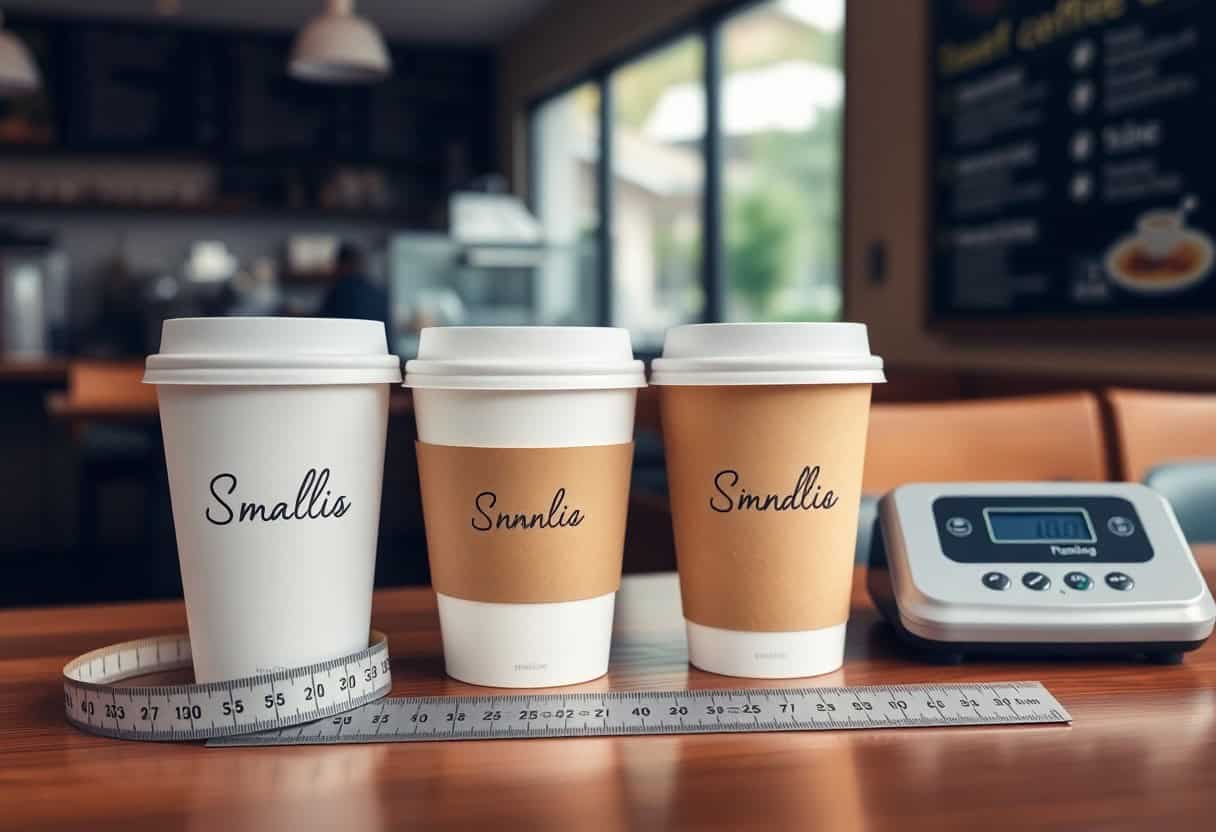
TL;DR: Coffee shop drink sizes are confusing on purpose. This guide compares 7 sizes across the big chains so you know exactly when a “large” drink size is genuinely large — and when you are just paying more for ice.
Table of Contents
Just because a coffee shop calls a drink “large” doesn’t mean it’s the biggest option available. Size labels vary wildly between chains, with some “large” drinks holding less than a competitor’s medium. You could be paying more for less volume, especially at major brands where naming isn’t standardized. Knowing the actual ounces helps you make smarter, more satisfying choices.
Key Takeaways:
- Coffee shop “large” sizes vary widely between chains, with some large drinks holding less than another brand’s medium.
- Starbucks’ “grande” is actually their medium size, which can confuse customers expecting large to mean the biggest option.
- At Dunkin’, a large hot coffee is 20 ounces, while at Starbucks, a large (venti) hot coffee is 20 ounces too-but their cold venti is 24 ounces.
- Some regional or independent coffee shops offer larger actual volumes for a “large” than national chains, often at a better value.
- Always check the exact ounce measurement when ordering, since naming conventions like “large” are inconsistent and not standardized across the industry.
Drink Sizes: The Great Ounce Deception
Most coffee chains don’t measure drink sizes by standard volume-instead, they rely on visual cues and cup shape to influence your perception. What you think is a large may actually hold far less than advertised, especially when the cup tapers dramatically at the top. This design subtly tricks your eye into believing it’s fuller than it really is, making portion distortion a common, often unnoticed, issue.
The Illusion of the Tapered Cup
Height often replaces volume in coffee cup design. A tall, narrow cup appears larger than a shorter, wider one-even if both hold the same amount. Your brain equates height with quantity, letting chains serve less liquid while still marketing it as a generous size. This optical trick is intentional, maximizing profit without technically misleading on paper.
Standard Measurements vs. Reality
Industry standards define a large coffee as 16 ounces, yet many national chains label 12-ounce drinks as “large.” You’re paying premium pricing for less liquid than expected. This gap between labeling and actual volume is not regulated, leaving room for misleading marketing. Always check the real ounce count before assuming you’re getting more.
What makes this discrepancy dangerous is its consistency across major brands. Even if you switch cafes, the pattern repeats-“large” becomes a flexible term, not a fixed measure. Knowing the true volume empowers you to make cost-effective, informed choices and avoid paying more for less.
Chains and Their Liquid Lies
Every coffee chain uses its own language to describe size, but few deliver on the promise of volume. What one brand calls a large, another brands as medium, creating confusion with every order.
You’re not imagining it-your grande at one shop might be smaller than a tall elsewhere. These inconsistent labels let chains make you feel like you’re upgrading, even when you’re not.
The Seattle Giant Naming Scheme
Starbucks redefined coffee sizing with its Italian-inspired names, but the logic behind them is anything but authentic. A “grande” sounds impressive, yet holds just 16 ounces-less than many competitors’ large. This naming masks modest volumes behind bold terms, making you pay more for the illusion of abundance.
Donut Shops and the Overflowing Foam
Dunkin’ and similar donut chains often serve lattes with excessive foam, reducing actual liquid coffee. A 20-ounce cup may contain only 14 ounces of drinkable espresso and milk. The rest is airy fluff you’re paying for by the ounce.
These foam-heavy pours inflate cup size without increasing value. You expect volume, but get froth instead. Chains exploit visual fullness, banking on you not measuring what’s inside. Your large isn’t large-it’s engineered to look full while delivering less.
Behind the counter, baristas are trained to pull short shots and over-foam milk, especially during rush hours. This speeds up service and cuts costs, but it means your extra dollar for a large often buys little more than air.
When foam rises to the brim, you’re left with a weaker, smaller drink than the cup suggests.
The Physics of Ice Displacement
Ice takes up space-space that could otherwise be filled with your actual drink. When you order an iced coffee, the cubes at the bottom displace liquid volume, meaning you’re often paying for water in solid form instead of caffeine. A tall iced drink might start with only 6 ounces of liquid in a 12-ounce cup, leaving half your purchase as frozen filler. This becomes especially costly when premium ingredients are diluted by design.
How Frozen Water Steals Your Caffeine
Each ice cube you see is a tiny thief, reducing the amount of coffee you actually consume. As the ice melts, your drink becomes weaker, not stronger. You paid for bold flavor and a caffeine kick, but end up with watered-down results by the last sip. Cold brew, often served over ice without concentration adjustments, suffers the most from this silent dilution.
Cold Brew vs. Iced Latte Volume
Cold brew typically uses a higher coffee-to-water ratio when brewed, but that strength vanishes if poured over too much ice. An iced latte, made with espresso and milk, starts with less liquid but gains volume from steamed milk, giving more consistent fill. The real difference lies in how each is built: cold brew relies on immersion strength, while iced lattes depend on concentrated shots.
Understanding this helps you choose wisely. If the barista uses a standard ice fill, your cold brew may lose potency fast, while the iced latte maintains richness longer. Always ask for less ice or extra shots if you want strength that lasts from first to last sip.
European Standards vs. American Ambition
Europe measures coffee in moments, not ounces. In Italy, a proper espresso is a concentrated ritual-typically 25-30ml-served in a small ceramic cup meant to be consumed in one swift pull. This tradition prioritizes quality over quantity, where even a “large” coffee means little more than a double shot with a splash of steamed milk. You’re not paying for volume; you’re paying for precision.
The Traditional Italian Espresso Scale
Italy’s coffee culture runs on simplicity and consistency. A standard espresso is about one ounce, while a *doppio* doubles that. Anything larger, like a *caffè americano* or *macchiato*, still stays under 8 ounces, preserving the drink’s strength and character. You won’t find “venti” or “grande” labels here-just a quiet expectation of excellence in every small serving.
The Super-Size Evolution
America redefined coffee as fuel, not ritual. Chains like Starbucks introduced sizes that dwarf European norms-starting at 12 ounces and climbing to 31. This shift turned coffee into a volume game, where “large” often means over 20 ounces of diluted brew and sweetened milk. You’re no longer sipping; you’re consuming by the quart.
Size inflation didn’t just change cups-it changed expectations. What was once a 6-ounce standard in the U.S. is now considered small. You’re now more likely to see iced drinks in 48-ounce vessels, blurring the line between beverage and meal replacement. This expansion reflects a cultural appetite for more-regardless of taste or tradition.
The Economic Ratio of Cents to Sips
Price per ounce often reveals what marketing hides. When you compare coffee shop drink sizes, the math shows that larger isn’t always cheaper per sip. Many chains charge disproportionately more for the jump from medium to large, eroding any real savings. You’re paying not just for volume, but for convenience and temptation.
Calculating Value per Fluid Ounce
Size labels like “grande” or “venti” don’t reflect consistent volume increases across brands. You need to divide the price by fluid ounces to see true cost. A 16-ounce drink for $3.50 offers better value than a 24-ounce at $5.00, despite sounding like a bargain. Always check the numbers-marketing thrives on assumptions.
The Diminishing Returns of the Venti
Venti drinks often cost nearly as much as a meal side. You pay a premium for that extra 8 ounces, but the per-ounce savings shrink or disappear. Some venti options cost only 10% more in volume but 25% more in price. That’s not value-it’s psychology.
Baristas aren’t misleading you; the cup just gets wider, not smarter. Your thirst rarely scales linearly with size, so that last third often goes to waste. You’re not just overpaying-you’re over-serving.
What many don’t realize is that the venti size was designed to boost profit margins, not hydration. Chains use it as a psychological anchor, making the grande seem like a reasonable compromise. This pricing nudge pushes you toward higher revenue items without improving satisfaction. The biggest size rarely rewards you fairly for your spend.
The Sugar Trap in Larger Vessels
Larger drinks come with more than extra caffeine-they bring hidden sugar. Sweetened beverages scale syrup pumps with size, so a venti mocha can pack over 60 grams of sugar. You might think you’re just getting more coffee, but you’re really getting a dessert in disguise.
Even “light” versions often keep full sugar levels, just diluted. Your body responds to total sugar, not concentration. Choosing bigger can mean exceeding daily recommendations in a single cup.
What feels like a treat can quickly become a health liability. That extra pump of syrup in a large isn’t optional-it’s automatic. You’re consuming more sugar without consent, simply because the cup is taller. Awareness is your best defense against this silent overload.
Consumer Tactics at the Counter
You can gain real control over your order by understanding how coffee shops present their sizes. Chains often use proprietary names like “Grande” or “Venti” to obscure actual volumes, making comparison difficult. By asking for exact ounce measurements, you sidestep marketing language and access transparent, factual data. A quick check might reveal that one shop’s “large” holds less than another’s “medium.” For deeper insights, explore this Coffee shop drink size comparison discussion to see how others decode these differences in real time.
Decoding the Secret Menu Dimensions
Baristas often know sizes not listed on the menu board, especially for off-menu or custom drinks.
You can access more accurate volumes by requesting the technical specs behind terms like “tall” or “short.” These hidden numbers reveal that some “large” options are only marginally bigger than medium.
Understanding these unadvertised measurements puts real power in your hands when comparing value. Don’t assume branding reflects volume-always verify. A “Venti” may sound grand, but it could be just 20% more than a “Grande,” not worth the extra cost.
Questions to Ask Your Barista
Start by asking, “How many ounces is your largest size?” This cuts through branding and gives you measurable data. Follow up with, “Does that include room for cream or lid space?” since some cups are filled below capacity by design.
You should also inquire whether size upgrades change ingredient ratios. Sometimes, a larger drink just means more milk, not more espresso. Getting these answers ensures you’re paying for what you actually want, not just empty volume.
Knowing what to ask transforms a routine order into an informed decision. Baristas are trained on portion standards and can clarify discrepancies between perceived and actual size.
This simple dialogue protects you from overpaying for underfilled promises, making every dollar stretch further in your daily coffee ritual.
The Weight Factor in Paper vs. Plastic
Disposable cup material affects your drink’s total weight, which can hint at actual liquid volume. Paper cups often feel lighter than plastic ones, even when holding the same amount, due to density differences.
Hefting your drink might reveal discrepancies-a noticeably lighter “large” could mean less product. While not precise, this tactile clue adds another layer to your size assessment, especially when comparing across shops.
Weight differences between paper and plastic cups can mislead your perception of portion size. A heavy plastic cup might feel more substantial, tricking you into thinking you’re getting more.
Stay focused on fluid ounces, not container mass, to avoid being misled by material illusions.

To wrap up
Now you understand that coffee shop drink sizes vary widely between chains, and a “large” at one place may be smaller than a “medium” elsewhere.
Size labels like small, medium, and large are not standardized, so you should check actual ounce measurements before ordering. This helps you make informed choices based on your needs and value.
Always consider the actual volume, not just the name of the size.
Key Takeaways: Drink Sizes
- Names are marketing — coffee shop drink sizes rarely match cup volume across chains.
- Large is relative — one chain’s large drink size is another’s medium.
- Price per ounce matters — compare drink sizes by volume, not by name.
- Iced drinks shrink — ice cuts the real liquid in larger drink sizes.
- Know your chain — memorise the drink sizes you order most to avoid overpaying.
Order the Right Drink Sizes Every Time
Once you understand drink sizes, the rest of your coffee order gets easier. Keep learning with these guides.
- The complete guide to coffee brewing methods
- Every type of coffee drink explained
- The fair trade coffee guide
For industry standards on coffee preparation and serving, see the Specialty Coffee Association.
FAQs: Drink Sizes
Q: What are the standard drink sizes at major coffee chains like Starbucks, Dunkin’, and McDonald’s?
A: Starbucks labels its sizes as Tall (12 oz), Grande (16 oz), Venti (20 oz for hot, 24 oz for cold), and Trenta (31 oz). Dunkin’ uses Small (10 oz), Medium (14 oz), Large (20 oz), and Extra Large (24 oz).
McDonald’s offers Small (12 oz), Medium (16 oz), and Large (21 oz). The naming and volume vary significantly between chains, so a “Large” at one place may be smaller than a “Medium” at another.
Q: Why does a “Large” coffee at Starbucks (Venti) hold less than a “Large” at McDonald’s?
A: Starbucks uses Italian-inspired size names, and their Venti hot drink is 20 oz, while their cold Venti is 24 oz. McDonald’s Large is 21 oz, making it slightly bigger than Starbucks’ hot Venti but smaller than the cold version.
The difference comes from each company’s branding strategy and target customer preferences. Starbucks prioritizes distinct naming and drink customization, while McDonald’s aligns more closely with standard U.S. cup measurements.
Q: Is the largest available size always the best value per ounce?
A: Not always. While larger sizes often reduce the cost per ounce, the discount isn’t consistent across all chains. For example, at Dunkin’, stepping from Large to Extra Large adds 4 oz but may only cost 30-50 cents more, offering good value.
At Starbucks, the jump from Venti to Trenta (31 oz) is only available for select cold drinks and may not save much per ounce. Customers should calculate price per fluid ounce to compare true value.
Q: Do all coffee shops offer the same volume for “Medium” and “Large” drinks?
A: No. A Medium at Starbucks (Grande) is 16 oz, while a Medium at Dunkin’ is 14 oz and at McDonald’s it’s also 16 oz. A Large at Dunkin’ is 20 oz, but at McDonald’s it’s 21 oz. These small differences can add up, especially for regular customers.
The lack of industry-wide standards means size labels are more about branding than consistency.
Q: Can the definition of “Large” be misleading for customers?
A: Yes. Because coffee chains use different naming systems and volumes, a “Large” can mean 20 oz at one place and 21 oz or even 24 oz at another. Customers expecting a standard size may be surprised.
For instance, ordering a “Large” iced coffee at Starbucks gets you 24 oz (Venti), but the same order at Dunkin’ gives you 20 oz. The labels don’t reflect uniform volumes, so it pays to know the actual ounces behind the names.