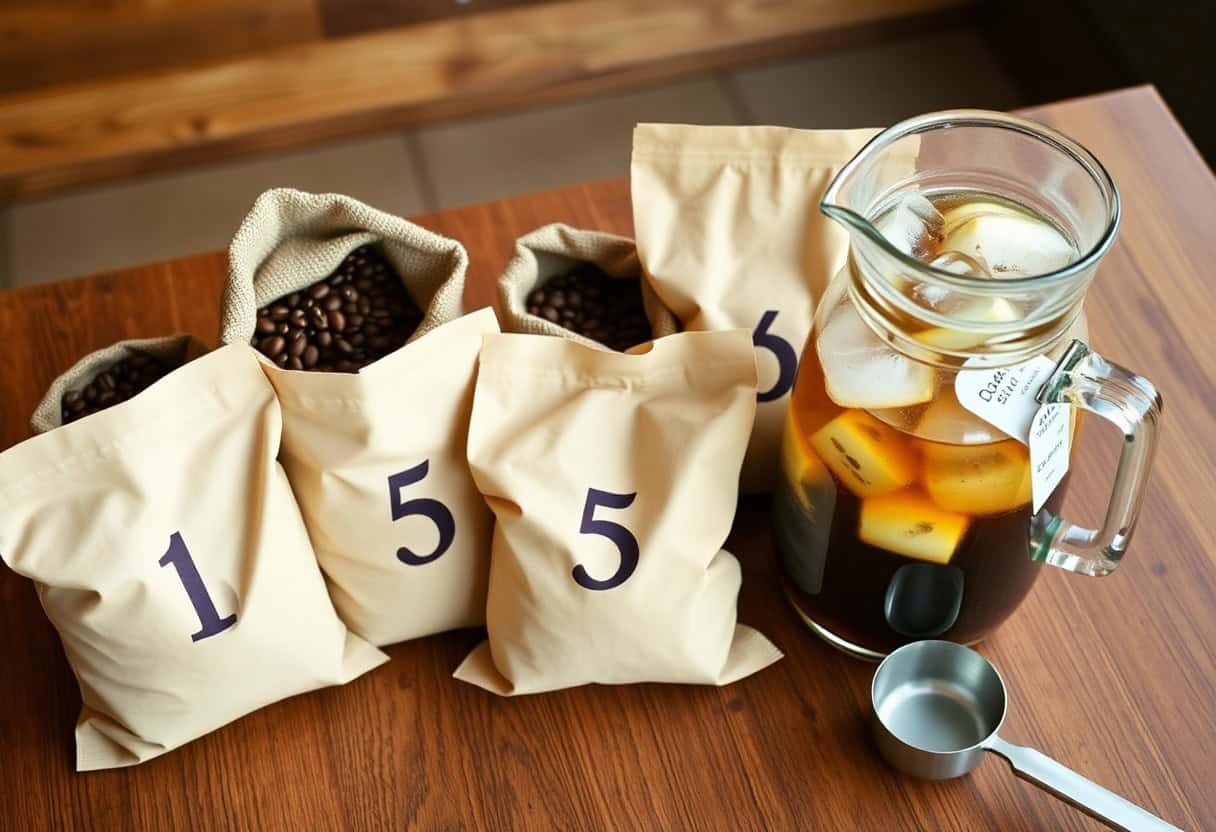
TL;DR: The best cold brew coffee beans are smooth, low-acid and chocolatey. This guide ranks top cold brew coffee beans by flavor and value so you can brew the perfect batch.
Cold Brew Coffee Beans: Table of Contents
Over 60% of cold brew lovers choose the wrong beans, dulling flavor and wasting money. You need beans that deliver smooth, rich taste without bitterness and offer real value per ounce. This guide ranks top picks based on extraction performance, roast profile, and cost efficiency-so your brew is always bold, balanced, and affordable.
Key Takeaways:
- Light to medium roast beans often deliver brighter, more nuanced flavors in cold brew, challenging the assumption that dark roasts are always best.
- Single-origin beans from Ethiopia and Colombia tend to offer clean, fruity, or floral notes that stand out in slow-steeped preparations.
- Pre-ground beans marketed specifically for cold brew can offer convenience and consistent extraction, but freshly ground whole beans generally provide superior flavor.
- Value isn’t just about price-some mid-range beans outperform expensive specialty options by balancing rich flavor with affordability.
- Beans labeled as “smooth” or “low acidity” typically produce a mellow, easy-drinking cold brew, ideal for those sensitive to bitterness.
The Criteria for a Good Bean
Flavor Profile and Roast Level
You’ll want to choose beans that deliver a smooth, balanced taste when steeped for long periods. Cold brew extracts flavor slowly, so beans with inherent sweetness, chocolatey notes, or nutty undertones tend to shine. Dark roasts are popular for cold brew because they offer bold body and low acidity, but medium roasts can provide more complexity without bitterness. Avoid light roasts unless they’re specifically balanced for cold extraction-they often lack depth and can taste grassy or sour after 12+ hours in cold water.
Origin and Bean Type
Origin plays a major role in how your cold brew will taste. Beans from Brazil or Sumatra often bring earthy, chocolate-forward notes that stand up well to ice. Ethiopian beans might add floral or fruity hints, which can be refreshing but risk becoming muted during long steeping. Arabica beans are generally preferred for their cleaner, more nuanced flavor, though some blends include robusta for extra caffeine and crema-like texture. You’ll need to decide whether you want a single-origin bean for distinct character or a blend for consistency and balance.
Grind Size and Freshness
Even the best beans won’t perform well if they’re stale or ground incorrectly. Cold brew requires a coarse grind to prevent over-extraction and sludge. If the particles are too fine, your brew will be bitter and difficult to filter. Freshly ground beans-used within two weeks of roasting-deliver the most vibrant flavor. Pre-ground coffee loses aromatic compounds quickly, so buying whole bean and grinding just before brewing makes a noticeable difference. Check roast dates on packaging; anything without one should raise a red flag.
Value and Accessibility
You don’t need to spend $30 per pound to make excellent cold brew. Many mid-range beans offer outstanding flavor and consistency without the boutique markup. Look for brands that are transparent about sourcing, roast dates, and grind options. Subscription models or bulk purchases can lower cost per cup significantly. At the same time, avoid the cheapest supermarket options-these often use old, low-grade beans that result in flat, dull coffee. Your ideal pick hits the sweet spot between quality, freshness, and price.
Top Flavor Choice: African Light Roasts
Why African Light Roasts Shine in Cold Brew
You’ll notice a bright, complex profile when you use African light roasts for cold brew-something many other regions and roast levels struggle to match. The extended steeping time of cold brew softens the natural acidity of these beans, transforming what might taste sharp in a hot pour-over into a smooth, layered sip. Expect floral notes, citrus zest, and stone fruit sweetness that unfold gradually with each taste, making every glass feel like a discovery. These beans thrive in cold extraction because their delicate aromatics aren’t scorched by high heat during roasting or brewing.
Best Regions and Varietals to Try
Beans from Ethiopia’s Yirgacheffe and Sidamo regions consistently deliver the most expressive cold brews. Their heirloom varietals carry genetic diversity that translates into unpredictable but delightful flavor combinations. Washed Ethiopian beans offer clean, tea-like clarity, while natural-processed versions bring intense berry and wine-like fermentation notes. Kenyan AA beans, grown at high altitudes and processed with precision, add a juicy blackcurrant tang and a crisp finish. When identifying, look for roast dates within the past three weeks-freshness is non-negotiable for preserving these nuanced flavors.
How to Brew African Light Roasts for Maximum Impact
Grind your beans slightly coarser than you would for French press to avoid over-extraction during the 12-16 hour steep. Use a ratio of 1:8 (coffee to water) for a concentrate that holds up when diluted with ice or milk. Never skip filtering twice-first through a coarse sieve, then through a paper filter-to remove fine sediment that can mute the brightness. The result should be a luminous, aromatic brew that tastes nothing like the flat, bitter cold coffees sold at chain cafes. This is coffee that speaks-softly, elegantly, and with intention.
Best Value: South American Medium Roasts
Why South American Beans Stand Out
You’ll find that South American medium roasts consistently deliver a clean, balanced profile ideal for cold brew. Beans from Colombia, Peru, and Brazil often feature notes of milk chocolate, toasted nuts, and subtle stone fruit, creating a smooth base that doesn’t turn bitter during long steeping. The high-altitude farms and meticulous processing methods in these regions contribute to their exceptional quality at accessible price points. Unlike flashier single-origins from boutique farms, these beans are produced at scale without sacrificing consistency, making them a smart long-term choice for daily cold brew drinkers.
Affordability Without Compromise
Cost matters when you’re brewing large batches weekly, and South American roasts rarely exceed $15 per pound for top-tier quality. You’re not paying for exotic fermentation techniques or limited releases-just reliable, well-processed coffee that performs. Many roasters source directly from cooperatives in Antioquia or Minas Gerais, cutting out middlemen and passing savings to you. This transparency also means fewer ethical concerns, as fair wages and sustainable practices are increasingly standard in these regions.
Top Picks Under $13
One standout is a Colombian Huila from a mid-sized specialty roaster that clocks in at $12.50-its bright citrus lift and creamy body make it surprisingly complex for the price. Another strong contender is a Brazilian Cerrado blend with pronounced caramel sweetness and low acidity, retailing at just $11.99. Both hold up exceptionally well over 16-20 hour steeps, producing a concentrate that’s rich but never harsh. When value, flavor, and ethical sourcing align like this, you’ve found a cold brew staple that won’t drain your wallet.
Dark Roasts for Bold Extraction
Richness That Stands Up to Time
Dark roasts deliver the kind of depth that thrives in cold brew’s slow-steeped process. You’ll notice how the extended extraction pulls out bold chocolate and smoky notes without tipping into bitterness, especially when the beans are freshly ground just before brewing. These roasts often originate from regions like Sumatra or Brazil, where the terroir enhances their naturally heavy body. The oils on the surface of dark roasted beans intensify flavor saturation, giving your cold brew a velvety mouthfeel that lingers pleasantly.
Flavor Stability and Cost Efficiency
Roasting transforms the bean’s chemical structure, and in darker profiles, this means more consistent flavor over time. You won’t lose complexity even if you store your ground coffee for a few days-though whole beans always perform better. Because dark roasts are widely produced, they tend to be more affordable than specialty light or medium options, offering excellent value without sacrificing strength. This makes them ideal for daily cold brew drinkers who want bold taste without overspending.
Top Picks for Maximum Impact
When choosing a dark roast, look for beans labeled as “full city” or “French roast,” but avoid those with burnt or ashy aromas-these are signs of over-roasting that will ruin your batch. One standout option balances espresso-level intensity with subtle hints of caramel, making it a favorite among home brewers. For a curated list of reliable options, check out The Best Coffee Bean Brands for Cold Brew, which highlights roasts proven to deliver in cold water immersion. These selections consistently score high for both flavor clarity and price-to-performance ratio, so you’re not gambling on untested brands.
Grinding for the Long Soak
Why Grind Size Matters More Than You Think
Every cold brew starts with how you treat the bean before it ever meets water. The ideal extraction happens when the surface area of your grounds allows for slow, even saturation over 12 to 24 hours. Too fine a grind and you’ll pull out bitter, astringent notes; too coarse and your brew will taste thin and underdeveloped. You’re aiming for something closer to coarse sea salt-uniform and chunky, not dusty. This isn’t just preference; it’s chemistry. The extended steep time demands balance, and your grinder is the first tool shaping that outcome.
Fine Lines Between Flavor and Failure
Some home brewers try to save time by using pre-ground coffee, but pre-ground beans often skew too fine for cold brew and begin losing freshness the moment they’re milled. Oxidation starts immediately, dulling the bright, nuanced notes you paid for in those specialty beans. Even if the bag claims “cold brew blend,” you can’t control the consistency. A blade grinder introduces another risk-uneven particles that lead to uneven extraction. One sip might taste smooth and chocolatey, the next harsh and woody. For consistent results, a burr grinder set to coarse is your best ally.
Timing Is Everything-Grind Right Before Steeping
You wouldn’t pour hot water over stale grounds for a pour-over, so why do it here? Freshly ground beans preserve volatile aromatics and oils that define a rich, layered cold brew. Wait until your water is filtered and chilled, your vessel ready, then grind just before combining. This small step makes a dramatic difference in clarity and depth. If you grind too early, even by an hour, you’re surrendering flavor to the air. Treat your beans like perishables-because in flavor terms, they are.
Water and Time Ratios
The Foundation of a Balanced Cold Brew
You control the strength and clarity of your cold brew through two simple variables: water and time. Getting this balance right means the difference between a smooth, aromatic concentrate and a bitter, over-extracted mess. A standard starting point is a 1:4 coffee-to-water ratio by weight, meaning one part coffee to four parts cold, filtered water. This ratio delivers a concentrated base that you can dilute later, giving you flexibility when serving over ice or with milk.
How Long to Steep for Optimal Flavor
Time transforms coarse coffee grounds into a rich, low-acid beverage, but patience has limits. Most cold brews reach peak extraction between 12 and 18 hours at room temperature or in the refrigerator. Steeping beyond 24 hours often pulls out woody, astringent notes, especially with lighter roasts. If you’re brewing in the fridge, expect to lean toward the longer end-16 to 18 hours-since colder temperatures slow extraction.
Adjusting Ratios for Taste and Economy
Your preferred strength should guide adjustments, not rigid rules. If your brew tastes weak or thin, try increasing the coffee to a 1:3 ratio on your next batch. Conversely, if it’s too intense or muddy, scale back to 1:5. These tweaks not only refine flavor but also affect value-using more coffee per batch increases cost, so finding your ideal balance supports both taste and budget. Always weigh your ingredients for consistency; volume measurements from scoops lead to uneven results.
Room Temp vs. Cold-Only Steeping
Choosing between room temperature and refrigerated steeping changes your timeline and flavor profile. Room temp brewing extracts faster and often yields a fuller, slightly sweeter concentrate in as little as 12 hours. However, leaving grounds steeping at room temperature for more than 20 hours increases the risk of off-flavors or spoilage, particularly in humid environments. Refrigerator brewing is slower but safer for longer steeps and produces a cleaner, more delicate cup-ideal for showcasing single-origin beans.
Conclusion
So you’ve explored the top coffee beans tailored for cold brew, ranked by how they balance flavor and value. You now know that medium to dark roasts with low acidity and rich chocolate or nutty notes deliver the smoothest, most satisfying results.
Your choice should reflect both your taste preference and budget, as several affordable options perform as well as premium picks.
You don’t need the most expensive beans to make exceptional cold brew-consistency in grind size and brew time matters just as much. By selecting beans specifically suited to long, cold extraction, you ensure a drink that’s naturally sweet, smooth, and full of character.
Key Takeaways: Cold Brew Coffee Beans
- Choose cold brew coffee beans with chocolate and nutty notes for the smoothest result.
- Medium-to-dark cold brew coffee beans hold up best over a long steep.
- Low-acid cold brew coffee beans are gentler on the stomach.
- Coarse-ground cold brew coffee beans prevent a bitter, over-extracted brew.
- Freshly roasted cold brew coffee beans deliver the most flavor and value.
Apply Cold Brew Coffee Beans to Your Routine
Picking the right cold brew coffee beans is the first step to a richer, smoother cold brew.
- Arabica vs Robusta for cold brew coffee beans
- Light vs dark roast cold brew coffee beans
- Best organic cold brew coffee beans
For brewing standards, see the Specialty Coffee Association.
FAQs: Cold Brew Coffee Beans
Q: What are the best coffee beans for cold brew when balancing flavor and value?
A: The top choice for flavor and value is Lifeboost Cold Brew Organic Medium Roast. It delivers a smooth, low-acidity profile with notes of chocolate and caramel, grown at high altitudes without pesticides.
Priced moderately for its quality, it offers excellent taste without the premium cost of specialty boutique brands. Its consistency in cold brew preparation makes it a favorite among daily drinkers who want great taste and fair pricing.
Q: Is a dark roast always better for cold brew?
A: A dark roast isn’t always better for cold brew. While many dark roasts bring bold, smoky, or chocolatey notes that stand out in cold water extraction, they can sometimes become overly bitter or ashy when steeped too long.
Medium roasts often provide a more balanced flavor-retaining subtle sweetness and complexity-without overwhelming the palate.
Beans like Onyx Coffee Co.’s Bonfire Blend (medium-dark) strike a sweet spot, offering depth with clarity, making them more versatile than full dark roasts.
Q: Can I use regular grocery store coffee beans for cold brew?
A: Yes, you can use grocery store beans, but results vary widely. Store brands often blend lower-grade beans and use older stock, which leads to flat or stale flavor.
If using supermarket beans, choose a freshly roasted, 100% Arabica option with a visible roast date.
Peet’s Coffee Major Dickason’s Blend is a widely available option that performs well in cold brew due to its rich, full body and accessible price point. Freshness matters more than origin when using mass-market beans.
Q: Why do some cold brew beans emphasize low acidity?
A: Cold brew extraction naturally reduces acidity compared to hot brewing, so beans marketed for cold brew often highlight low acidity to enhance smoothness. High-acid beans can taste sharp or sour when steeped for 12-24 hours, even in cold water.
Beans like Kicking Horse Coffee Smart Ass Blend are processed to minimize acid while boosting earthy, nutty tones, resulting in a mellow, easy-drinking concentrate.
This makes them ideal for people with sensitive stomachs or those who prefer a gentler cup.
Q: How does bean origin affect cold brew flavor?
A: Origin shapes the core flavor profile of cold brew. Beans from Ethiopia often add floral or fruity hints, which can shine in lighter cold brews but may fade in long steeps.
Colombian beans bring balanced sweetness and mild citrus, making them reliable for everyday use. Brazilian beans are prized for nutty, chocolatey depth-perfect for rich, syrupy cold brew concentrates.
A blend like Stumptown’s Hair Bender combines origins to deliver layered flavor that holds up well over extended extraction, giving a consistent, satisfying result.