AI disclosure: this content, including any imagery, was artificially generated.
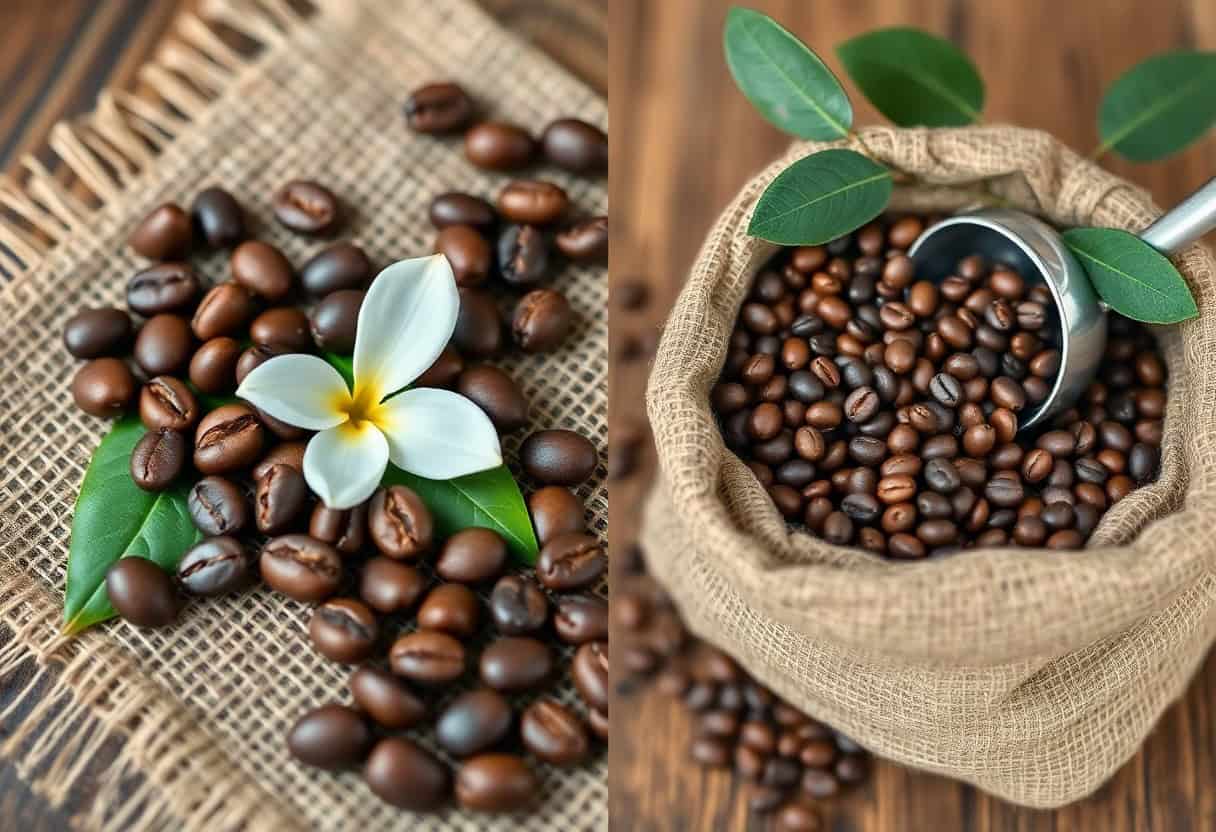
TL;DR: In the arabica vs robusta debate, arabica wins on smooth flavour while robusta brings more caffeine and crema for less money. This guide breaks down arabica vs robusta on taste, strength, price, and best use.
Many coffee drinkers don’t realize that their daily cup likely comes from one of two beans-Arabica or Robusta. You’re probably drinking Arabica if you prefer smooth, aromatic flavors, while Robusta delivers a stronger caffeine punch and bolder, more bitter notes. Each bean has distinct growing conditions, taste profiles, and price points that directly impact your experience.
Key Takeaways:
- Arabica beans are generally smoother and sweeter, with notes of sugar, fruit, and berries, making them a favorite among specialty coffee drinkers.
- Robusta beans have nearly double the caffeine of Arabica, contributing to a stronger, more bitter taste often described as earthy or woody.
- Arabica plants grow at higher altitudes and are more sensitive to climate, which increases production costs and often results in a higher market price.
- Robusta is hardier, easier to grow, and more resistant to pests, making it a more economical choice for large-scale coffee production.
- The “better” bean depends on personal taste-Arabica suits those who prefer a milder, more complex cup, while Robusta appeals to fans of bold, intense coffee often found in espresso blends.
The High Ground of the Arabica
Arabica dominates specialty coffee for a reason-its nuanced flavors and aromatic complexity set the standard. You’ll find these beans thriving at high elevations, where cooler temperatures and thinner air slow their development. This extended maturation allows the plant to concentrate sugars and organic acids, resulting in a cup with depth and character unmatched by faster-growing varieties.
Cool Air and Slow Growth
High-altitude farms, often above 600 meters, provide the ideal climate for Arabica. The cooler nights and intense sunlight during the day stress the plant just enough to slow bean development. This prolonged growth enhances flavor density, giving you a richer, more refined coffee experience.
The Profile of Acid and Sugar
Bright acidity and natural sweetness define Arabica’s taste. You’ll notice citrus, berry, or floral notes balanced by a smooth mouthfeel. The higher sugar content and lower caffeine make it more palatable for most drinkers, especially when roasted lightly to preserve its delicate compounds.
Acidity in Arabica isn’t harsh-it’s a sign of freshness and quality. When grown at elevation, the bean develops malic and citric acids that mimic the tartness of green apple or lemon. Combined with its inherent sweetness, this creates a harmonious, layered flavor profile you can taste in every sip.
The Strength of the Robusta
Robusta beans thrive where Arabica struggles, standing strong in lowland heat and humid climates across Africa and Southeast Asia. You’ll often find them grown at lower elevations, where
higher temperatures and pests would devastate more delicate crops. Unlike Arabica, Robusta plants are hardy, resistant, and productive-making them a practical choice for farmers facing tough conditions. For a deeper look at how these two species compare, check out this guide on Arabica and Robusta: the best grown coffee bean species.
Lowland Heat and Bitter Truths
Robusta flourishes in hot, humid lowlands where Arabica cannot survive. You’ll notice its beans are more resistant to disease, thanks to natural defenses built into the plant. This resilience comes at a cost-Robusta often carries a harsher, more bitter flavor profile, which some drinkers find intense. Yet this boldness is precisely what makes it ideal for certain blends and espresso shots.
The Caffeine of the Earth
Caffeine in Robusta isn’t just a stimulant-it’s a survival tool. You’re consuming nearly double the caffeine compared to Arabica, a natural pesticide that protects the plant from insects. This high concentration delivers a punchier buzz and contributes to the bean’s sharp, earthy taste.
That extra caffeine isn’t just about alertness-it shapes the entire experience. You’re not only tasting strength, but feeling it.
This natural defense mechanism translates into a brew that’s unapologetically bold, making Robusta a favorite in traditional Italian espresso and energy-focused blends.
Visual Truths in the Bean
Shape tells a story when you hold coffee beans in your palm, revealing origins and growing conditions without a single sip. Arabica beans are larger and more oval, with a pronounced central crease that runs the length of the bean. This elongated form isn’t just aesthetic-it reflects slower maturation at higher altitudes, where cooler temperatures allow sugars to develop fully.
The Oval and the Crease
Arabica’s distinctive oval shape and deep, wavy crease are visual markers of its delicate nature. You’ll notice these beans curve gently, almost like a crescent moon, with a longer, more irregular slit down the center. This crease is a fingerprint of slow growth, formed as the bean expands unevenly inside the cherry. When you inspect a batch, the asymmetry and elongation signal lower yields and more hands-on farming.
The Roundness of the Resilient
Robusta beans surprise you with their compact, nearly circular shape and a shorter, straighter crease. Their stout form reflects a hardier plant, one that thrives in harsher climates and resists pests. You’ll find these beans denser and more uniform, a physical clue to their higher caffeine content and industrial scalability.
What you might not expect is how this roundness affects roasting. Because Robusta beans are smaller and more compact, they heat more evenly but can resist flavor development. Their density traps moisture, requiring longer roasting times to unlock depth. This resilience makes them ideal for espresso blends, where body and crema matter as much as taste.
The Ritual of the Roast
Every time you crack open a bag of freshly roasted coffee, you’re encountering the result of precise thermal chemistry. The roast profile transforms raw potential into aromatic reality, unlocking sugars, acids, and vital oils that define flavor. How heat is applied-its duration and intensity-shapes whether delicate floral notes survive or give way to deeper, bolder tones.
Fire and the Essential Oils
Heat begins a delicate dance within the bean, coaxing out volatile compounds that form its aromatic soul. Arabica, with its higher concentration of vital oils, responds to lighter roasts by preserving bright, wine-like acidity and floral complexity. Too much heat too fast, and those fragile, prized aromatics vanish in smoke. You learn to respect the narrow window where fire enhances rather than destroys.
Darker Tones for the Hardier Crop
Robusta demands a different approach. Its denser structure and higher caffeine content make it more heat-resistant, allowing for longer, darker roasting without complete bitterness. You’ll notice how extended exposure brings out earthy, woody notes, muting its natural harshness. This resilience makes it ideal for styles like Italian espresso, where boldness and crema matter most.
When you roast Robusta dark, you’re not hiding flaws-you’re shaping character. The lower acidity and inherent bitterness transform into a rich, full mouthfeel that stands up to milk and sugar. Unlike Arabica, which sings in subtlety, Robusta earns its strength through endurance, emerging from the flame with a distinct, unapologetic voice.
The Economics of the Cup
Cost of the High Slopes
Arabica beans grow at higher altitudes, where cooler temperatures and thinner air slow plant development. This extended maturation increases labor and maintenance costs, as farmers must navigate steep, remote terrain to tend crops. These conditions limit yield and drive up prices, making Arabica more expensive from farm to cup. You pay not just for flavor, but for the difficulty of growing it.
Value in the Dense Harvest
Robusta thrives in lowland regions, producing dense harvests with higher yields per acre. Its resilience to pests and harsh weather reduces reliance on chemical inputs and intensive labor. You gain affordability and consistency, especially in mass-market blends and instant coffee. The plant’s efficiency translates directly into lower costs for producers-and for you.
Robusta’s high caffeine content acts as a natural pest deterrent, reducing crop loss and increasing harvest reliability. This biological advantage means fewer failed seasons and more stable supply chains. For regions with limited resources, Robusta offers economic resilience-a dependable income source even under challenging conditions. You benefit from this stability every time you brew a budget-friendly, bold cup.
The Final Verdict on Taste
Arabica and Robusta each deliver distinct sensory experiences, shaped by their genetics and growing conditions. You’ll find Arabica beans offer a smoother, more nuanced profile with floral, fruity, or chocolatey notes that unfold gradually on the palate. Robusta, in contrast, hits harder-its bold, earthy punch often accompanied by a sharper bitterness and higher caffeine. Your preference depends on whether you value complexity or intensity.
Complexity Versus Intensity
Complexity defines the Arabica experience, where subtle flavor layers emerge with every sip. You might detect hints of citrus, caramel, or even wine-like acidity, especially in high-altitude beans. These delicate notes appeal to those who savor coffee as a sensory journey. Robusta, however, trades finesse for force-its intense, woody character dominates, making it ideal for espresso blends that demand a strong backbone and rich crema.
Choosing for the Light
Light roasts highlight a bean’s inherent qualities, and here, Arabica truly shines. You’ll taste the terroir, altitude, and careful cultivation in every bright, acidic note. These beans respond beautifully to lighter heat, preserving their floral and fruity elegance. Robusta, when lightly roasted, often reveals harsher edges and less aromatic depth, limiting its appeal in this style.
When you choose light roast coffee, you’re prioritizing clarity and origin expression. Arabica’s lower bitterness and higher sugar content caramelize gracefully, enhancing sweetness and brightness. This makes it the preferred choice for specialty light roasts, where the goal is to showcase the bean’s natural sophistication rather than mask it.
To wrap up
With this in mind, you now understand that neither Arabica nor Robusta is universally better-each suits different preferences and brewing styles. Arabica offers smoother, more nuanced flavors with higher acidity, ideal if you enjoy a refined cup.
Robusta delivers boldness, higher caffeine, and a stronger crema, fitting for those who prefer intensity. Your choice depends on taste, brewing method, and how you take your coffee.
Recognizing these differences puts you in control of a more informed, satisfying coffee experience.
Key Takeaways: Arabica vs Robusta
- Flavour — in arabica vs robusta, arabica is smoother and sweeter while robusta is bolder and more bitter.
- Caffeine — robusta wins the arabica vs robusta caffeine test with nearly double the content.
- Price — arabica vs robusta pricing favours robusta, which is cheaper to grow and buy.
- Crema — for espresso, the arabica vs robusta blend gives the best crema.
- Best use — choose arabica vs robusta based on whether you want clarity (arabica) or punch (robusta).
Apply Arabica vs Robusta to Your Cup
Put the arabica vs robusta comparison to work with these guides.
For industry grading standards, see the Specialty Coffee Association.
FAQs: Arabica vs Robusta
Q: What are the main differences between Arabica and Robusta coffee beans?
A: Arabica beans come from the Coffea arabica plant and are typically grown at higher altitudes in tropical regions. They have a smoother, sweeter taste with notes of sugar, fruit, and berries, often accompanied by a wine-like acidity.
Robusta beans come from the Coffea canephora plant and are usually grown at lower elevations. They have a stronger, harsher taste, with earthy or nutty overtones and higher bitterness.
Robusta also contains nearly twice as much caffeine as Arabica, which acts as a natural pest deterrent.
Q: Why is Arabica coffee generally more expensive than Robusta?
A: Arabica plants are more difficult to grow. They require specific climate conditions, higher altitudes, and are more susceptible to pests and disease. This makes cultivation more labor-intensive and less productive per acre.
Robusta plants are hardier, grow faster, and can thrive in a wider range of environments. The higher production cost and lower yield of Arabica contribute to its higher market price.
Consumers often associate Arabica with premium quality, which also supports its pricing.
Q: Does Robusta coffee have any advantages over Arabica?
A: Yes, Robusta has several practical advantages. It contains more caffeine, which gives it a bolder flavor and a stronger stimulant effect.
This makes it a popular choice for espresso blends, where it contributes to a richer crema and a more intense kick. Robusta is also more resistant to pests and environmental stress, making it easier and cheaper to cultivate.
In some traditional preparations, like Vietnamese iced coffee or Italian dark roasts, Robusta is valued for its full body and strong character.
Q: Is Arabica always better tasting than Robusta?
A: Not necessarily. Taste is subjective and depends on personal preference and brewing method. Many specialty coffee drinkers prefer Arabica for its complexity, acidity, and aromatic profile.
However, some people enjoy the bold, punchy flavor of Robusta, especially when mixed with milk or sugar.
Low-quality Robusta can taste harsh or woody, but high-grade Robusta beans, when properly roasted and brewed, can offer a satisfying depth and intensity that Arabica doesn’t always provide.
Q: Can you tell the difference between Arabica and Robusta in a blind taste test?
A: Many people can distinguish them with practice. Arabica tends to taste smoother, slightly sweet, and more nuanced, with floral or fruity hints. Robusta often tastes more bitter, with a grainy or rubbery note and a heavier mouthfeel.
In espresso or dark roasts, the difference may be less obvious due to the roasting process masking some flavor characteristics. However, the higher bitterness and lingering aftertaste of Robusta are usually noticeable clues.
Regular coffee drinkers who pay attention to flavor profiles often learn to identify the bean type after a few comparisons.