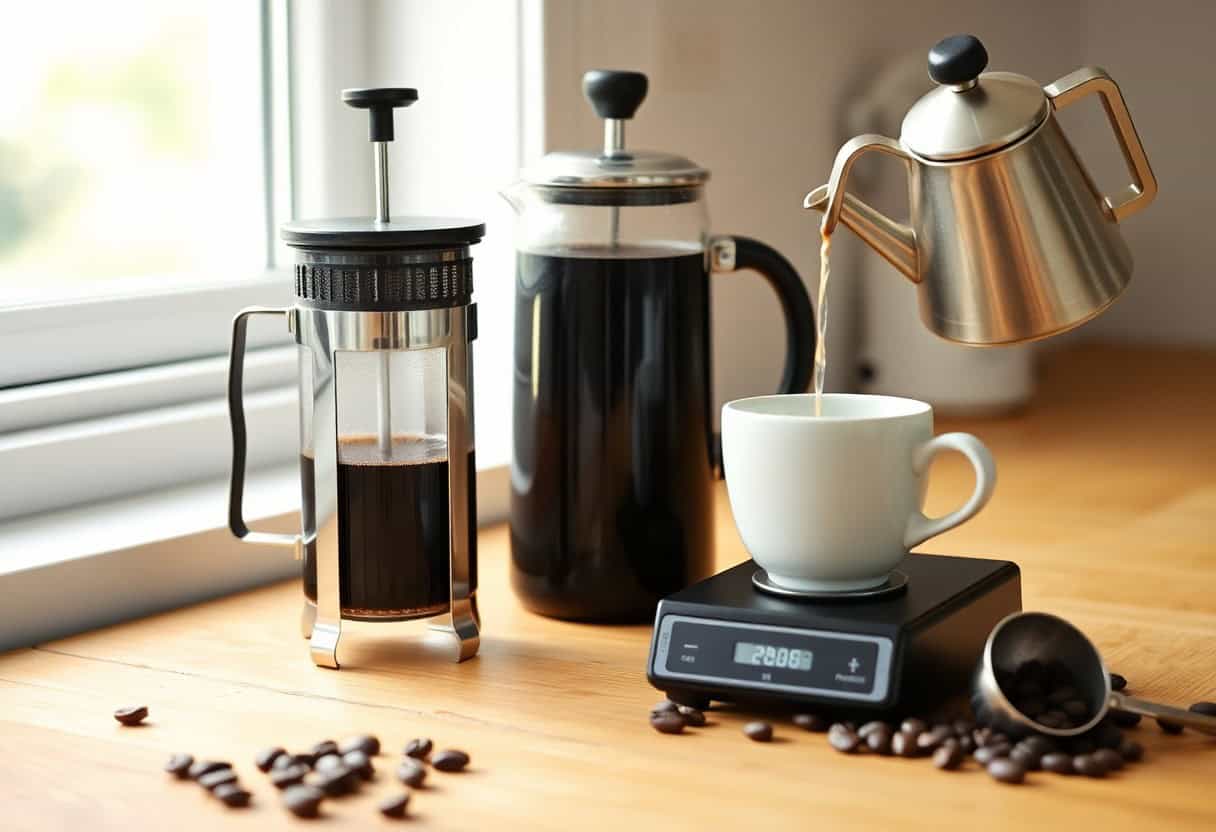
TL;DR: In this AeroPress vs French Press comparison we test flavor, body, brew time, ease, and cost so you can decide which brewer earns a spot on your counter. AeroPress vs French Press suits different routines — this guide shows which fits yours.
Table of Contents
AeroPress brewing delivers a clean, grit-free cup with low acidity, ideal if you prefer bright, nuanced flavors. The French Press offers a full-bodied, rich taste but includes sediment and more oils. Your preference for clarity or boldness decides the winner.
Key Takeaways:
- The AeroPress produces a cleaner, smoother cup of coffee due to its paper filter, which removes oils and fine sediment.
- The French Press delivers a fuller-bodied brew with more texture and richness because it uses a metal mesh filter that allows oils and small coffee particles to remain in the final cup.
- Brew time is significantly shorter with the AeroPress-typically 1 to 2 minutes-compared to the French Press, which requires about 4 minutes of steeping.
- The AeroPress is more portable and travel-friendly, made of lightweight plastic, while the French Press is bulkier and often made of glass or metal, making it better suited for home use.
- Flavor control is more precise with the AeroPress, allowing adjustments in pressure, grind size, and brewing time, whereas the French Press offers a more straightforward, consistent method with less room for fine-tuning.
The French Press: A Heavy Ritual
There’s a quiet dignity in the way the French press demands your attention. This isn’t a brew you rush. It stands solid on your counter, a vessel of ritual and patience, asking you to slow down and engage.
Every step-from boil to plunge-feels deliberate, almost meditative. You’re not just making coffee; you’re participating in a tradition that values time and texture over speed.
Metal and Glass Construction
Most French presses combine a glass beaker with a stainless steel frame and plunger. The glass allows you to watch the bloom and steep, giving visual feedback during brewing. However, glass can crack under thermal shock if you pour boiling water into a cold press. Many models now include double-walled insulation or full stainless steel bodies to prevent breakage and retain heat better.
Coarse Grounds and Hot Water
You’ll need coarse coffee grounds to avoid sludge in your cup. Fine particles slip past the mesh filter, creating bitterness and grit. Pour water just off the boil-around 200°F-and stir gently to ensure even saturation. The long steep time, usually four minutes, extracts deep, full-bodied flavor, but over-steeping leads to harshness.
Using coarse grounds isn’t just about texture-it’s important for proper filtration. The metal mesh can’t trap fine particles, so your grind size directly impacts clarity.
Pair that with water that’s too hot, and you risk scalding the coffee, pulling out unwanted bitterness. Control these two variables, and you unlock a rich, bold cup with natural oils intact-something few other methods replicate so completely.
The AeroPress: A Modern Tool
Plastic and Pressure
You hold a lightweight, durable chamber made of BPA-free plastic, designed to withstand high pressure without warping. This compact brewer uses air pressure to force hot water through coffee grounds quickly, extracting flavor in under a minute. The result is a smooth, grit-free cup with less bitterness, thanks to the short brew time and controlled environment. Its portability makes it ideal for travel or small kitchens.
Paper Filters and Clarity
Each brew relies on a paper filter that traps oils and fine particles, delivering a clean, bright cup reminiscent of pour-over coffee. Unlike metal filters, paper removes sediment and reduces acidity, giving you a crisp profile that highlights subtle notes in light and medium roasts. This clarity sets the AeroPress apart from full-immersion methods.
Because the paper absorbs coffee oils, you lose some body compared to a French press, but gain precision and cleanliness. This trade-off favors those who appreciate nuanced flavors over bold richness. The filters are inexpensive and widely available, making maintenance simple and consistent.
The Body of the BrewSilty Depth of the Press
You’ll notice the French press delivers a heavier mouthfeel, thanks to the metal filter allowing oils and fine particles to pass through. This full-bodied texture brings a rustic richness that many associate with traditional coffee. Sediment settles at the bottom, so the last sip can be gritty-something to consider if you prefer a smoother experience. For a deeper comparison, check out The Ultimate Brew Down: Aeropress vs. French Press.
Clean Finish of the Aero
AeroPress coffee feels lighter and crisper, with a paper filter capturing nearly all sediment. You’re left with a clean, bright cup that highlights subtle flavor notes often masked in fuller brews. This clarity makes it ideal for single-origin beans where nuance matters.
Its refined filtration means you avoid the sludge at the bottom, giving every sip consistent quality. That smooth finish appeals to those who value precision and purity in their daily brew.
Time and the Grind
Four Minutes of Waiting
Patience shapes your French press coffee more than you might think. Four full minutes of steeping time are vital to extract the full depth of flavor from coarse grounds. Rush this step, and you’ll taste the cost in weak, underdeveloped notes. You control the strength by how long you let it sit-no machine to rush in. This wait isn’t passive; it’s part of the ritual, part of the craft.
The Quick Plunge
Speed defines the AeroPress experience. Most brews take under two minutes, including pressing. You pour hot water, stir, and in less than a minute, you’re plunging. There’s no lingering steep-just fast, clean extraction. This method favors a finer grind and rewards precision, but leaves little room for distraction.
Once you start the plunge, resistance tells you everything. Too much pressure means the grind is too fine or the brew time too long, risking over-extraction. A smooth, steady push delivers bright, balanced coffee. Your hands stay involved from start to finish, making each cup feel personal, immediate, and in your control.
Portability and Survival
Fragile Glass at Home
Your French press likely sits comfortably on the kitchen counter, its glass carafe a quiet luxury in your daily routine. At home, the risk of breakage feels minimal-until it isn’t. One slip while pouring, and that delicate vessel shatters, turning a morning ritual into a cleanup chore. The plunger assembly, though simple, can also crack under pressure or improper handling, leaving you without coffee until you replace it.
Indestructible Gear for Travel
AeroPress thrives where durability matters most. Crafted from shatterproof plastic, it survives backpacks, campfires, and bumpy hikes without complaint. You can toss it in your luggage without fear-no fragile parts, no glass to splinter. Its compact size and lightweight build make it a favorite among hikers, travelers, and anyone who values coffee beyond the kitchen.
What sets the AeroPress apart isn’t just toughness-it’s reliability under pressure. Whether you’re brewing at 10,000 feet or in a hostel with questionable water, it delivers a clean cup every time. The plunger doubles as a seal and travel cap, and the entire unit nests into itself, creating a self-contained brewing station that fits in your palm.
The Final Choice
Every brew method speaks to a different rhythm of life, and your coffee should match yours. The French Press delivers a bold, full-bodied cup that rewards patience and presence. If you savor slow mornings and appreciate the ritual of brewing, this method aligns with a deliberate pace. The immersion process extracts rich oils and sediment, creating a deeply textured flavor-ideal for those who treat coffee as a moment, not a task.
For the Patient Man
Time works in your favor when you choose the French Press. You control every variable-grind size, water temperature, and steep time-giving you direct influence over flavor depth and clarity. Letting coffee bloom and steep for four minutes isn’t a delay; it’s part of the craft. This method respects your attention and returns it with a complex, satisfying cup that automatic machines can’t replicate.
For the Man on the Move
Speed and simplicity define your mornings, and the AeroPress was built for that. You can brew a clean, bright cup in under two minutes with minimal cleanup. Its compact design fits in a bag, making it perfect for travel or tight kitchens. With pressure-assisted brewing, it extracts intense flavor fast-without bitterness.
When your day starts before sunrise or unfolds in unpredictable bursts, the AeroPress adapts. You don’t sacrifice quality for convenience; instead, you gain consistency and portability. Whether you’re in a hotel room or hiking a trail, this device ensures your coffee remains smooth, sediment-free, and tailored to your taste-all with one lightweight tool.
Summing up
Hence, your preference between the AeroPress and French Press comes down to how you like your coffee and how much control you want over the brewing process.
The AeroPress delivers a clean, bright cup with less sediment and acidity, ideal if you enjoy subtle flavor notes and brewing on the go.
The French Press offers a fuller body and richer mouthfeel, suited for those who appreciate a bold, traditional brew. Both methods have strengths-choose based on your taste and routine.
Key Takeaways: AeroPress vs French Press
- Judge the aeropress vs french press on flavor first — the AeroPress brews a cleaner, brighter cup while the French press delivers heavier body.
- Match the aeropress vs french press to your routine — the AeroPress is faster and easier to clean; the French press shines for slow, batch brewing.
- Weigh cost in the aeropress vs french press — both are affordable, but paper-free French press brewing has no ongoing filter cost.
- Consider grind in the aeropress vs french press — the AeroPress is forgiving across grinds; the French press needs a coarse, consistent grind.
- Pick your winner in the aeropress vs french press — choose the AeroPress for clarity and travel, the French press for a full-bodied morning ritual.
Apply AeroPress vs French Press to Your Daily Brew
Once you have settled the aeropress vs french press question, dial in the rest of your setup with these guides.
- Chemex vs V60 pour-over comparison
- Nespresso vs Keurig honest comparison
- Best manual coffee grinders under $80
For brewing standards behind the aeropress vs french press verdict, see the Specialty Coffee Association.
FAQs: AeroPress vs French Press
Q: What’s the main difference between an AeroPress and a French Press?
A: The main difference lies in the brewing method and filtration. The AeroPress uses air pressure and a paper filter to extract coffee quickly, typically in under a minute. This results in a clean, smooth cup with little sediment.
The French Press relies on steeping coffee grounds in hot water for several minutes before pressing a metal mesh plunger down. This method produces a fuller-bodied coffee with more oils and fine particles in the final brew.
Q: Which one makes stronger coffee, AeroPress or French Press?
A: Strength depends on how you define it. The French Press delivers a heavier mouthfeel and more pronounced oils due to the metal filter, giving it a bolder, richer taste.
The AeroPress can produce a concentrated brew similar to espresso if used with a finer grind and shorter time, but it’s generally cleaner and less oily.
So while the French Press feels stronger in texture, the AeroPress offers more control over intensity through grind and brew time.
Q: Is the AeroPress easier to clean than the French Press?
A: Yes, the AeroPress is generally easier and faster to clean. Used grounds and the paper filter can be ejected with a quick push of the plunger, often in one compact puck. Rinsing the chamber and plunger takes seconds.
The French Press requires scooping out spent grounds, which can be messy, and the metal filter needs disassembling and thorough washing to prevent oil buildup. Glass carafes also break more easily than the AeroPress’s durable plastic.
Q: Can I use regular coffee grounds in both devices?
A: You can, but the ideal grind differs. The AeroPress works best with a fine to medium grind, similar to table salt, to allow proper pressure and extraction in its short brew time.
The French Press needs a coarse grind to prevent over-extraction and to keep fine particles from slipping through the mesh filter. Using the wrong grind can lead to bitterness or clogging, so matching the grind to the brewer improves results.
Q: Which brewer is better for travel or camping?
A: The AeroPress wins for portability. It’s lightweight, compact, made of durable plastic, and doesn’t break easily. It fits in a small bag and can brew coffee without electricity-just hot water from a camp kettle.
The French Press is bulkier, usually made of glass, and more prone to breaking. Its size and fragility make it less ideal for outdoor use, even though it brews larger volumes at once.