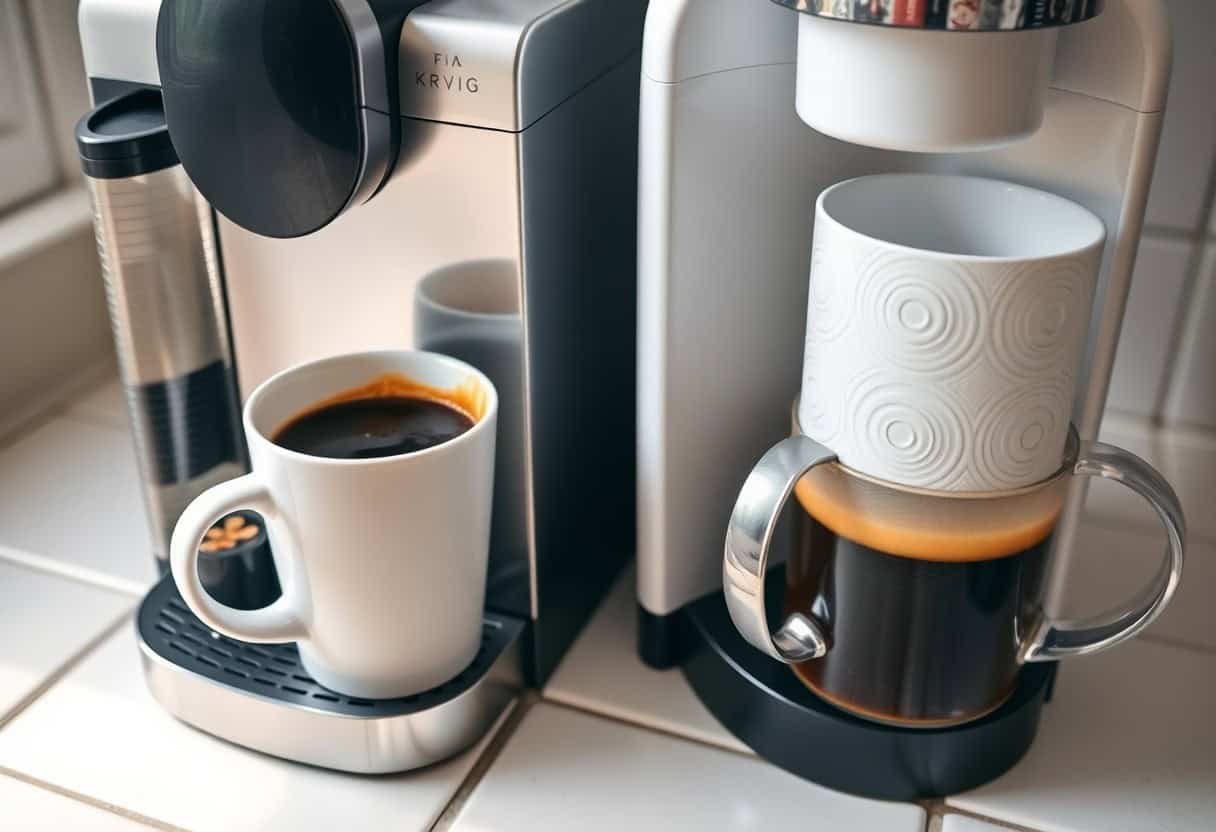
TL;DR: After six months, the Nespresso vs Keurig verdict comes down to cup quality versus variety. This Nespresso vs Keurig comparison weighs taste, cost per cup, and convenience.
Table of Contents
With six months of daily use behind you, you now see exactly how Nespresso delivers richer, café-quality espresso while Keurig prioritizes speed and variety. You’ve noticed Keurig’s plastic taste in early brews and Nespresso’s higher pod cost but superior crema. This direct experience reveals what specs alone won’t tell you.
Key Takeaways:
- Nespresso delivers noticeably better espresso quality with rich crema and café-like flavor, especially when using OriginalLine machines and authentic capsules.
- Keurig wins for convenience and variety, offering coffee, tea, hot cocoa, and specialty drinks in one machine with larger cup sizes.
- Pod cost and availability differ significantly-Nespresso capsules are more expensive but widely available, while Keurig K-Cups offer more budget-friendly and third-party options.
- Maintenance is simpler with Keurig; Nespresso machines require regular descaling and proper capsule ejection habits to avoid issues.
- For espresso lovers, Nespresso feels like a specialty appliance worth the investment. Keurig suits households wanting quick, consistent coffee with minimal fuss.
The Countertop War: Aesthetics and Physical Presence
Size and Space Considerations
You’ll notice right away that the Nespresso Vertuo takes up more real estate than you might expect. Its taller profile and wider base demand a dedicated spot, especially if you plan to store capsules nearby. The machine’s footprint is nearly 25% larger than the Keurig K-Elite, making it a tougher fit for compact kitchens or crowded countertops. The Keurig, by contrast, sits lower and narrower, tucking neatly beside a toaster or under upper cabinets. If counter space is limited, the Keurig gives you back inches you didn’t know you needed.
Design Language and Build Quality
Nespresso commits to a minimalist, European-inspired design that feels more like a luxury appliance than a coffee maker. Its matte finish, smooth curves, and magnetic drip tray lend a premium touch you can’t ignore. The build quality is solid-almost all plastic, yes, but high-grade and resistant to fingerprints. Keurig opts for a more utilitarian look: sharp edges, visible seams, and a glossy plastic shell that shows every smudge. It functions well, but it doesn’t invite admiration. If aesthetics matter to you-if you want your coffee machine to look like it belongs in a design magazine-Nespresso wins this round easily.
Visibility and Daily Use Impact
Leaving either machine out means living with its visual presence every day, and that changes how you interact with your kitchen. The Nespresso becomes a statement piece-sleek, quiet, almost sculptural when idle. Its quiet elegance makes it easier to justify leaving it on permanent display, even if you’re tight on space. The Keurig, with its digital display and busy interface, looks like a gadget first and a design object never. It screams “appliance,” which might be fine if you value function over form, but it doesn’t blend in. You’ll either love its no-nonsense look or wish you could hide it behind a cabinet door.
The Mechanics of the Morning Fix
How They Work Behind the Scenes
Every time you press the brew button on your Nespresso, a precisely measured capsule is pierced and pressurized water at 19 bars forces its way through the coffee grounds in under 30 seconds. This high-pressure extraction mimics the function of professional espresso machines, delivering a rich crema that most single-serve systems can’t replicate. You’ll notice the consistency from cup to cup-each shot pulls the same volume, temperature, and pressure, which means fewer surprises when you’re half-awake at 7 a.m.
Keurig’s system relies on a simpler, less intense process. Water passes through a K-Cup at lower pressure, typically around 1.5 to 2 bars, which means it’s technically brewing coffee, not pulling espresso. The result is a quicker drip-style cup, but you won’t get that concentrated depth or velvety texture. What you do get is speed and variety-Keurig handles everything from chai tea to hot cocoa with the same ease as coffee, making it more versatile for households with mixed drink preferences.
Maintenance and Daily Hassles
Nespresso machines require regular descaling and capsule disposal, and if you’re using the original line, you’ll need to empty the capsule container every few days. Forgetting to do so leads to a noticeable odor and potential machine error-something I learned the hard way after a long weekend away. The upside? The build quality feels solid, and the automatic shut-off after nine minutes helps conserve energy without you needing to remember a thing.
Your Keurig asks for more frequent cleaning if you use it daily. Mineral buildup clogs the needle and water lines faster, especially with hard water. I found myself descaling every month just to keep flow consistent. The exit needle also tends to get blocked by coffee grounds or tea fibers, leading to mid-brew failures that are frustrating when you’re already late. On the flip side, refilling the water reservoir is easier thanks to its large, front-facing opening, and the drip tray is simple to slide out and rinse.
Speed and Consistency
From power-on to first drop, the Nespresso Vertuo takes about 30 seconds to heat up and brew a full mug. Smaller espresso sizes are ready in under 20. Once warmed, it’s remarkably consistent in temperature and volume, shot after shot. If you value precision and a repeatable experience-especially for milk-based drinks like lattes-this machine delivers without guesswork.
Keurig’s strongest selling point is speed. Most models brew a full 12-ounce cup in under a minute, sometimes as fast as 45 seconds. That’s hard to beat when you’re in a rush. But that speed comes with trade-offs: water temperature fluctuates more between brews, and larger cups often start hot but finish lukewarm. You’ll also see more variation in extraction, especially with thicker K-Cup lids or decaf blends that don’t dissolve as evenly.
The Flavor Profile: Crema versus Diner Sludge
What Your Taste Buds Actually Experience
You know the moment you lift a Nespresso shot to your lips and see that thin, golden layer of crema glistening on top. That’s not just for show-it’s a sign of proper extraction, high pressure, and fresh, well-roasted beans. The crema adds a silky texture and a slightly sweet, aromatic complexity that transforms espresso from a caffeine delivery system into something worth savoring. Each sip carries notes of chocolate, nut, or fruit depending on the capsule, and the finish is clean, not bitter or flat.
Why Keurig Falls Flat on Extraction
Keurig’s brewing method uses far less pressure-around 2 to 3 bars compared to Nespresso’s 19-so you’re not getting espresso, and you’re definitely not getting crema. What lands in your mug is closer to what you’d find at a roadside diner: lukewarm, thin, and lacking depth. The flavor often tastes stale or one-dimensional, even with premium K-Cups. Without high pressure and precise water temperature, the oils and aromatics in coffee don’t fully release, leaving you with what can only be described as diner sludge-something to drink when you’re desperate, not when you’re discerning.
Real User Feedback Confirms the Divide
Others have noticed the gap too. In a candid discussion among home baristas comparing a Keurig or Nespresso coffee maker?, one user put it bluntly: “I switched after realizing I’d been drinking hot brown water for years.” You can read the full thread here, where dozens of users share side-by-side taste tests, bitterness complaints, and revelations about what real coffee should taste like. The consensus? Once you’ve had a properly extracted Nespresso shot, it’s hard to go back.
The Economics of the Pod Addiction
Cost Per Cup Adds Up Faster Than You Think
You might believe you’re saving time and money with single-serve pods, but the math tells a different story. A typical Nespresso OriginalLine pod costs around $0.90, while Keurig K-Cups average $0.70 each. If you drink just two cups a day, that’s over $500 a year for Nespresso and $500 for Keurig-before factoring in machine maintenance or accessories. What feels like a small daily expense becomes a significant monthly burden, especially when compared to brewing from whole beans, which can cost as little as $0.25 per cup.
Machine Prices Are Just the Entry Fee
The initial cost of the machine is only the beginning. Both Nespresso and Keurig lure buyers with sleek designs and low upfront prices-some models start under $100. But that price doesn’t reflect the long-term commitment. You’re not just buying a coffee maker; you’re signing up for a closed ecosystem where the real profits come from proprietary pods. Refills aren’t optional-they’re mandatory, and they’re priced to keep you spending year after year.
Refillable Pods Can Help, But With Trade-Offs
Reusable filters offer a way to cut costs and reduce waste, but they come with compromises. Third-party refillable pods for Keurig or Nespresso require extra effort-measuring grounds, cleaning after each use, and dealing with inconsistent extraction. Even then, the taste often falls short of fresh beans ground on demand. While refillables can reduce your spending by up to 60%, they rarely deliver the same quality or convenience as the original pods, and they may void your warranty if they cause internal damage.
The Hidden Environmental Price Tag
Every pod you toss adds to a growing waste problem. Even Nespresso’s aluminum capsules, which are technically recyclable, often end up in landfills due to poor consumer follow-through. Keurig’s plastic K-Cups, despite redesigns for recyclability, still contribute to plastic pollution. You’re not just paying in dollars-you’re paying in environmental cost, with billions of pods discarded annually. If sustainability matters to you, this ongoing footprint should weigh heavily in your decision.
The Maintenance Ritual and Hidden Grime
Daily Upkeep: What You Can’t Skip
Cleaning your machine every day isn’t optional if you want consistent taste and performance. The Nespresso requires you to wipe the capsule piercer and drip tray after each use-small tasks, but neglecting them leads to bitter coffee and mold buildup within days. Your Keurig asks for similar attention: the exit needle, K-cup holder, and lid need wiping to prevent clogs. Both machines reward routine care, but the Keurig’s wider internal pathways collect more coffee fines and mineral residue, making daily wiping even more urgent.
Descaling: The Inevitable Chore
Mineral deposits will sabotage your machine’s heating element and water flow-no matter which brand you own. The Nespresso alerts you after about 300 cups to descale, and the process takes 20 minutes with their branded solution. Your Keurig flashes a light after 150-200 brews, depending on model, and its descaling cycle runs longer-up to 45 minutes. Skipping this step risks permanent damage to the heating system, and using vinegar instead of manufacturer-approved solutions can void warranties on both machines. Stick to the guidelines, even if it feels tedious.
Hidden Mold and Bacteria Hotspots
Water sits in hidden corners, and that’s where problems start. The Keurig’s reservoir base and exit needle housing are notorious for developing black specks-that’s mold, not just dirt. You’ve likely seen it if you’ve owned one for more than a few months. The Nespresso’s sealed system reduces this risk, but the drip tray and used capsule container can grow mildew if left uncleaned. Rinse these parts weekly with warm, soapy water. Don’t assume “out of sight” means “safe”-your health depends on checking where water pools.
Long-Term Wear and Internal Buildup
After six months, internal gunk becomes unavoidable without aggressive maintenance. The Keurig’s brew chamber accumulates a thick, tarry residue from partial K-cup dissolution and coffee oils. You’ll need to disassemble parts monthly to scrub it properly. Nespresso’s aluminum capsules leave less residue, but the capsule ejection mechanism can jam if coffee grounds sneak in. Failure to clean deep inside every 6-8 weeks leads to malfunction and costly repairs. Treat your machine like a precision appliance, not a countertop toaster-because that’s what it is.
The Ecological Sin of Convenience
The Hidden Cost in Your Morning Cup
You probably didn’t think twice about tossing that used pod into the trash this morning. Each time you press brew, you’re not just making coffee-you’re generating waste designed to disappear from your mind as quickly as it does from your countertop. Nespresso’s aluminum pods are technically recyclable, but only if you rinse them, dry them, and drop them at a designated collection point. How often have you actually done that? The reality is, most end up in landfills, where aluminum takes up to 400 years to decompose.
Keurig’s Plastic Problem
Keurig’s K-Cups are mostly plastic, and even the newer “recyclable” versions require separation of the lid, filter, and pod body-a process most users skip. That means billions of plastic pods have flooded ecosystems, many ending up in oceans or incinerated, releasing toxic fumes. You might feel good about convenience, but convenience here comes at the cost of long-term environmental harm. Even if you recycle diligently, contamination and sorting errors mean a large portion still won’t be processed properly.
The Illusion of Sustainability Claims
Both brands advertise eco-friendly initiatives, but those claims often mask deeper issues. Nespresso touts its aluminum as infinitely recyclable, yet their global recycling rate remains below 30%. Keurig promises 100% recyclable pods by 2025, but current models still rely on complex multi-material construction that confuses municipal recycling systems. These are incremental changes wrapped in bold marketing, not systemic solutions. You’re being asked to believe the problem is being handled, while the burden of responsibility quietly shifts to you.
What You Can Actually Do
Switching to reusable pods is the single most effective step you can take. Stainless steel or silicone alternatives work with both machines and cut waste dramatically. Yes, they require a rinse after use, but that small effort breaks the cycle of disposability. One reusable pod can replace hundreds of single-use ones. You don’t need to abandon your machine-just rethink how you use it. The machine isn’t the enemy; the habit of thoughtless consumption is.
Final Words
Taking this into account, you’ve seen how Nespresso delivers richer, café-quality espresso with consistent temperature and pressure, ideal for coffee purists.
Keurig excels in convenience and variety, offering quick brews and broader drink options, better suited for casual drinkers. Your preference depends on what you value more: precision and taste or speed and flexibility.
After six months, the choice isn’t about which machine is better overall, but which aligns with your daily routine and coffee expectations.
Key Takeaways: Nespresso vs Keurig
- Judge nespresso vs keurig on cup quality — Nespresso pulls a richer espresso-style shot; Keurig wins on brewed-coffee variety.
- Compare nespresso vs keurig cost per cup — Nespresso pods often cost more but taste more premium.
- Weigh nespresso vs keurig variety — Keurig’s K-Cup range dwarfs Nespresso’s lineup.
- Match nespresso vs keurig to your taste — choose Nespresso for espresso drinks, Keurig for big mugs.
- Factor nespresso vs keurig upkeep — both need descaling, but pod recycling differs by brand.
Apply Nespresso vs Keurig to Your Kitchen
Once you settle the nespresso vs keurig choice, refine the rest of your setup.
- Chemex vs V60 pour-over comparison
- Best low-acid coffee for sensitive stomachs
- Best single serve coffee maker for one
For brewing quality standards behind the nespresso vs keurig verdict, see the Specialty Coffee Association.
FAQs: Nespresso vs Keurig
Q: Which machine makes better-tasting coffee, Nespresso or Keurig?
A: After six months of daily use, Nespresso consistently delivers richer, more espresso-like coffee. The extraction process uses higher pressure (19 bars), producing a crema on top and a more concentrated flavor.
Keurig brews coffee at lower pressure, resulting in a taste closer to standard drip coffee. For those who enjoy café-style espresso, lattes, or cappuccinos, Nespresso has the edge.
Keurig works better for people who prefer milder, larger cups of coffee with minimal fuss.
Q: How do the costs compare over time?
A: Nespresso pods range from $0.70 to $1.10 each, depending on the brand and blend. Keurig K-Cups are generally cheaper, averaging $0.40 to $0.80 per pod. However, Nespresso machines tend to last longer and maintain performance with less maintenance.
Keurig machines often require frequent descaling and may show wear within a year. Factoring in pod cost, machine longevity, and maintenance, Nespresso becomes competitive over time, especially if you use third-party capsules.
Q: Which system offers more drink variety?
A: Keurig wins in variety. Thousands of K-Cup flavors and brands are available, including teas, hot cocoa, and specialty drinks. You can find nearly any coffee roast or flavor imaginable.
Nespresso has fewer official options, focused mainly on espresso-style profiles. That said, many third-party brands now make Nespresso-compatible pods, expanding choices.
If you like switching between coffee, chai, and protein drinks daily, Keurig offers broader flexibility.
Q: How easy are they to clean and maintain?
A: Nespresso machines are simpler to maintain. Most models have a removable drip tray and capsule container that are easy to wash. The brewing mechanism stays clean with regular use, and descaling is needed every 3-4 months.
Keurig machines require descaling every 1-2 months due to water buildup, and the exit needle can clog if not cleaned weekly. The water reservoir and drip tray are larger but harder to dry completely, sometimes leading to mildew if neglected.
Nespresso wins for low-maintenance users.
Q: Can you make milk-based drinks like lattes with both?
A: Nespresso is designed for milk-based drinks. Most models produce real espresso, which pairs well with steamed milk. You can use a standalone milk frother or buy a machine with a built-in steam wand.
Keurig does not brew true espresso, so lattes made with K-Cup coffee lack the intensity and body. Some Keurig models have a “strong” brew setting, but the result still resembles strong drip coffee.
For authentic espresso drinks, Nespresso is the only real option between the two.