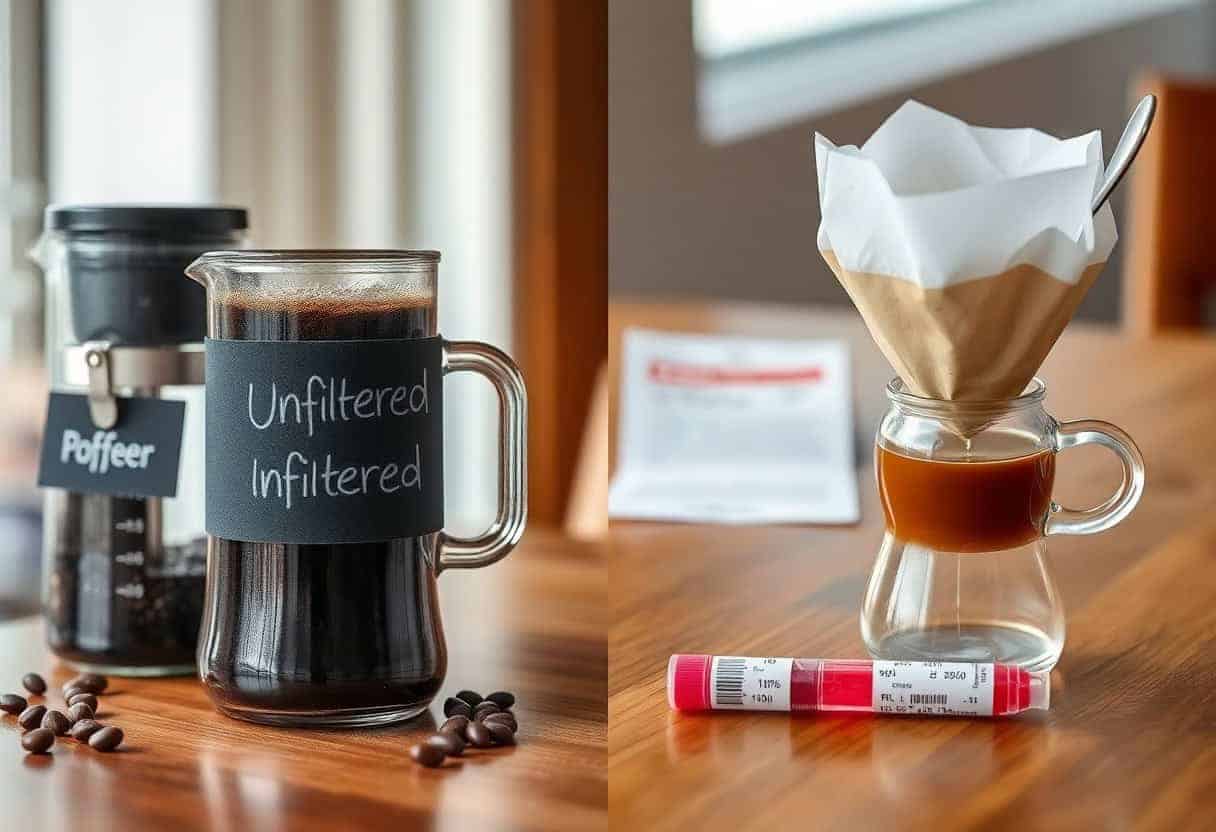
TL;DR — Coffee And Cholesterol is more about filter type than dose. Unfiltered brewing (French press, espresso) raises LDL via cafestol; paper filters block it. Here’s the practical guide to coffee and cholesterol in 2026.
Table of Contents
With every cup you brew, you may be influencing your cholesterol levels more than you think. Unfiltered coffee contains dangerous compounds like cafestol that significantly raise LDL cholesterol. Filtered methods, like drip brewing, remove these compounds effectively, making them a healthier choice for heart health.
Key Takeaways:
- Coffee itself doesn’t contain cholesterol, but certain compounds in coffee beans can affect cholesterol levels in the body.
- Unfiltered brewing methods like French press, Turkish coffee, or espresso release diterpenes such as cafestol and kahweol, which are linked to increased LDL (bad) cholesterol.
- Filtered coffee, made with paper filters, removes most of these oily compounds, making it a safer choice for heart health.
- People with high cholesterol or at risk for heart disease may benefit from choosing filtered coffee over unfiltered types.
- The brewing method matters more than the coffee bean type when it comes to cholesterol impact-how you brew is key.
The Botany of the Bean
What Lies Beneath the Surface of Your Brew
You might not realize it, but every coffee bean carries within it a complex plant chemistry that directly influences your health. Coffea arabica and Coffea canephora (commonly known as robusta) are the two primary species used in coffee production, each with distinct biochemical profiles. These plants grow as evergreen shrubs or small trees, thriving in tropical highlands between the Tropics of Cancer and Capricorn. Their seeds-the beans we roast and grind-are packed with compounds that survive brewing and make their way into your cup.
Diterpenes: The Hidden Players in Cholesterol Levels
One of the most dangerous yet overlooked components in coffee is a group of oily substances called diterpenes, specifically cafestol and kahweol. These compounds are naturally present in the lipid fraction of coffee beans and are largely responsible for the cholesterol-raising effects seen in certain brewing methods. Unfiltered techniques like French press, Turkish coffee, or boiling directly extract these oils, allowing them to enter your bloodstream. Your liver responds by reducing LDL receptors, which can lead to elevated LDL cholesterol over time.
How Processing Affects What Ends Up in Your Cup
Roasting alters the bean’s chemical structure, but it doesn’t eliminate cafestol and kahweol. The real difference comes after roasting-during brewing.
When you use a paper filter, the cellulose traps most of these diterpenes, drastically reducing their presence in your drink. Metal or cloth filters are less effective, and methods without any filter release the full spectrum of bean compounds.
This means your choice of brewing gear isn’t just about taste-it’s a direct determinant of how coffee impacts your cardiovascular health.
The Paradox of a Healthy Plant with Unhealthy Byproducts
Coffee plants evolved these oily compounds as natural defenses against pests and pathogens. In the wild, cafestol and kahweol help protect the seed. For humans, though, this protective mechanism becomes a double-edged sword. While coffee offers antioxidants and cognitive benefits, these same protective oils can disrupt your lipid metabolism. Understanding this botanical trade-off allows you to enjoy coffee’s positives while minimizing its risks through informed brewing choices.
The Filter as a Sieve of Health
How Paper Filters Trap Trouble
You may not realize it, but that simple paper filter in your drip coffee maker is doing far more than catching grounds. It acts as a physical barrier to harmful diterpenes like cafestol and kahweol, compounds naturally present in coffee oils that are strongly linked to elevated cholesterol levels. These substances are among the most potent cholesterol-raising agents ever discovered in the human diet. When you brew with a paper filter, the porous material absorbs nearly all of these oils, leaving behind a cleaner, safer cup. Studies show that paper-filtered coffee results in little to no impact on your LDL cholesterol-making it a smarter daily choice.
What Unfiltered Methods Let Through
French press, Turkish, and espresso preparations skip the paper filter, allowing coffee’s natural oils to flow freely into your mug. While this delivers a richer mouthfeel and bolder flavor, it also means you’re consuming significantly higher levels of cafestol. Research indicates that drinking just four to five cups of unfiltered coffee per day can raise total cholesterol by 6% to 8%, with LDL taking the biggest hit. Even occasional use adds up over time, especially if you have a genetic predisposition to high cholesterol or existing cardiovascular concerns. Your brewing method isn’t just about taste-it directly influences your long-term heart health.
The Surprising Role of Metal and Cloth Filters
Not all filters are created equal, and your choice of reusable metal or cloth options may not offer the same protection as paper. These materials allow more oils to pass through because their pores are larger and less absorbent.
While they reduce sediment, they don’t effectively block diterpenes. If you’re using a permanent filter, you’re likely getting a dose of cholesterol-raising compounds with every cup-closer to unfiltered brewing than you might think.
Switching to paper, even occasionally, can make a measurable difference in your lipid profile over time.
The Sedimentary Risk of Unfiltered Methods
What Lurks in Your French Press
You’ve likely enjoyed the bold, full-bodied taste of coffee brewed in a French press, but that richness comes with a hidden trade-off. Unfiltered methods like French press, Turkish, or boiled coffee allow natural oils from the beans-specifically compounds called cafestol and kahweol-to pass directly into your cup. These diterpenes are among the most potent cholesterol-elevating substances ever identified in the human diet. Without a paper filter to trap them, they enter your bloodstream and can significantly disrupt your lipid profile.
How Brewing Style Alters Health Outcomes
Each time you brew with an unfiltered method, you’re introducing compounds that signal your liver to reduce its ability to clear LDL cholesterol. Studies show daily consumption of unfiltered coffee can raise total cholesterol by 5 to 10 points, and LDL by even more. This effect isn’t subtle-it’s measurable, consistent, and reversible when you switch methods. The difference between a French press and a drip brewer isn’t just taste; it’s a direct influence on your cardiovascular risk.
Filtering as a Protective Step
Switching to filtered coffee removes up to 90% of cafestol and kahweol, drastically reducing their impact on your cholesterol. The paper filter acts as a silent guardian, capturing oily residues while letting flavor compounds through. This simple change doesn’t dull your coffee experience-it protects your long-term health. For deeper insight into how this small shift can make a meaningful difference, explore How Filtered Coffee Can Protect Your Heart and Lower … to understand the science behind cleaner brewing.
Clinical Observations of Blood Lipids
What Studies Reveal About Coffee and Cholesterol
You’ve likely heard conflicting reports about coffee’s effect on heart health, but clinical data offers clearer insight. Research consistently shows that unfiltered coffee-such as that made with a French press, Turkish method, or boiling technique-can raise total and LDL cholesterol levels by 5% to 10% over weeks of regular consumption. This isn’t a minor fluctuation; for individuals already at risk for cardiovascular disease, even small increases in LDL can amplify long-term health risks. The culprit? Two natural compounds in coffee beans: cafestol and kahweol, which are diterpenes with potent biological activity.
The Role of Brewing Method in Lipid Response
Filter type dramatically alters your exposure to these compounds. Paper filters, commonly used in drip coffee makers, effectively trap cafestol and kahweol, reducing their presence in your cup to negligible levels. When you drink filtered coffee, studies show no significant change in your cholesterol profile. In contrast, metal or cloth filters-like those in a French press or espresso machine-allow more of these oils to pass through. Clinical trials comparing daily consumption of boiled, unfiltered coffee to paper-filtered brews confirm that only the unfiltered version leads to measurable lipid disturbances.
Individual Variability and Risk Considerations
Your body’s response to these coffee compounds isn’t uniform. Some people experience sharp increases in LDL after just a few cups of unfiltered coffee, while others show minimal change. This variation may stem from genetic differences in how your liver processes fats and detoxifies substances. However, if you have a history of high cholesterol, metabolic syndrome, or heart disease, the risk isn’t worth ignoring. Regular intake of unfiltered coffee could undermine efforts to manage your lipid levels, even if you’re on medication. Switching to a filtered method is a simple, effective way to reduce this hidden dietary risk.
Espresso and the Crema Paradox
The Unique Brewing Method
Espresso stands apart from other coffee preparations due to its high-pressure extraction process. Water is forced through finely ground coffee at around 9 bars of pressure, producing a concentrated shot topped with a golden-brown layer known as crema. This method extracts oils and compounds quickly, including cafestol, a diterpene with a strong impact on cholesterol levels. Unlike drip coffee, espresso bypasses paper filtration, allowing more of these substances to remain in your cup.
Cafestol’s Hidden Role
You might assume that because espresso is served in small quantities, its effect on cholesterol is negligible. However, research shows that espresso contains moderate to high levels of cafestol, even more so than French press or boiled coffee in some cases. Each shot delivers a concentrated dose, and if you drink multiple servings daily, the cumulative effect can raise LDL cholesterol significantly over time. The absence of a paper filter is the key reason-oil-soluble compounds pass directly into the beverage.
The Crema Misconception
Many believe the crema-the rich foam on top of a well-pulled shot-is a sign of purity or healthfulness. In reality, crema is formed from emulsified coffee oils, carbon dioxide, and fine particles, and it carries a portion of the very compounds that influence cholesterol. While visually appealing and imperative to espresso’s sensory experience, crema is not an indicator of safety. Its presence means more lipids and diterpenes are suspended in your drink, increasing potential cholesterol effects.
How Your Habits Shape the Risk
Your daily routine determines whether espresso becomes a concern for your lipid profile. Drinking one or two shots a day likely poses minimal risk for most people, especially if your overall diet is balanced. But if you consume four or more shots regularly, particularly without paper-filtered coffee elsewhere in your day, you may be unintentionally elevating your LDL levels. The brewing method matters as much as the quantity-espresso’s unfiltered nature is the silent contributor.
A Balanced Perspective
Espresso isn’t inherently harmful, and its benefits-such as improved focus, antioxidant content, and metabolic stimulation-are well documented. The paradox lies in its dual nature: a small, intense beverage that delivers both pleasure and a measurable physiological trade-off. To enjoy it safely, consider moderating intake, pairing it with filtered coffee, or opting for paper-filtered espresso-style drinks when available. Awareness, not avoidance, is your best tool.
Strategies for the Health Conscious Drinker
Choose Your Brewing Method Wisely
Filtering your coffee isn’t just about taste-it directly impacts your cholesterol levels. Unfiltered methods like French press, Turkish coffee, or espresso deliver higher levels of cafestol and kahweol, two natural compounds in coffee oils strongly linked to increased LDL cholesterol. When you opt for paper-filtered brewing, such as drip coffee, these compounds are trapped in the filter, drastically reducing their presence in your cup. Switching from unfiltered to filtered methods can lower your cholesterol impact without giving up coffee altogether.
Monitor Your Daily Intake
You don’t need to eliminate coffee to protect your heart, but quantity matters. Drinking more than 4-5 cups of unfiltered coffee daily has been associated with significant LDL increases, especially in individuals already at risk for cardiovascular issues. Even with filtered coffee, moderation supports long-term health. Pay attention to how much you consume and consider capping your intake, particularly if you use brewing methods that retain more oils.
Pair Coffee with Heart-Healthy Choices
Your morning routine extends beyond the brew itself. Adding heavy cream, butter, or sugary syrups can compound the cardiovascular risks, especially when combined with unfiltered coffee. Instead, choose low-fat milk, plant-based alternatives without added sugars, or skip additives altogether. A clean cup paired with a balanced diet enhances the benefits of choosing filtered brewing and supports overall lipid health.
Know Your Body’s Response
Individual reactions to coffee vary, and genetics play a role in how your body processes cholesterol. Some people are hyper-responders to dietary compounds that affect lipid levels, meaning even moderate unfiltered coffee could pose a risk. If you have high cholesterol or a family history of heart disease, discuss your coffee habits with your healthcare provider. Getting regular lipid panels can reveal whether your current brewing method is affecting your numbers, allowing you to make informed, personalized choices.
Final Words
Considering all points, your choice of coffee brewing method directly affects cholesterol levels. Unfiltered coffee, such as that made with a French press or boiled style, contains diterpenes like cafestol, which can raise LDL cholesterol.
Filtered coffee, using paper filters, removes these compounds, making it a safer option for heart health. Your daily habit doesn’t have to increase cardiovascular risk-simply switching methods can make a measurable difference.
You control the impact through how you brew.
Key Takeaways: Coffee And Cholesterol
- Coffee And Cholesterol risk depends on filter type — paper filters trap cafestol and kahweol; metal/cloth filters do not.
- Unfiltered coffee and cholesterol brewing (French press, espresso, Turkish) can lift LDL 5-10 points in heavy drinkers.
- Filtered drip and pour-over keep coffee and cholesterol risk minimal — paper traps the diterpenes.
- Dose matters for coffee and cholesterol — under 3 cups/day, even unfiltered impact is small in healthy people.
- Test if you’re high-risk and concerned about coffee and cholesterol — basic lipid panel after 4 weeks of switch will show the change.
Apply Coffee And Cholesterol Insights to Your Routine
Use these resources to brew with coffee and cholesterol in mind.
- Caffeine half-life — how long coffee stays in your system
- How to drink coffee without staining your teeth
- Coffee and sleep — how late is too late
For coffee research and brewing standards, see the Specialty Coffee Association.
FAQs: Coffee And Cholesterol
Q: Does drinking coffee affect cholesterol levels?
A: Yes, coffee can affect cholesterol levels, but the impact depends on how it’s brewed. Unfiltered coffee contains natural compounds called cafestol and kahweol, which are found in coffee oils and have been shown to raise LDL (bad) cholesterol.
Filtered coffee, such as drip coffee, passes through a paper filter that traps most of these compounds, resulting in little to no effect on cholesterol.
So while coffee itself isn’t inherently high in cholesterol, the brewing method plays a major role in whether it influences your blood cholesterol.
Q: What’s the difference between filtered and unfiltered coffee when it comes to cholesterol?
A: The key difference lies in how the brewing method handles cafestol and kahweol.
Unfiltered methods like French press, Turkish coffee, espresso, and boiling (as in cowboy coffee) allow these cholesterol-raising compounds to remain in the final drink.
Filtered methods, especially those using paper filters like drip coffee makers, remove over 90% of these oils. Metal or cloth filters are less effective than paper, so they may still allow some cholesterol-elevating substances into the cup.
Q: How much unfiltered coffee does it take to raise cholesterol?
A: Studies show that drinking just two to three cups of unfiltered coffee per day, such as French press or boiled coffee, can increase total and LDL cholesterol by 5 to 10% over a few weeks.
The effect is dose-dependent, meaning more cups lead to a greater rise. People who drink five or more cups daily of unfiltered coffee may see increases of up to 20 mg/dL in LDL cholesterol.
Switching to filtered coffee typically reverses these effects within a few weeks.
Q: Does espresso raise cholesterol like other unfiltered coffee?
A: Espresso is technically unfiltered and contains cafestol and kahweol, but its overall impact on cholesterol is usually modest. This is because people tend to drink smaller volumes of espresso compared to French press or boiled coffee.
A single shot has less total oil than a full cup of French press. However, consuming multiple shots daily could still contribute to higher cholesterol over time, especially in sensitive individuals.
It’s not as strong an effect as with large amounts of unfiltered coffee, but it’s not neutral either.
Q: Can switching to filtered coffee lower my cholesterol?
A: Yes, switching from unfiltered to filtered coffee can lead to measurable reductions in LDL and total cholesterol. Research shows that people who make this change often see cholesterol levels drop within a few weeks.
The paper filter in drip coffee machines effectively removes the diterpenes (cafestol and kahweol) responsible for the increase.
If you enjoy coffee daily and have borderline or high cholesterol, choosing filtered coffee is a simple dietary adjustment that supports heart health without giving up your habit.