TL;DR: The best dark roast coffee beans deliver bold, smooth flavor without bitterness. These 7 picks and brewing tips help you choose. Brew smarter.
Table of Contents
Many coffee lovers seek dark roast beans that deliver bold taste without harsh bitterness. You want rich, full-bodied flavor balanced with smoothness, not charred notes. The right beans offer deep chocolate or smoky-sweet tones and are roasted to perfection, preserving complexity. Choosing quality ensures a satisfying, consistent cup every time.

Key Takeaways:
- Dark roast coffee beans offer bold flavor with lower acidity, making them ideal for those who prefer a rich, smooth cup without bitterness.
- Beans from regions like Sumatra, Brazil, and Guatemala often deliver deep chocolatey or smoky notes that define a satisfying dark roast profile.
- Look for whole beans labeled “French roast,” “Italian roast,” or “espresso roast” to ensure a genuine dark roast suitable for bold flavor extraction.
- Freshness matters-choose beans with a recent roast date and store them in an airtight container away from light and moisture to preserve flavor.
- Proper brewing methods like French press or espresso enhance the full body and intensity of dark roast beans without over-extracting harsh tones.
Dark Roast Coffee Beans: The Anatomy of the Dark Roast
What Happens During the Roast?
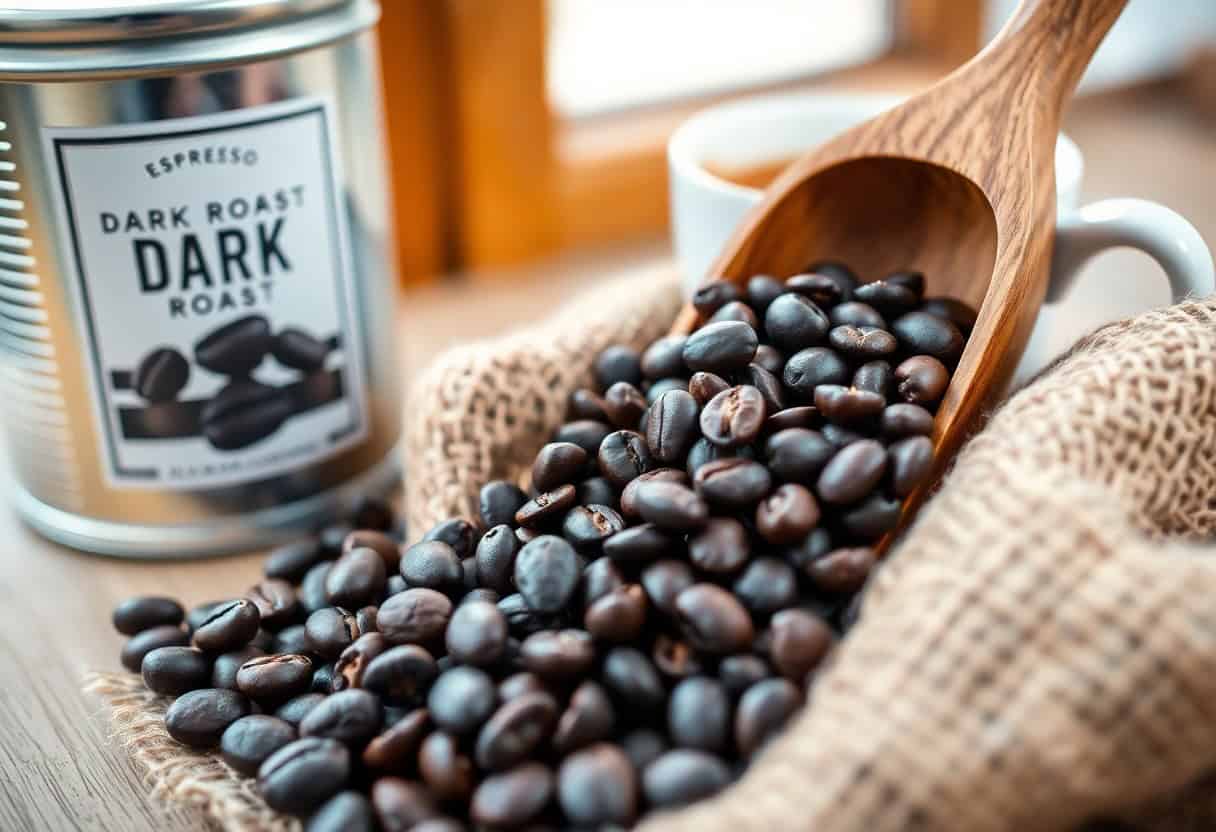
You’ve likely noticed how dark roast beans look glossy and almost oily compared to their lighter counterparts. That’s because during the roasting process, which extends well past the second crack, the internal structure of the bean breaks down and natural oils migrate to the surface. This extended exposure to heat transforms sugars and acids, reducing acidity and amplifying bold, smoky notes. The longer the roast, the more the original terroir of the bean is overshadowed by the flavors created through caramelization and carbonization.
Flavor Profile Breakdown
Dark roasts deliver a full-bodied experience with dominant flavors like dark chocolate, toasted nuts, and sometimes even a hint of spice or char. What you gain in richness, you may lose in origin character-subtle floral or fruity notes common in light roasts are typically muted or absent. Your palate encounters a smoother, more uniform taste, often with a slightly bittersweet finish. This doesn’t mean complexity is lost; it’s simply redefined by the roast itself rather than the bean’s growing conditions.
Caffeine Content Myths
Many assume dark roast coffee packs a stronger caffeine punch, but the truth might surprise you. Caffeine levels actually decrease slightly during prolonged roasting, meaning your dark roast likely contains marginally less caffeine than a light roast from the same bean. The bold flavor can be misleading-what feels stronger on the tongue isn’t necessarily higher in stimulation. If you’re chasing caffeine, roast level isn’t the deciding factor; bean type and brew method matter more.
Choosing the Right Bean Base
Not every green coffee bean is suited for a dark roast. Beans with dense structure and lower acidity, like those from Brazil or Sumatra, handle high heat better and develop richer, more balanced results. Roasting a delicate Ethiopian bean to dark levels can result in a flat, ashy taste, masking its natural vibrancy. You’ll get the best outcome when the origin profile complements the roast style-seek out beans labeled specifically for dark roasting or espresso blends, where balance under high heat is already considered.
Sourcing the Midnight Bean
Origin Matters More Than You Think
Every bold cup begins with a decision made thousands of miles away-where the bean first takes root. The altitude, soil composition, and climate of a coffee-growing region directly shape the depth and character of dark roast profiles. Regions like Sumatra, Ethiopia, and Guatemala produce beans with naturally low acidity and rich body, making them ideal candidates for dark roasting without sacrificing smoothness. You’ll notice that the best dark roasts often trace back to single-origin farms with strict harvesting standards. When terroir aligns with expert processing, the result is a bean capable of withstanding intense heat while preserving its soul.
Roast Profiles That Honor the Bean
Roasting isn’t just about color-it’s about transformation. A skilled roaster knows that pushing beans into the dark spectrum requires precision, not aggression. Over-roasting burns away nuanced flavors and introduces harsh, ashy notes that no amount of milk can fix. The finest dark roasts develop caramelized sugars and smoky depth while avoiding char. You want beans roasted just past the second crack, where oils begin to surface but the structure remains intact. This balance delivers boldness without bitterness, a hallmark of quality you can taste in every sip.
Why Transparency Builds Trust
You deserve to know exactly what’s in your cup. Brands that openly share harvest dates, roast dates, and farm partnerships signal confidence in their process. Look for roast dates printed clearly on the bag-coffee peaks within 2-4 weeks post-roast, and anything older sacrifices aroma and complexity. When companies withhold sourcing details, you’re left guessing whether you’re drinking consistency or compromise. Trust grows when you can trace your coffee from mountain to mug, especially when bold flavor depends on every step being done right.
The French Roast Standard
What Defines a True French Roast
You’ll recognize a genuine French roast by its deep, smoky aroma and glossy surface-signs of oils drawn to the bean’s exterior during extended roasting. This roast level pushes beans to the brink of carbonization, typically reaching temperatures between 465°F and 480°F. The result is a coffee that’s bold in presence but surprisingly smooth in execution when done right. Under-roasted beans masquerading as French roast lack depth and complexity, while overdone versions can taste ashy or burnt. Authenticity lies in balance, and that’s what separates the standard from the rest.
Flavor Profile and Brewing Tips
Dark chocolate, toasted walnut, and a hint of caramelized sugar often define the flavor spectrum of a well-executed French roast. You might detect subtle smokiness, but it should never overpower the palate. A clean finish without bitterness is the hallmark of quality, indicating precise roasting control and fresh, high-grade beans. For best results, grind just before brewing and opt for a French press or pour-over method to highlight the richness. Avoid boiling or prolonged extraction, which can extract unwanted harsh notes.
Why Choose French Roast from Trusted Roasters
Not every bag labeled “French roast” delivers the depth and consistency you expect. Mass-market versions often sacrifice quality for uniformity, using lower-grade beans that crack under high heat. Artisan roasters, on the other hand, source premium beans and monitor each batch to ensure peak development. If you’re seeking a reliable source, explore curated selections like those found in Dark Roast Coffee collections that prioritize freshness and roast integrity. These brands often provide roast dates and origin details, giving you transparency and confidence in every cup.
Italian Roasts and the Espresso Heart
The Soul of the Dark Roast Tradition
You’ll find that Italian roasts carry a legacy built on intensity and balance, where darkness doesn’t mean bitterness but depth. These beans are roasted long enough to bring out smoky sweetness and a velvety body, making them ideal for espresso lovers who crave bold yet smooth flavor without harshness. The traditional Italian method prioritizes consistency and richness, often using a blend of Arabica and Robusta to achieve that signature punch and crema. When done right, the result is a cup that’s powerful but never overwhelming.
What Sets Italian-Style Roasting Apart
Time and temperature define the Italian approach, with beans typically roasted past the second crack to deepen their character. This extended roast pulls out oils that glisten on the surface, a visual cue of the roast’s intensity. While some dark roasts lose origin nuance under high heat, Italian styles preserve a distinctive harmony between roast-driven notes and inherent bean qualities. You’ll taste dark chocolate, toasted nuts, and sometimes a hint of spice-never burnt rubber or ash, which signals poor roasting technique. Your palate benefits when craftsmanship guides the flame.
Perfecting the Espresso Experience
Espresso in Italy isn’t just a drink-it’s a ritual shaped by generations of preference for concentrated, full-bodied coffee. The best Italian roast beans deliver a creamy mouthfeel and a lingering finish that stands up to milk in a cappuccino or shines solo in a tiny cup. When you pull a shot from a well-roasted Italian blend, the crema should be thick and golden, not pale or bubbly. That’s your sign of proper extraction and quality roasting. Choose beans labeled “espresso roast” from roasters who respect tradition, and you’ll taste the difference in every sip.
Sumatra and the Earthy Profile
The Origin of Depth
You’ll find that Sumatran coffee beans grow in the lush highlands of Indonesia, where volcanic soil and tropical humidity create ideal conditions for dense, flavor-rich beans. These environmental factors slow the maturation process, allowing sugars and organic compounds to develop more fully inside the bean. The result is a cup with remarkable body and a lingering finish that coats your palate. Unlike brighter African coffees, Sumatra delivers a grounded experience-one that speaks to the earth itself.
Wet-Hulling and Its Impact
Processing plays a defining role in shaping Sumatra’s signature taste, thanks to a method known as *giling basah*, or wet-hulling. Farmers remove the outer skin of the coffee cherry and ferment the beans briefly before hulking them while still moist. This unusual technique contributes to the coffee’s distinctive earthiness, low acidity, and syrupy mouthfeel. You’ll notice flavors that evoke damp forest floors, dark chocolate, and sometimes a hint of spice. It’s a bold profile that stands up well to dark roasting without losing its integrity.
Why Dark Roast Works Here
Dark roasting Sumatran beans enhances their natural richness while smoothing out any raw or vegetal notes that might linger from the wet-hulling process. You’re not masking the origin character-you’re amplifying its depth and warmth. The roast brings forward notes of cedar, roasted walnut, and molasses, creating a cup that’s both powerful and balanced. Because the beans already have low acidity, they don’t turn sour or sharp when roasted deeply, making them one of the most reliable choices for a bold, smooth dark roast.
Brewing for Maximum Strength
Choose the Right Grind Size
Your grind size directly impacts extraction and overall strength. Too fine a grind can lead to over-extraction, bringing out bitter, ashy notes, while too coarse a grind leaves your coffee weak and underdeveloped. For dark roast beans, aim for a medium-coarse to coarse grind, especially if using a French press or pour-over. Espresso demands a finer grind, but even then, avoid going too fine-dark roasts are already highly soluble, and over-extraction happens quickly.
Control Your Water Temperature
Water that’s too hot scorches dark roast grounds, amplifying bitterness and diminishing smoothness. Keep your water between 195°F and 205°F to extract rich, bold flavor without tipping into harshness. If your machine doesn’t allow temperature control, let boiled water sit for 30 seconds before brewing. This small adjustment preserves the chocolatey, caramelized notes dark roast lovers seek.
Optimize Your Brew Time
Brew time determines how much flavor transfers from bean to cup. With dark roasts, longer contact doesn’t mean stronger taste-it often means more bitterness. For drip or pour-over, target a total brew time of 3 to 4 minutes. French press should steep for 4 minutes max before plunging. Going beyond these windows risks extracting the charred compounds developed during roasting, undermining the smooth profile you’re after.
Use the Correct Coffee-to-Water Ratio
Strength starts with proportion. A standard 1:16 ratio (1 gram of coffee per 16 grams of water) produces a balanced cup, but for bolder results, try 1:14 or even 1:12. Increasing coffee density enhances body and intensity without relying on over-extraction. Always weigh your beans and water for consistency-scoops and estimates lead to unpredictable results, especially with potent dark roasts.
Clean Equipment Matters More Than You Think
Residue from old oils and fine particles builds up in grinders and brewers, tainting your fresh batch with rancid, stale flavors. A grimy machine can ruin even the best dark roast beans. Clean your grinder weekly and descale your brewer monthly, especially if using hard water. Freshness isn’t just about the beans-it’s about every surface your coffee touches.
Final Words
With this in mind, you now know the best dark roast coffee beans deliver bold flavor without sacrificing smoothness.
Beans like Sumatra Mandheling, French Roast, and Dark Roast Colombian offer rich profiles with low acidity and deep aroma, tailored to your taste for intensity balanced with refinement.
Your preference shapes the ideal choice-whether it’s oily sheen and smokiness or a velvety finish matters most to you.
Roast date, origin, and freshness play key roles in what lands in your cup. You control the outcome by selecting whole beans, grinding just before brewing, and storing them properly. This attention ensures every brew meets your standard for bold, smooth excellence.

Key Takeaways: Dark Roast Coffee Beans
- Dark Roast Coffee Beans taste bold, not burnt — quality roasting keeps them smooth.
- Origin shapes dark roast coffee beans — Sumatra and Italian profiles differ widely.
- French roast defines dark roast coffee beans — the darkest standard for intensity.
- Freshness matters for dark roast coffee beans — buy whole bean and grind to order.
- Brewing unlocks dark roast coffee beans — match grind and method for maximum strength.
Apply These Dark Roast Coffee Beans Picks
Ready to brew the best dark roast coffee beans? Start here.
- How dark roast coffee beans compare to light roast
- Italian icons among dark roast coffee beans
- Is Black Rifle one of the best dark roast coffee beans?
For grading standards, see the Specialty Coffee Association.
FAQs: Dark Roast Coffee Beans
Q: What makes a dark roast coffee bold and smooth at the same time?
A: A dark roast becomes bold through extended roasting, which develops deep, rich flavors like chocolate, caramel, and toasted nuts.
The smoothness comes from the breakdown of acids during roasting-longer heat exposure reduces acidity and bitterness when brewed correctly. Beans roasted just to the second crack and cooled quickly tend to balance intensity with a velvety mouthfeel.
The origin of the bean also matters; beans from Sumatra or Brazil often have naturally low acidity and earthy tones that enhance smoothness.
Q: Which dark roast coffee beans are best for a rich, full-bodied cup without harsh bitterness?
A: Look for beans labeled as “full city,” “Vienna,” or “French roast” from reputable roasters who avoid charring. Beans from regions like Sumatra Mandheling or Brazilian Cerrado are known for their low acidity and syrupy body.
Roasters like Stumptown, Intelligentsia, and Kicking Horse offer dark blends such as “House Blend” or “Grizzly Claw” that emphasize depth without burnt notes. These are roasted to bring out smoky-sweet flavors while preserving balance.
Q: Does the roast date matter for dark roast flavor quality?
A: Yes, the roast date is key. Dark roast beans peak in flavor between 7 to 14 days after roasting. Right after roasting, they release CO2, which can interfere with extraction and create off-flavors.
Waiting a few days allows gases to dissipate and flavors to stabilize. After two weeks, the oils on the surface begin to degrade, especially if exposed to air or light.
Always check the roast date on the bag and use within three weeks for the best taste.
Q: Can I brew dark roast coffee using a French press for maximum smoothness?
A: Yes, a French press works well for dark roast beans because it enhances body and minimizes acidity. Use coarsely ground beans and water just off the boil (around 200°F). Steep for 4 minutes, then press slowly.
This method extracts oils and solids that contribute to a creamy texture. Avoid over-steeping, which can pull out harsh compounds.
A dark roast like Death Wish Coffee or Peet’s Major Dickason’s Blend delivers a bold yet smooth result with this technique.
Q: Are single-origin dark roasts better than blends for bold flavor?
A: It depends on your taste preference. Single-origin dark roasts, like a Sumatran or Guatemalan dark roast, offer a distinct profile-think earthy, spicy, or smoky-with more transparency in flavor origin.
Blends are crafted to balance intensity and smoothness by combining beans from multiple regions. A blend might mix a low-acid Sumatran with a sweet Peruvian to create depth and harmony. For consistent boldness with rounded edges, many prefer blends.
For a more unique, expressive cup, try a well-roasted single-origin dark bean.