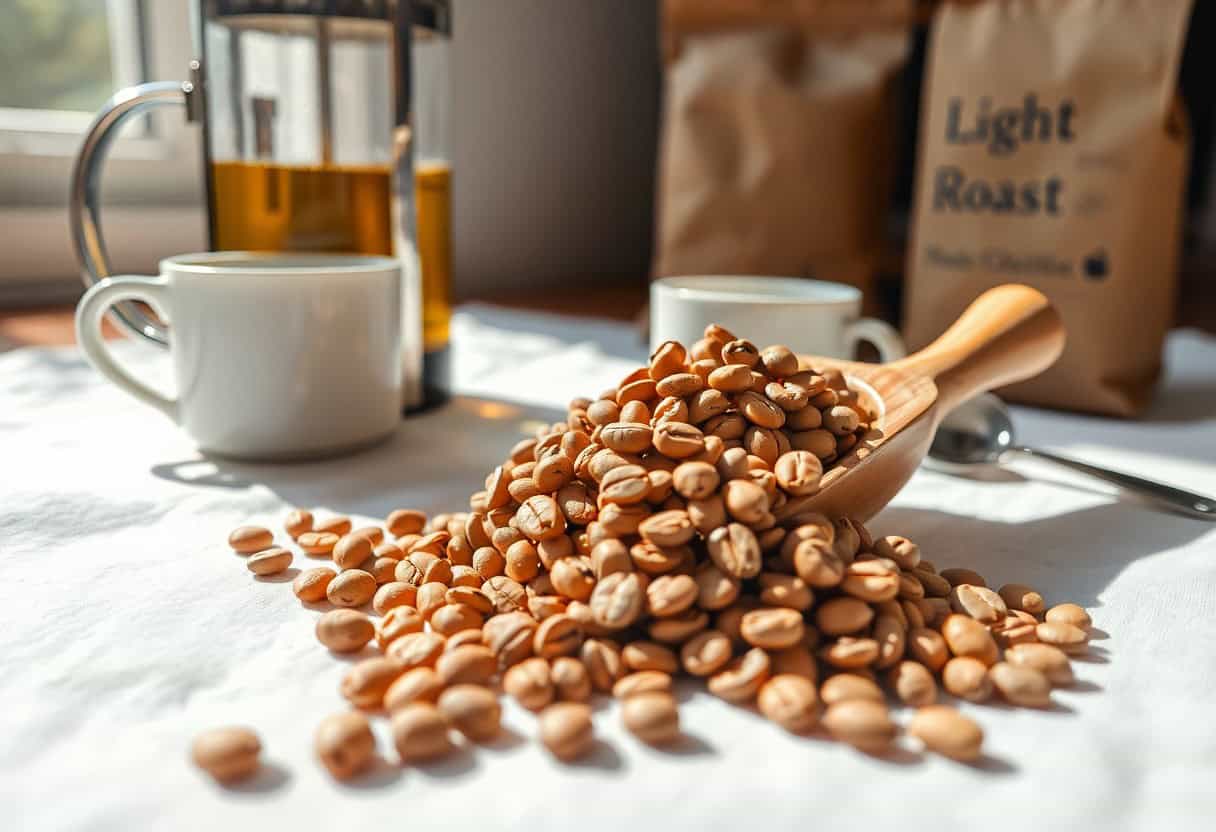
TL;DR: The best light roast coffee beans deliver a brighter, cleaner cup with more origin character. These 7 picks and brewing tips help you choose. Brew smarter.
Table of Contents
There’s a reason light roast coffee stands out: it preserves the bean’s natural flavors and offers a brighter, cleaner taste. You’ll notice higher acidity and floral or fruity notes that darker roasts often mask. Choosing the right beans means enhancing clarity and smoothness in every sip, without bitterness.
Key Takeaways:
- Light roast coffee beans preserve more of the original flavor notes from the bean’s origin, offering brighter acidity and complex tasting profiles like citrus, floral, or fruity tones.
- These beans are roasted for a shorter time at lower temperatures, which helps maintain their natural sugars and delicate aromas without developing the smoky or bitter notes found in darker roasts.
- Single-origin light roasts often provide a clearer expression of terroir, making them ideal for drinkers who enjoy tracing flavor differences between regions like Ethiopia, Colombia, or Kenya.
- For a smoother cup, choose beans with balanced acidity and a clean finish-look for descriptors like “tea-like,” “juicy,” or “bright but not sharp” on packaging or tasting notes.
- Pour-over, Chemex, or drip brewing methods highlight the nuanced qualities of light roast coffee better than espresso or French press, which can overpower their subtleties.
Light Roast Coffee Beans: The Character of the Light Bean
What Defines a Light Roast?
You’ll recognize a light roast by its light brown hue and dry surface-no oils visible, since the beans never reach the high temperatures that cause them to burst and release fat. This lower heat preserves the bean’s original characteristics, allowing you to taste the soil, altitude, and climate where it was grown. Roasting stops early, usually just after or before the first crack, locking in delicate acids and floral notes that darker roasts tend to burn off. Your palate gets a clearer picture of the coffee’s origin, not the flavor of charred sugar or smoke.
Acidity with Purpose
Acidity in light roast coffee isn’t a flaw-it’s a feature. When balanced well, it delivers a lively, wine-like brightness that lifts the entire cup. You’ll notice it first on the sides of your tongue, a zesty spark that makes each sip feel fresh and clean. This isn’t sourness from underdevelopment; it’s intentional, structured, and often paired with fruity or citrusy notes. Beans from Ethiopia or Kenya, for example, shine here, where their natural complexity thrives under a light hand.
Body and Aftertaste
Light roasts typically have a lighter body than their darker counterparts, but that doesn’t mean they lack depth. Instead, they trade heaviness for clarity, offering a clean mouthfeel that highlights nuance over intensity. You’ll find subtle textures-like the silkiness of a washed Ethiopian or the tea-like finish of a Guatemalan highland bean. The aftertaste often lingers with floral or herbal impressions, not bitterness, making each cup feel refined and intentional.
Preserving Origin Integrity
When you choose a light roast, you’re choosing transparency. The roast profile doesn’t mask defects or inconsistencies-it reveals them. That means only high-quality, well-processed beans can truly succeed at this level. You’re tasting the farmer’s work, the soil, and the microclimate, not just the roaster’s craft. This honesty demands care at every step, from harvest to your grinder, but the reward is a cup that tells a story with every sip.
Origins of the High Ground
The Birthplace of Brightness
High-altitude farms shape the character of light roast coffee in ways no other factor can. When you sip a cup from beans grown above 5,000 feet, you’re tasting the result of thinner air, cooler temperatures, and longer maturation cycles. These conditions force the coffee cherry to develop slowly, concentrating sugars and acids that translate into a lively, complex cup. Countries like Ethiopia, Kenya, and Colombia dominate this space because their mountainous terrain naturally supports this slow development. The elevation isn’t just a number-it’s the foundation of flavor clarity.
Why Altitude Dictates Acidity
Temperature swings between day and night at high elevations tighten the bean’s density, locking in nuanced flavors. You’ll notice this most in the acidity-crisp, clean, and often compared to citrus or wine. This isn’t accidental; it’s a direct outcome of how the plant responds to stress. The cooler climate reduces pest pressure and slows photosynthesis, giving farmers more control over harvest timing. What matters most is that higher elevation correlates with brighter, more articulate notes, especially when roasted lightly to preserve them.
Terroir Beyond the Bean
Soil composition, rainfall patterns, and microclimates all contribute to what makes high-grown coffee distinct. In Ethiopia’s Yirgacheffe region, for example, native forest cultivation imparts floral and tea-like qualities you won’t find elsewhere. When you choose beans from these elevated zones, you’re not just selecting a roast level-you’re aligning with an ecosystem. The interplay of natural elements creates unmatched depth, and light roasting ensures those delicate traits aren’t buried under caramelization. Your palate becomes a witness to geography itself.
The Mechanics of the Cup
How Light Roast Shapes Your Experience
Light roast coffee preserves the bean’s original characteristics, allowing you to taste the subtle notes influenced by its origin, soil, and climate. You’ll notice higher acidity levels, which isn’t a flaw but a hallmark of quality-this brightness brings a crisp, tea-like clarity to your cup. When brewed correctly, these beans reveal floral, citrus, or fruity tones that darker roasts often mask. The clarity and complexity you experience come directly from minimal roast exposure, letting the bean speak for itself rather than being shaped by heat-driven caramelization.
Brewing Variables That Make a Difference
Water temperature plays a pivotal role when extracting flavor from light roast beans. Aim for between 195°F and 205°F to ensure enough energy to pull out delicate compounds without scalding the grounds. Your grind size should be slightly finer than table salt for pour-over methods, promoting even extraction. Too coarse, and your brew will taste weak and sour; too fine, and bitterness creeps in despite the roast’s natural brightness. Consistency in grind and water contact time is where precision meets flavor, so use a scale and timer to maintain control.
Community Insights and Real-World Feedback
Baristas and home brewers alike share their experiences online, offering practical insight beyond technical specs. One active discussion on Light roast coffee recommendations : r/pourover highlights specific beans that deliver consistent brightness and balance. Users praise Ethiopian Yirgacheffe and Guatemalan Huehuetenango for their vibrant profiles when roasted lightly. These real-world reports confirm that origin and roast profile alignment are key to unlocking a smoother, more expressive cup, reinforcing what theory suggests.
Recommended Varieties
Colombian Supremo
You’ll find Colombian Supremo consistently delivers a clean, balanced cup with lively acidity and subtle sweetness. Grown at high altitudes across Colombia’s Andean slopes, these beans develop slowly, allowing complex sugars to form and produce a remarkably smooth profile. Notes of red apple, citrus, and honey emerge clearly when roasted lightly, making it ideal for pour-over or drip methods. The even bean size also ensures uniform roasting and extraction, reducing the risk of bitterness even with longer brew times.
Kenyan AA
Kenyan AA stands out for its bold brightness and structured acidity, often described as wine-like or juicy. When roasted to a light profile, it reveals layers of blackcurrant, grapefruit, and a hint of tomato vine that challenge and delight the palate. You can expect a higher concentration of malic and citric acids, which contribute to its vibrant character-perfect if you enjoy a cup with energy and depth. This variety performs best with precise water temperature control to highlight its nuanced flavors without overwhelming them.
Guatemalan Huehuetenango
From the mountainous region of Huehuetenango comes a bean known for its floral aroma and crisp finish. Light roasting preserves its natural complexity, bringing forward notes of jasmine, green apple, and a touch of brown sugar. You’ll appreciate how the high elevation and volcanic soil enhance its clarity and sweetness, resulting in a cup that feels both refreshing and satisfying. This coffee shines in Chemex or V60 brewing, where its clarity can fully express itself.
Washed Ethiopian Yirgacheffe
Washed Ethiopian Yirgacheffe offers one of the purest expressions of terroir in light roast coffee. With its bright lemony acidity and delicate tea-like body, it introduces you to a lighter, more refined side of coffee. The washed processing method removes fruit before drying, leading to a cleaner, more focused flavor profile compared to its natural counterparts. You’ll notice hints of bergamot and stone fruit, making it a favorite among those who value clarity and elegance in their morning cup.
Preserving the Essence
Understanding Light Roast Sensitivity
Light roast coffee beans retain more of their original chemical composition because they spend less time in the roaster. This means delicate floral, citrus, and fruity notes are preserved, but also that they’re more vulnerable to degradation. Exposure to oxygen, light, heat, and moisture can quickly dull the vibrant characteristics you sought when selecting high-quality beans. Your ability to enjoy the full spectrum of flavors hinges on how carefully you store them after purchase.
Optimal Storage Conditions
Airtight containers made of opaque materials shield beans from light and air, two of the most damaging elements. You’ll want to keep your coffee away from the stove, window, or any warm spot-even brief exposure to heat can accelerate staling. Room temperature, low-humidity environments are ideal. Avoid the refrigerator or freezer unless you’re dealing with long-term storage and can prevent moisture absorption with vacuum sealing, as condensation introduces risks that outweigh potential benefits.
The Role of Freshness Timeline
Peak flavor in light roast beans typically occurs between 5 to 14 days after roasting, when carbon dioxide off-gassing has slowed but aromatic compounds remain vibrant. Buying beans with a clear roast date-never a vague “best by” label-puts you in control. Grinding immediately before brewing ensures maximum flavor release, as surface area expansion from grinding exposes oils and volatiles to rapid oxidation. Pre-ground coffee sacrifices brightness far too quickly for light roasts to shine.
Respecting the Roast’s Intent
Roasters who specialize in light profiles do so to highlight origin characteristics, not mask them. When you brew with filtered water, precise temperature control, and clean equipment, you honor that intention. Even minor residue from old oils or mineral buildup can distort the clarity of your cup. Treat each step-from storage to pour-as part of a chain where every link affects the final taste. Protecting the essence isn’t just preservation-it’s active stewardship of flavor.
The Sensory Evaluation
How to Taste Like a Pro
Every light roast reveals its character through careful tasting, and you don’t need a lab to experience it. Begin by grinding your beans just before brewing-this preserves the volatile aromatics that define brightness and complexity. Inhale deeply after grinding; the fragrance should be lively, often carrying notes of citrus, stone fruit, or floral hints. These scents are your first clue to what’s ahead in the cup. A dull or flat aroma may signal aged beans or improper storage, which can ruin even the highest-quality origin.
What to Look for in Acidity
Acidity in light roast coffee isn’t about sourness-it’s the crisp, clean lift that makes each sip feel refreshing. When evaluating, ask yourself: does the coffee sparkle on your tongue or fall flat? High-quality light roasts deliver a balanced acidity that complements sweetness, not overwhelms it. Think of it like biting into a ripe peach or a green apple-there’s tartness, but it’s rounded and pleasant. If your coffee tastes sharp or vinegary, the roast may have gone too far or the bean wasn’t suited to a light profile.
Recognizing Body and Aftertaste
Body in light roasts tends to be lighter than in darker styles, but that doesn’t mean thin or watery. You should feel a subtle texture-like fresh tea or juice-coating your palate. Pay attention to the finish: a clean, lingering aftertaste with evolving notes is a sign of a well-executed roast. On the flip side, a chalky or astringent mouthfeel suggests underdevelopment or poor bean quality. Let the coffee cool slightly; many light roasts reveal their best flavors as they drop to just above room temperature.
Scoring Your Brew
You can rate your coffee using a simple five-point scale for aroma, acidity, body, flavor, and aftertaste. Assign points based on clarity, balance, and enjoyment-don’t chase intensity. A coffee that’s overly aggressive in one area, like acidity, might score lower than one that’s harmonious. The best light roasts create a cohesive experience, where no single element dominates. Over time, this practice sharpens your palate and helps you identify which beans truly deliver a smoother, brighter cup.
Summing up
As a reminder, light roast coffee beans offer a clean, vibrant profile that highlights origin characteristics and natural sweetness. You get brighter acidity, floral or fruity notes, and a lighter body compared to darker roasts.
Choosing high-quality beans from reputable roasters ensures freshness and flavor integrity. Look for recent roast dates and single-origin options to experience the full potential of your brew.
Your morning cup becomes more nuanced and refreshing when you prioritize bean quality and roast precision.
Key Takeaways: Light Roast Coffee Beans
- Light Roast Coffee Beans taste bright and clean — less roast, more origin flavor.
- High-altitude origins suit light roast coffee beans — denser beans hold more acidity.
- Grind finer for light roast coffee beans — they need precise extraction.
- Freshness defines light roast coffee beans — delicate notes fade fast after roasting.
- Pour-over flatters light roast coffee beans — it highlights their subtle sweetness.
Apply These Light Roast Coffee Beans Picks
Ready to brew the best light roast coffee beans? Start here.
- How light roast coffee beans compare to dark roast
- Italian blends vs light roast coffee beans
- Caffeine in light roast coffee beans vs the strongest brews
For grading standards, see the Specialty Coffee Association.
FAQs: Light Roast Coffee Beans
Q: What makes light roast coffee different from medium or dark roast?
A: Light roast coffee is roasted for a shorter time at lower temperatures, usually stopping just after the first crack. This preserves more of the bean’s original characteristics, including higher acidity, floral or fruity notes, and a lighter body.
Compared to darker roasts, which develop more caramelized, smoky, or bitter flavors from longer roasting, light roasts highlight the unique terroir and varietal traits of the coffee.
They tend to have a brighter, cleaner taste that many describe as tea-like or crisp.
Q: Which regions produce the best light roast coffee beans for a smooth, bright cup?
A: Ethiopia, Kenya, Colombia, and Costa Rica are known for producing high-quality beans ideal for light roasting. Ethiopian beans, especially from Yirgacheffe or Sidamo, often have floral aromas, citrus brightness, and a silky mouthfeel.
Kenyan coffees deliver vibrant acidity with berry and wine-like complexity. Colombian and Costa Rican beans offer balanced profiles with notes of stone fruit, honey, and lemon, making them smooth and approachable when lightly roasted.
These regions grow beans at high altitudes, which contributes to denser beans and more nuanced flavors.
Q: How does roast level affect the smoothness and brightness of coffee?
A: Light roasts retain more of the bean’s natural acids and volatile compounds, which contribute to a brighter, more complex cup. The shorter roast time prevents the breakdown of delicate flavor molecules, preserving fruity and floral notes.
Smoothness in light roasts comes from balanced acidity and clean processing, not from low acidity as some assume.
A well-roasted light coffee avoids harsh or ashy flavors common in dark roasts, resulting in a smoother experience on the palate, especially when brewed correctly.
Q: What should I look for when buying light roast coffee beans for a brighter flavor?
A: Look for beans with a recent roast date, ideally within the past two to four weeks. Choose single-origin coffees from high-altitude farms, as they often have the clarity and complexity suited for light roasting.
Check the flavor notes listed on the bag-terms like lemon, bergamot, jasmine, peach, or green apple suggest brightness. Avoid beans with generic descriptions or oily surfaces, which can indicate over-roasting.
Opt for whole beans and grind them just before brewing to preserve freshness and aroma.
Q: Can I brew light roast coffee in any method, or are some better than others?
A: Pour-over methods like V60, Chemex, or Kalita Wave bring out the best in light roast coffee by highlighting clarity, acidity, and nuanced flavors.
These methods allow precise control over water temperature and brew time, which helps extract the delicate notes without over-extracting bitterness. Espresso can work with light roasts but requires careful tuning to avoid sourness.
French press and AeroPress also perform well, especially with adjustments like finer grinds and slightly hotter water. Cold brew is less ideal, as it tends to mute the bright, floral qualities that define a great light roast.